




Antique Plate Cover
An antique plate cover guards a roast or keeps a cheese bell snug, arriving from Georgian, Victorian, and Edwardian dining rooms.
Antique Plate Cover
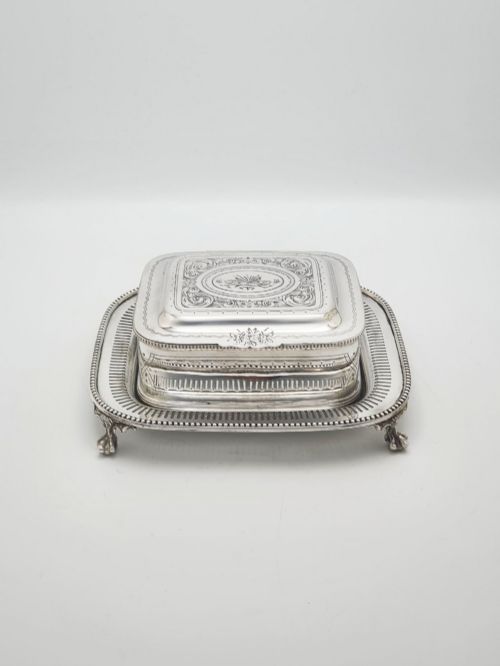
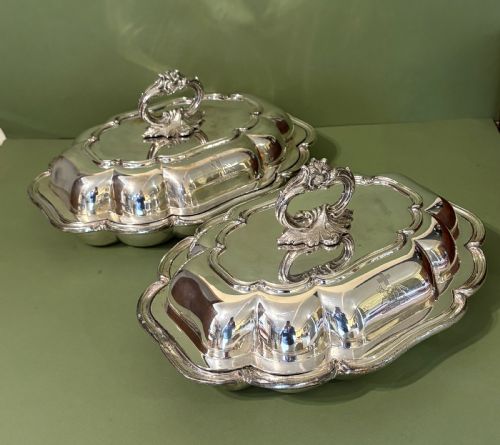
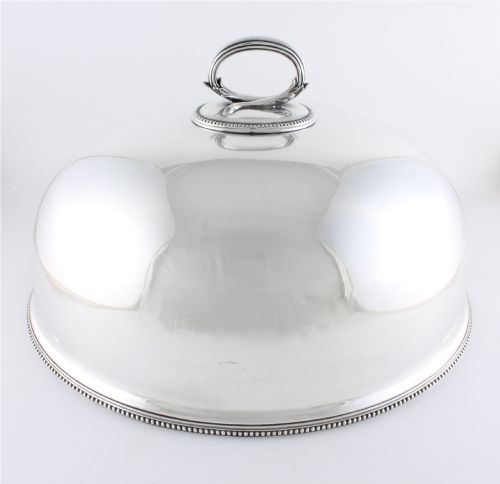
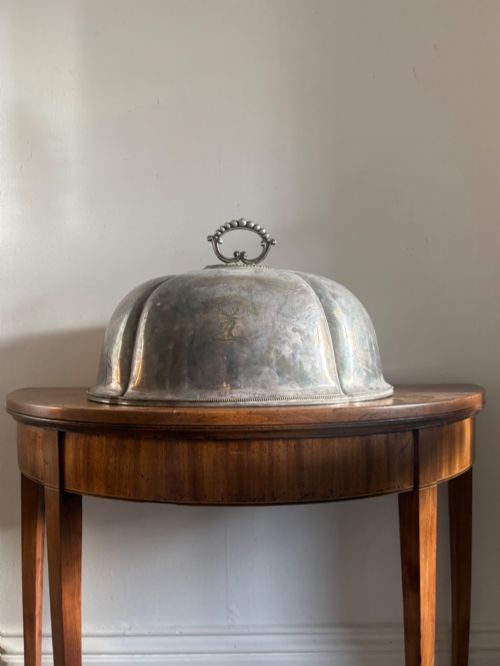
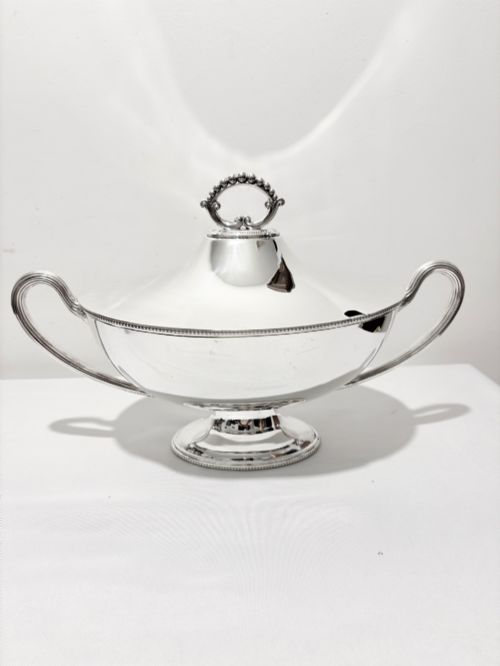
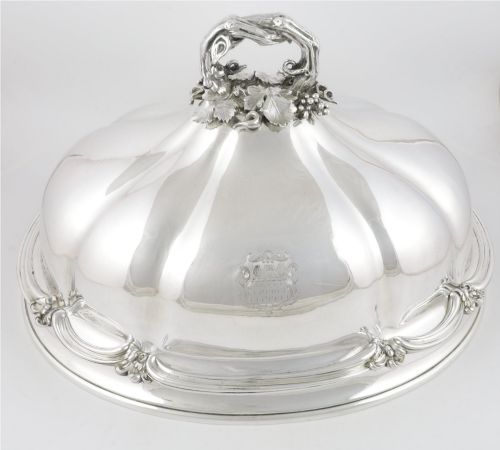
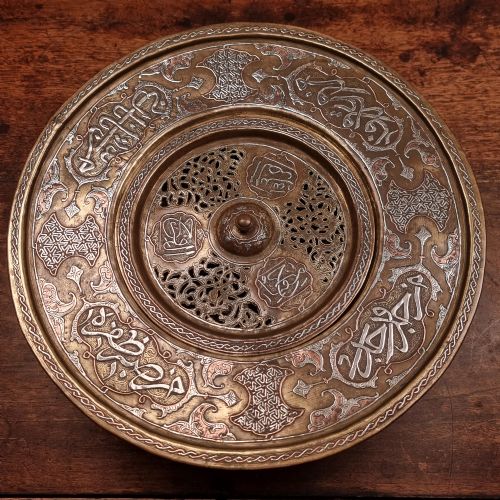
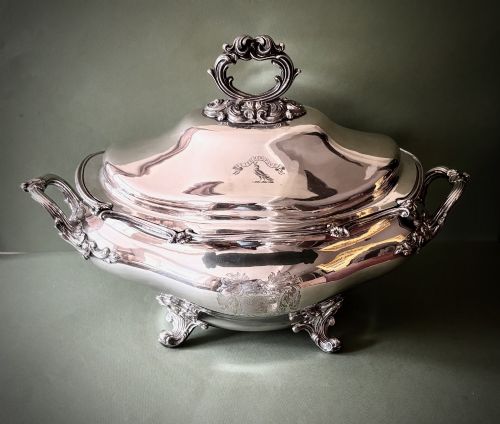
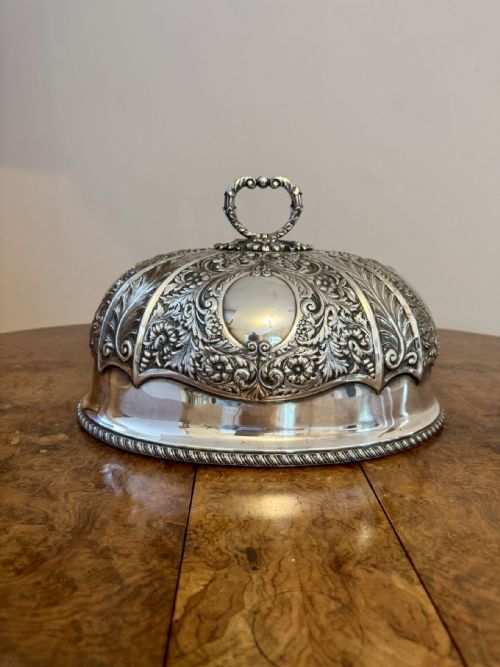
An antique plate cover serves to protect food at table, appearing as large meat domes, entree dishes, cheese covers, and warming dishes. Pieces span the Georgian, Victorian, and Edwardian eras, reflecting changes in formal dining habits.
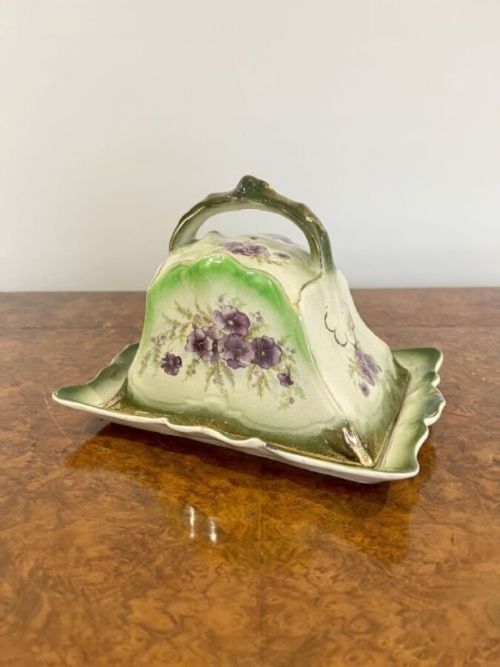
The most common forms on this page include silver plated meat covers, entree dishes with matching bases, and ceramic cheese bells with fitted covers. Makers utilise styles ranging from simple Regency lines to ornate Victorian ornamentation.
Domestic service and grand dining rooms dictated the shape of these items, with large domes designed for joints of meat and smaller covers for individual courses. Materials shift from early Old Sheffield Plate to later electroplated nickel silver.
Materials and construction methods
Old Sheffield Plate employs a thin sheet of silver fused to a copper base through heat and pressure, often revealing a thin copper edge along seams. Electroplated nickel silver uses an electrical current to bond silver to a base metal alloy, creating a uniform finish.
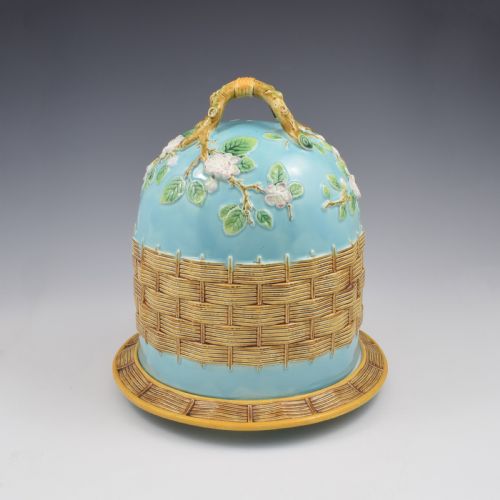
Majolica and jasper ware pieces rely on moulded ceramic bodies glazed with coloured lead oxides or left with a fine matte texture. Metal items feature soldered handles, applied borders, and hand-chased details executed by skilled silversmiths.
Antique Plate Cover Retail Price Guide 2026
Typical asking prices for plate cover among the pieces listed under this phrase on Sellingantiques today, from the lower quarter to the upper quarter. They describe what is for sale here now, not the wider market.
Victorian dining etiquette dictated that even the humble cheese must wear a ceramic hat.
Assessing craftsmanship and finish
The weight of the metal and the thickness of the silver plating distinguish superior domestic pieces from utilitarian versions. Crispness in applied cast handles and symmetry in chased borders indicate greater workshop skill.
Ceramic cheese covers show quality in the depth of the glaze and the precision of the fit between the dome and the base plate. Minimal wear to underlying base metals on plated items points to careful historical use and preservation.
Roberts Cadman·Henry Wilkinson·Mappin and Webb·Hamilton and Inches·Daniel and Arter
The Antique Plate Cover Glossary
- Old Sheffield Plate
- A fused composite material made by heating a layer of silver to a copper ingot before rolling them into sheets together. This technique predates modern electroplating.
- Electroplated Nickel Silver
- A base metal alloy of copper, nickel, and zinc coated with a layer of pure silver using electricity. It became widespread during the Victorian period.
- Entree dish
- A shallow serving vessel with a fitted cover used for secondary courses at dinner. They often feature removable handles for versatile serving.
- Meat dome
- A large, high-domed cover designed to fit over a platter of meat to retain heat. They frequently include cast handles on top.
- Majolica
- A type of earthenware covered with an opaque coloured lead glaze, popular for nineteenth-century cheese bells and tableware. The technique produces rich, vibrant tones.
Antique Plate Cover: Frequently Asked Questions
How do I clean an antique plate cover?
Wash silver plated items gently in warm soapy water with a soft cloth. Avoid abrasive dips that strip the remaining silver layer from the base metal.
Dry the metal thoroughly to prevent water spots. Store pieces in a dry environment away from direct sunlight.
What is the difference between Old Sheffield Plate and EPNS?
Old Sheffield Plate uses a mechanical fusion of silver sheet onto copper through heat. This creates a thick layer where copper lines occasionally show at the cut edges.
Electroplated nickel silver involves passing an electrical current to bond silver particles onto a nickel alloy base. This method produces a more uniform surface without exposed copper seams.
How were meat domes used on the dining table?
Servants placed the heavy metal dome over the carved meat on a platter in the kitchen. This kept the food warm during transit to the dining room.
The cover was then lifted at the table just before serving the guests. Smaller versions served the same purpose for poultry and game.
Can I use an antique cheese dish today?
Ceramic cheese bells and glass-lined butter dishes function well for serving cheese at room temperature. Ensure any ceramic glazes remain free from heavy crazing before storing moist foods.
Metal covers protect food from dust and insects during buffet service. Hand washing preserves the delicate ceramic bodies and vintage glazes.