



Antique Pink Lustreware
Antique pink lustreware pieces are ceramic vessels carrying metallic glaze highlights, sought after for their distinctive iridescent pink sheen and narrative transfer prints.
Antique Pink Lustreware
When you search for antique pink lustreware, you encounter earthenware and pearlware vessels dominated by jugs, pitchers, and decorative bowls. These pieces frequently emerge from the Georgian and Victorian periods, often associated with Sunderland potteries.
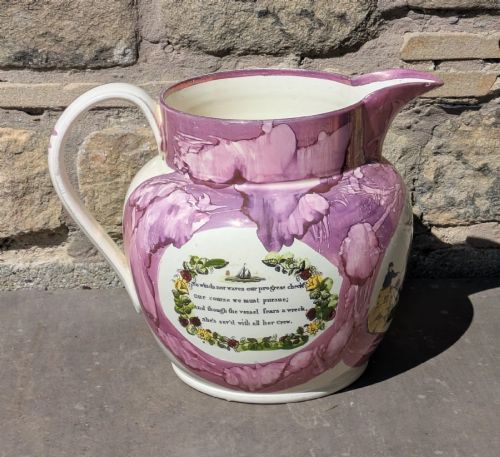
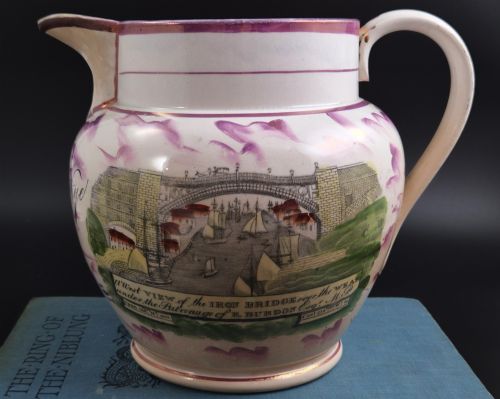
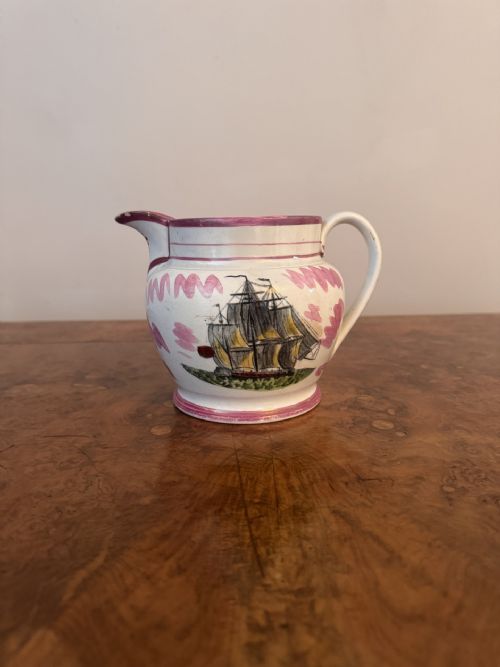
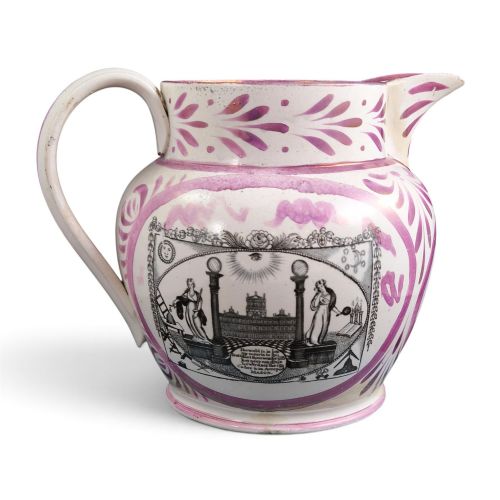
The most common forms on this page are large jugs decorated with maritime themes, poetic panels, and transfer-printed scenes such as the Iron Bridge over the Wear or Masonic emblems. Teacups and saucers also appear alongside bowls, recording the domestic and commemorative uses of the material.
How they were made
Potters utilised earthenware and pearlware as the ceramic base, applying metallic oxides or a metallic glaze to achieve the characteristic pink lustre sheen. Transfer printing laid down the initial outlines of maritime scenes, poems, or portraits before the application of the glaze.
Makers introduced splash or speckle effects by controlling the chemical reaction of the metallic solution during firing, creating mottled pink surfaces. Some specialised pieces incorporated additional hand-colouring or gold leaf alongside the purple and pink transfer decorations.
Antique Pink Lustreware Retail Price Guide 2026
Typical asking prices for pink lustreware among the pieces listed under this phrase on Sellingantiques today, from the lower quarter to the upper quarter. They describe what is for sale here now, not the wider market.
Listings feature earthenware and pearlware bodies decorated with metallic oxide and lustre glazes across the Georgian, Victorian, and Edwardian periods.
What varies in quality
The division between standard domestic ware and finer pieces rests on the clarity of the transfer printing and the depth of the metallic glaze. Rich, even pink coverage with distinct copper-derived iridescence indicates superior kiln control during manufacture.
Scale and subject matter also dictate the standing of a piece, as large jugs featuring named ships, Masonic symbols, or detailed transfer work demand greater technical skill from the potter than small, plain vessels.
Daisy Makeig-Jones·Wedgwood
The Antique Pink Lustreware Glossary
- Lustre glaze
- A metallic glaze containing gold or copper that creates an iridescent, reflective surface when fired in a reducing atmosphere. This technique produces the distinctive pink and purple sheen found on Sunderland and Staffordshire pottery.
- Pearlware
- A refined earthenware developed in the late eighteenth century featuring a bluish glaze that pooled slightly in crevices. It served as a smooth white body for transfer printing and lustre decoration.
- Transfer printing
- A method of decorating ceramics by engraving a design on a copper plate, pulling it on tissue paper, and pressing it onto the biscuit or glazed ware. It allowed complex maritime scenes and poems to be reproduced rapidly.
- Splash lustre
- A specific decorative technique where droplets of metallic solution are flicked onto the ceramic surface before firing. This creates a mottled, marbled pink and white pattern across the body of the jug or bowl.
- Earthenware
- A porous, opaque ceramic body fired at lower temperatures than stoneware or porcelain. It formed the foundational material for the vast majority of nineteenth-century lustre jugs.
Antique Pink Lustreware: Frequently Asked Questions
What is pink lustreware?
Pink lustreware is a type of ceramic, mostly earthenware or pearlware, decorated with a metallic glaze that fires to an iridescent pink or purple sheen. These items frequently date from the Georgian and Victorian eras.
Potters often combined this metallic glaze with black or purple transfer-printed scenes, ranging from ships and bridges to poetic verses and Masonic symbols.
How were pink lustre jugs used?
Many of these jugs served practical functions in households as pitchers for water, beer, or milk, while others held commemorative or decorative roles. Large vessels were often given as tokens to sailors or marked important local landmarks.
The inclusion of verses, naval themes, and Masonic emblems suggests they also held sentimental or fraternal value for their original owners.
How do I date pink lustreware?
Dating relies on ceramic body types, stylistic cues, and specific historical references recorded in the transfer prints. Pearlware bodies and certain bridge depictions point toward the early nineteenth century, while later Victorian pieces show different glaze textures and forms.
Inscribed dates and named subjects provide the most precise chronological anchors for individual items.
Where was pink lustre pottery made?
Much of the prominent lustreware originated in the North East of England, particularly around Sunderland, alongside production centres in Staffordshire. Potteries in these regions developed distinct transfer prints and splash techniques.
Local landmarks like the Iron Bridge over the Wear frequently appear on pieces originating from northern kilns.