




Antique Pink Brooch
An antique pink brooch brings soft colour to a lapel, spanning Georgian, Victorian and Edwardian periods in gold, silver and platinum.
Antique Pink Brooch
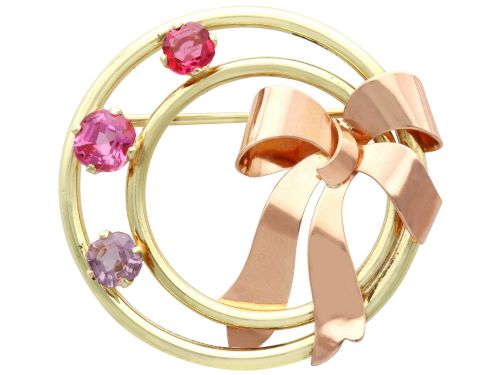
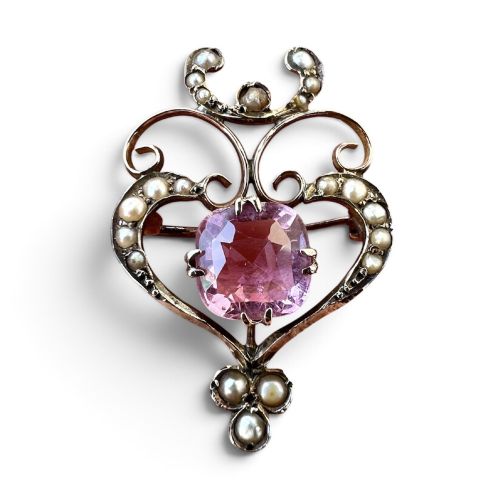
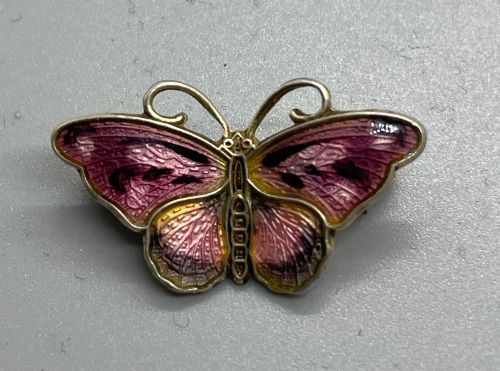
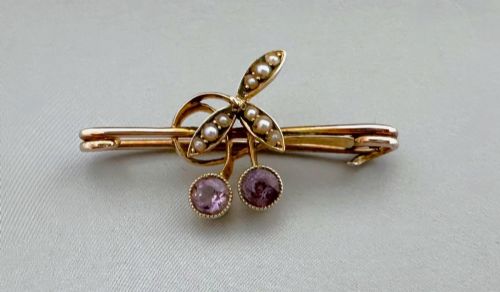
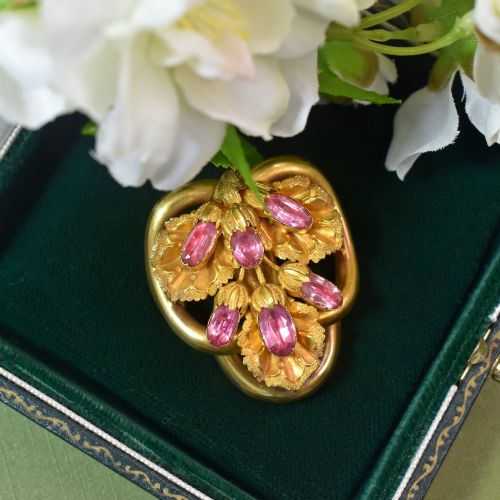
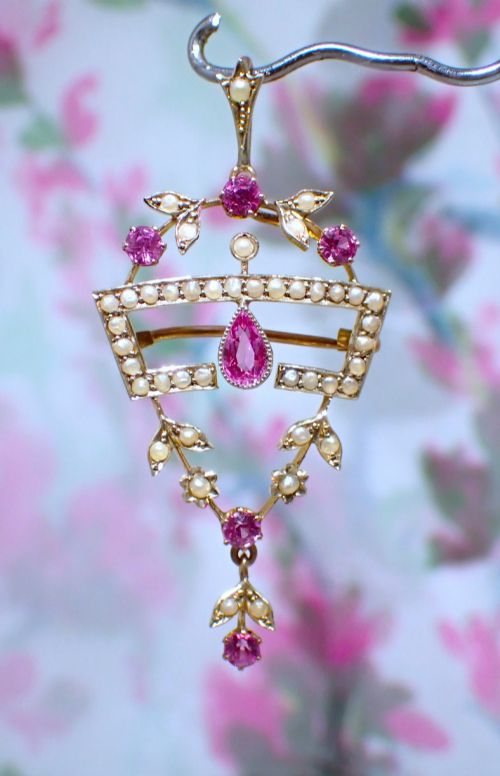
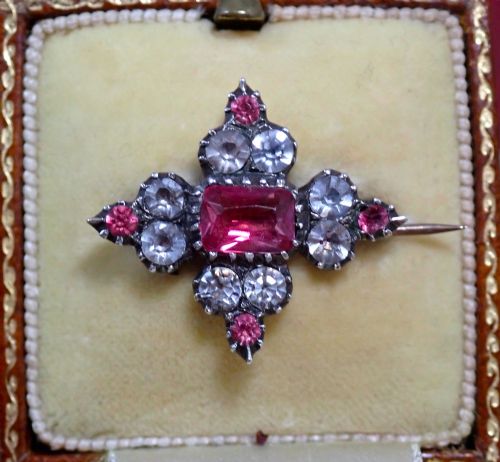
When you search for an antique pink brooch, you encounter pieces shaped as floral clusters, insects, shields and pendants spanning the Georgian to the Art Deco periods. These jewels combine gold, silver and platinum settings with stones that range from pale pink tourmaline and imperial topaz to salmon coral and foil-backed gems.
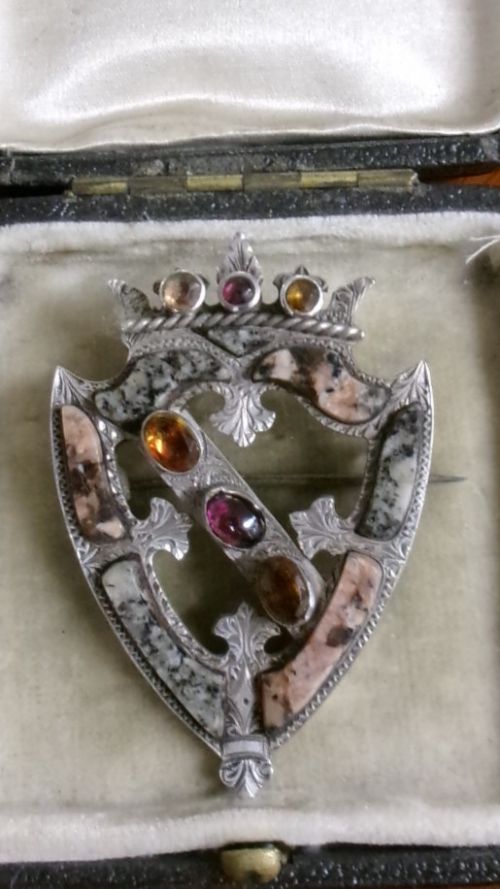
The version you are most likely to meet on this page is the Victorian or Edwardian gold brooch, often featuring pearls alongside pink stones. Others draw upon Georgian or Scottish Revival traditions, employing silver-topped gold or agates in distinct regional forms.
Materials and construction
Metalwork relies on fifteen-carat and nine-carat gold, alongside silver-topped gold and platinum settings that securely hold older gemstone cuts. Foil-backing underneath certain stones enhances their depth of colour, a technique prominent in earlier periods.
Gems such as pink tourmaline, imperial topaz, spinels and salmon coral take centre stage, complemented by accents of seed pearls, old-cut diamonds and chrysoberyl. Enamel work also appears on flower-themed stick pins and dress pieces.
Antique Pink Brooch Retail Price Guide 2026
Typical asking prices for pink brooch among the pieces listed under this phrase on Sellingantiques today, from the lower quarter to the upper quarter. They describe what is for sale here now, not the wider market.
Listings feature gold, platinum, and silver alongside natural pink tourmaline, topaz, coral, and diamonds across Edwardian and Victorian periods.
Factors that distinguish quality
The sophistication of the stone cutting and the integrity of the original metalwork separate finer examples from simpler work. Well-matched natural stones and crisp floral or insect motifs indicate higher workshop standards.
The survival of original conversions, such as dual pendant and brooch fittings, demonstrates thoughtful design. Clean integration of foil-backings and secure collet settings also distinguish superior pieces.
The Antique Pink Brooch Glossary
- Foil-backed
- A thin sheet of coloured metallic foil placed behind a gemstone to enhance its brilliance or hue. This method is typical in Georgian and early Victorian jewellery.
- Old-cut diamond
- A hand-faceted diamond cut before modern machinery standardisation, featuring a smaller table and a higher crown. These stones display a softer, candlelit sparkle.
- Tourmaline
- A complex silicate mineral family that yields pink and red varieties often set in Edwardian and Victorian brooches. It offers distinct pleochroism when viewed from different angles.
- Kilt pin
- A large decorative fastening pin traditionally used in Scottish highland dress. Examples in the evidence incorporate agate and shield shapes.
- Collet setting
- A band of metal that encircles the girdle of a gemstone to hold it securely in place. This technique predates modern prong settings.
Antique Pink Brooch: Frequently Asked Questions
What is imperial topaz?
Imperial topaz is a prized natural precious stone displaying rich pink, orange or peach tones. It was favoured in high-end Georgian and nineteenth-century designs.
Its distinct warmth sets it apart from lighter quartz or paste substitutes.
How do I date an Edwardian brooch?
Edwardian pieces often utilise platinum-topped gold, airy openwork wireframes and delicate pearl or tourmaline clusters. The style spans roughly the first decade of the twentieth century.
Motifs lean towards light floral garlands and symmetrical geometric arrangements.
Can brooches be worn as pendants?
Many antique brooches include a concealed or hinged loop at the back for a chain. This allowed owners to switch between wearing the jewel on clothing or around the neck.
Examining the reverse reveals whether this conversion feature is original to the piece.