

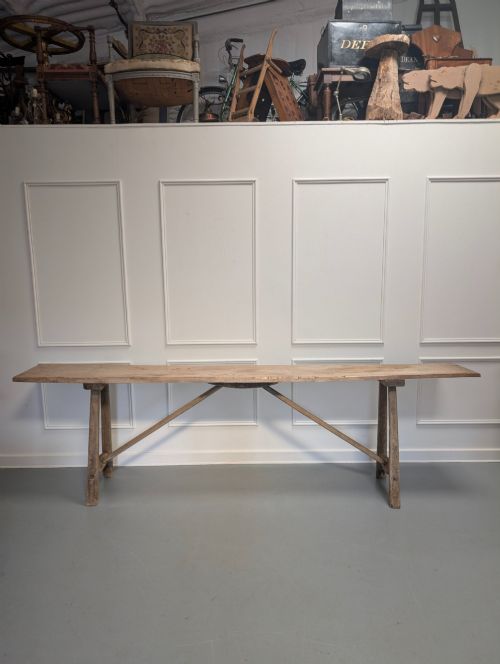
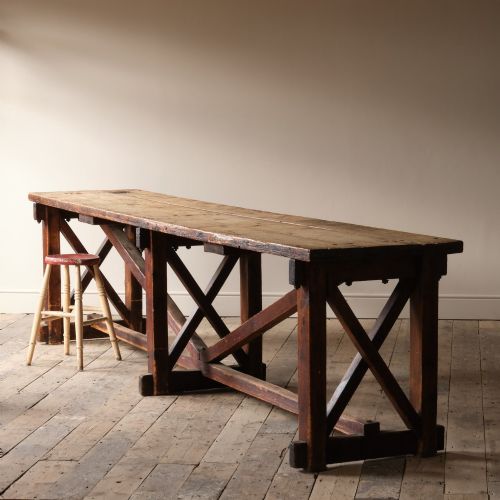
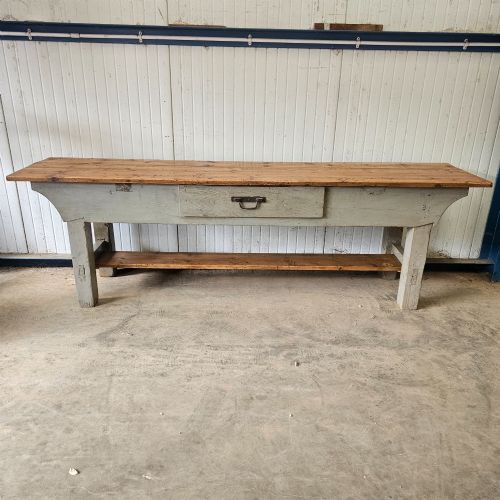
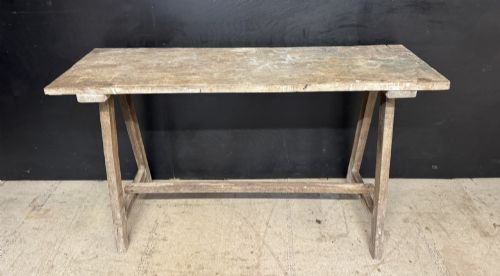
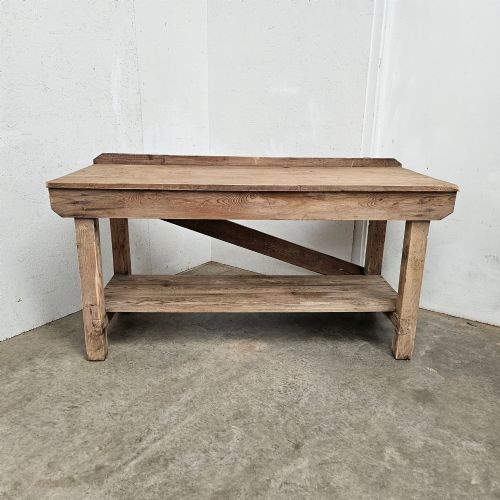
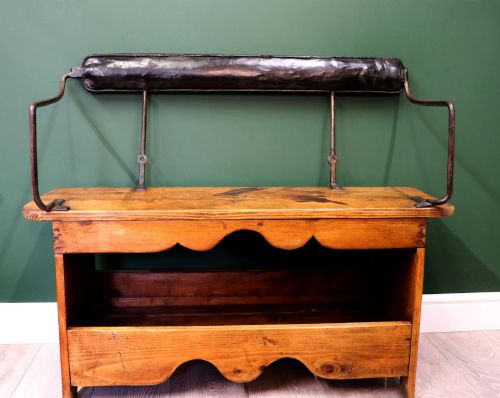
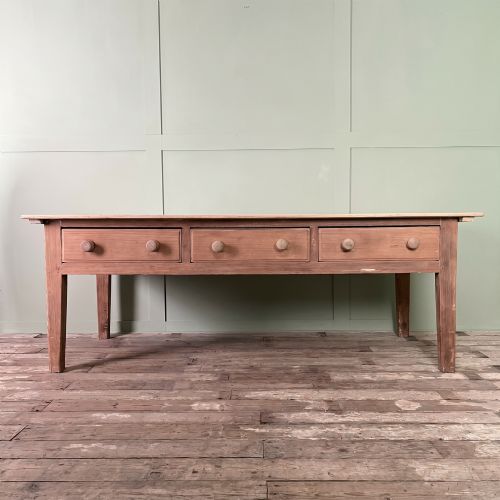


Antique Pine Work Bench
An antique pine work bench brings hard-wearing character and honest utility into a modern kitchen or boot room.
Antique Pine Work Bench
An antique pine work bench serves as a sturdy focal point, drawing on utilitarian forms built for trade and domestic labour. When searching for an antique pine work bench, buyers encounter a variety of practical tables and preparation surfaces originating from workshops, laundries, and dairies. These items cross several functional categories, appearing as drapers tables, potting tables, and dairy prep surfaces.
The selection encompasses pieces from the nineteenth century up through the Edwardian era and the early twentieth century. Regional styles range from English country utility to French provincial and industrial Victorian designs. Structural forms vary from simple trestle tables and two-tier florists tables to heavy foundry benches featuring iron elements.
Most examples rely primarily on pine timber, frequently paired with secondary woods like sycamore, elm, or oak. Painted finishes in distressed tones sit alongside scrubbed timber surfaces shaped by decades of physical work. Buyers often select these functional objects to serve as kitchen islands, console tables, or robust dining tables.
How they were made
Makers constructed an antique pine work bench using solid timber joints designed to withstand heavy daily pressure. Carpenters utilised sturdy pine for main tabletops and frames, sometimes integrating harder woods such as sycamore or elm for surfaces requiring extra resilience against moisture and friction.
Metal components appear where structural reinforcement was necessary, incorporating iron brackets and cast iron supports into industrial workshop pieces. Joinery relied on straightforward, practical methods suited to utility furniture rather than delicate cabinet-making techniques.
Surface treatments developed organically through active service, though some examples retain original painted finishes or historical layers of pigment. Scrubbed timber tops reflect intensive cleaning with water and brushes over generations of daily use in laundries and dairies.
Antique Pine Work Bench Retail Price Guide 2026
Typical asking prices for pine work bench among the pieces listed under this phrase on Sellingantiques today, from the lower quarter to the upper quarter. They describe what is for sale here now, not the wider market.
Listings feature pieces from the nineteenth century, Edwardian era, and early twentieth century, constructed from pine, sycamore, oak, and iron.
What varies in quality
The quality of an antique pine work bench rests upon the integrity of its original construction and the proportion of its proportions. Pieces built for heavy industrial or trade tasks typically display thicker timber tops and more robust underframes than domestic variants.
The Antique Pine Work Bench Glossary
- Pine
- A softwood commonly used for furniture carcasses and tables due to its widespread availability and workability. It forms the primary structural material across the majority of these utilitarian pieces.
- Sycamore
- A dense hardwood frequently chosen for food preparation surfaces because it resists splitting and absorbs minimal moisture. It often appears on dairy and kitchen prep tables paired with pine bases.
- Trestle table
- A table design featuring a horizontal beam supported by two pairs of sloping legs. This construction method offers maximum legroom and stability for heavy workshop tasks.
- Patina
- The surface sheen and colour acquired by wood and paint through years of handling, cleaning, and exposure to light. It serves as a visual indicator of age and genuine service.
- Drapers table
- A long, wide table originally utilised in textile shops for measuring and cutting cloth. These forms are prized in domestic interiors for their generous proportions and narrow profile.
Antique Pine Work Bench: Frequently Asked Questions
How do I use a work bench at home?
An antique pine work bench functions well as a kitchen island, providing a large surface for food preparation and serving. Lower shelves offer convenient storage for baskets, cookware, or tableware.
In hallways or boot rooms, these sturdy tables act as console surfaces or seating areas. Their robust construction handles daily family life without delicate handling.
How do I clean a scrubbed pine top?
Maintain scrubbed timber surfaces by brushing away loose dust and wiping down with a damp cloth and mild soap. Avoid harsh chemical cleaners that strip the natural oils from the aged wood.
Dry the timber thoroughly after cleaning to prevent moisture damage. Occasional light sanding can remove stubborn marks while preserving the historic patina.
How do I date an antique work bench?
Examine the construction methods, tool marks, and fastener types used in the frame and undercarriage. Hand-sawn boards and wrought iron nails generally indicate nineteenth-century or earlier origins.
Compare the timber wear patterns and overall design against documented period forms like Victorian industrial or Edwardian utility pieces. Hardware such as cast iron wheels or brackets also helps establish the era of manufacture.
Are painted finishes original?
Distinguished painted finishes often show multiple historical layers that reveal age through natural chipping and wear. Assessing the integration of the paint into the grain helps determine if the coating dates to the working life of the piece.
Professional restoration or later decorative painting can sometimes mimic historic surfaces. Look for consistency in wear between the paint and the underlying timber to judge authenticity.