





Antique Pine Tool Box
An antique pine tool box brings honest workshop utility and robust carpentry into a modern interior.
Antique Pine Tool Box
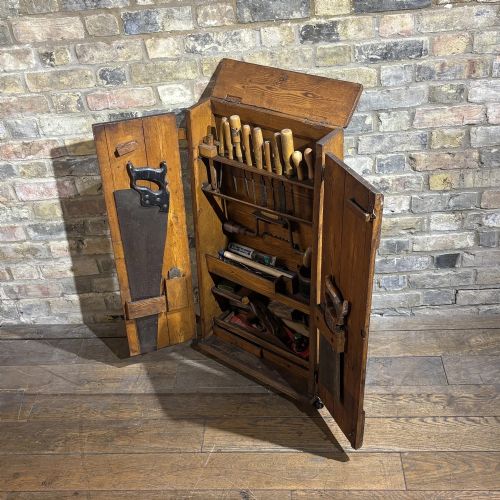
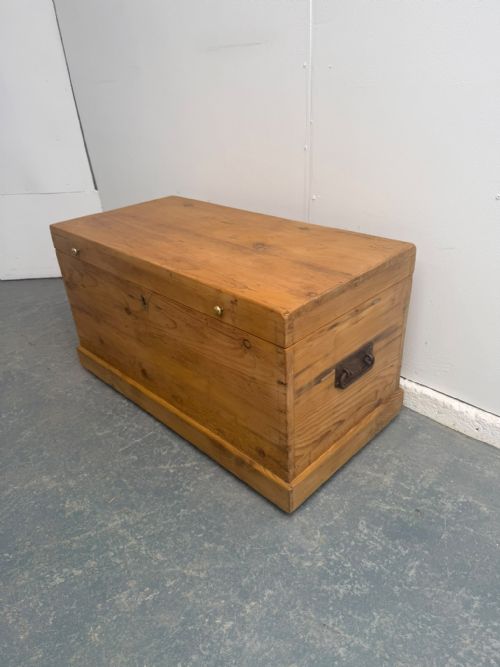
An antique pine tool box satisfies the demand for practical, hard-wearing storage built by tradesmen, carpenters, and maritime workers. These pieces emerge primarily from the Victorian and nineteenth-century periods, spanning simpler rustic farmhouse items to heavily fitted carpenter and shipwright chests.
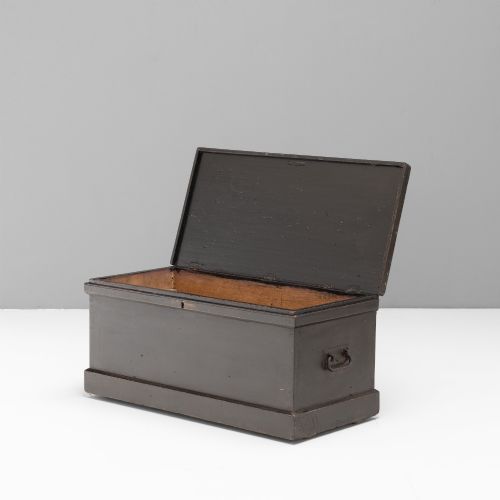
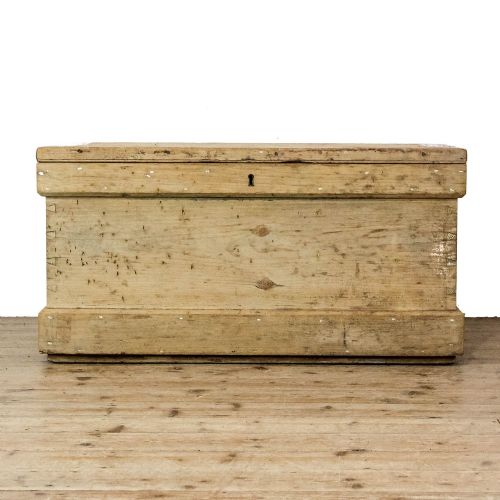
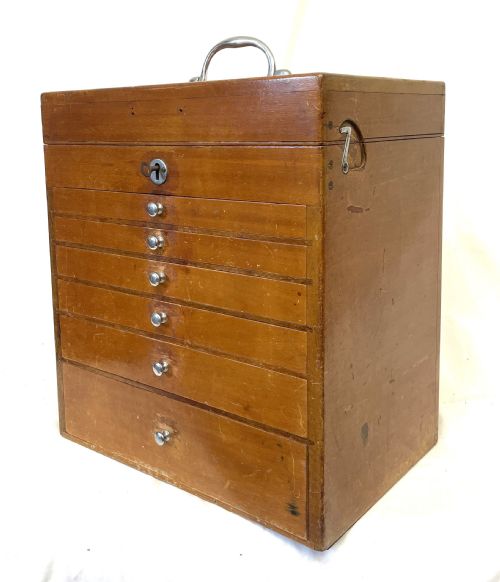
The versions most commonly met on this page include solid pine chests, trunks, and portable cabinets featuring functional iron or brass hardware. Many retain their original surface treatments, ranging from waxed timber and scumble paint finishes to dark patinas earned through hard workshop use.
Beyond standard storage boxes, the selection encompasses specialised forms such as cabinet maker chests with fitted internal tills, seaman trunks, and military or ammunition cases. These functional origins mean each box carries distinct marks of its working past, from rope lifting handles to internal compartment divisions.
Construction and materials
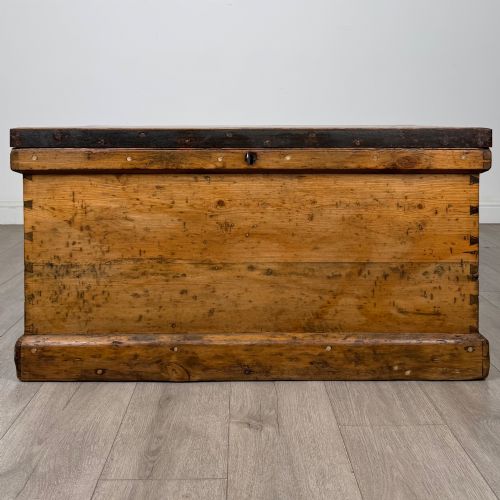
Makers relied primarily on solid pine and pitch pine for the main body of these boxes, valuing the timber for its strength and accessibility. Dovetail joints frequently secure the corners, providing robust structural integrity capable of withstanding heavy tools and frequent transport.
Iron and brass hardware reinforces the chests, appearing as corner brackets, strap hinges, banding, and carrying handles. Rope handles also appear on maritime and travel pieces, offering a practical grip for heavy loads.
Surface finishes applied to the wood include traditional wax, dark stains, and protective layers of paint, such as scumble or maritime schemes. These coatings preserved the soft timber against damp workshop environments and shipboard conditions.
A nineteenth-century seaman painted his chest with the proud declaration Emblem of Liberty.
Evaluating craftsmanship and survival
The standard of joinery sets individual pieces apart, distinguishing utilitarian boxes hastily nailed together from finely dovetailed chests built by master cabinet makers. Internal complexity also marks out superior examples, particularly those retaining original fitted tool trays, multiple small drawers, and working locks with functional keys.
Originality of surface finish heavily influences the character of a box, with untouched painted or waxed skins preferred over stripped or overly restored timber. Evidence of genuine trade use, such as tool stamps, decorative maritime motifs, or calligraphic details, adds distinct historical depth to the better survivors.
Gnome Et Le Rhone Engine Company·W G Pollard
The Antique Pine Tool Box Glossary
- Dovetail joint
- A traditional interlocking woodworking joint formed by wedge-shaped fingers that locks adjacent panels together securely. This construction method provides exceptional resistance to pulling apart under heavy loads.
- Pitch pine
- A dense, resinous variety of pine timber often utilised for maritime and heavy-duty storage pieces. Its high resin content offers natural resistance to moisture and decay.
- Scumble
- A decorative paint technique involving a translucent top glaze manipulated over a lighter base colour to imitate grain. It was frequently applied to nineteenth-century pine furniture and trunks.
- Till
- A small internal compartment or sliding tray fitted inside the upper section of a chest. It keeps smaller instruments, nails, and measuring tools separate from the main cavity.
- Iron banding
- Metal straps affixed around the exterior corners and edges of a trunk to reinforce the structure. This addition protected the timber from splitting during transit and heavy workplace handling.
Antique Pine Tool Box: Frequently Asked Questions
How were these tool boxes originally used?
Tradesmen, carpenters, and shipwrights utilised these robust chests to transport and protect their valuable hand tools between job sites and workshops.
Internal tills and partitioned compartments kept chisels, measuring instruments, and metalwork organised and secure during rough travel.
Can I use an antique pine tool box as a coffee table?
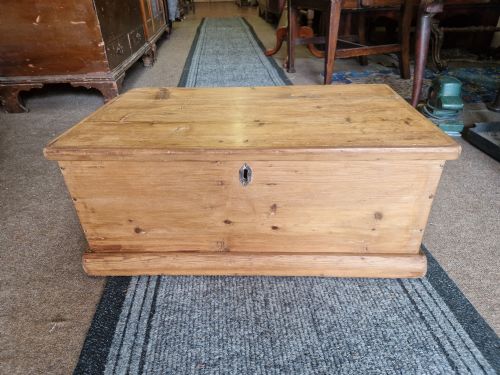
The flat, heavy-duty lids and sturdy rectangular proportions make these chests a natural fit for living room placement.
Their substantial internal volume simultaneously provides convenient concealed storage for blankets, books, and household items.
How do I date a nineteenth-century pine chest?
Examination of the construction techniques, particularly the scale and regularity of the dovetails, offers clear chronological clues.
Hardware styles, lock mechanisms, and the presence of original paint or wax finishes further help narrow down the period of manufacture.
What is pitch pine and how does it differ?
Pitch pine contains a significantly higher natural resin content than standard softwood timber, giving it a denser and heavier feel.
This variety frequently appears on maritime and high-end Victorian trunks due to its superior durability and resistance to moisture.