

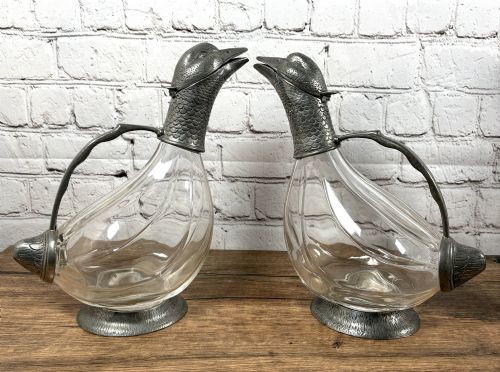


Antique Pewter Decanter
These antique pewter decanter pieces combine metalwork and glass, offering a tangible link to historical drinking vessels that collectors prize for display.
Antique Pewter Decanter
When you search for an antique pewter decanter, you encounter a varied selection of vessels, flagons, and jugs spanning the eighteenth, nineteenth, and early twentieth centuries. The current offerings lean heavily towards British and Continental production, mixing utilitarian metal containers with decorative glassware.
The objects range from Georgian ecclesiastical flagons down to Art Nouveau liqueur sets and jugs from the nineteen hundreds. You will frequently find pieces combining pewter mounts with glass bodies, alongside solid metal flagons from specific regions.
Makers and styles bridge multiple design movements, encompassing Georgian utility, Victorian glassware, and the organic lines of Arts and Crafts and Art Nouveau creation. This mix reflects how serving vessels evolved from functional tavern and church items into artistic tabletop pieces.
How they were made
The fabrication relies on metalworking and glass production, uniting pewter, silvered pewter, and silver plate with clear, green, and enamelled glass. Artisans shaped the metal components through casting and soldering, often incorporating hinged lids on flagons and jugs.
Art Nouveau examples utilise complex metal mounts framing glass inserts, sometimes enhanced with enamel or polychrome decoration. Glass elements are blown or moulded, pairing with handles cast in organic figural shapes such as maidens or mermaids.
Antique Pewter Decanter Retail Price Guide 2026
Typical asking prices for pewter decanter among the pieces listed under this phrase on Sellingantiques today, from the lower quarter to the upper quarter. They describe what is for sale here now, not the wider market.
Materials across the listings include standard pewter, silvered pewter, green glass, clear glass, enamel, and silver plate.
What varies in quality
The standard of an antique pewter decanter depends on the crispness of the metal casting and the integration between the pewter mounts and the glass body. Pieces bearing distinct maker attributions or regional lidded marks typically command greater interest from collectors.
Design complexity also separates standard items from exceptional examples, particularly where renowned metalwork studios or specific designers produced unified glass and pewter table sets.
John Heaney of Dublin·Archibald Knox for Liberty Co·WMF
The Antique Pewter Decanter Glossary
- Flagon
- A large drinking vessel with a handle and usually a lid, often utilised for ecclesiastical or domestic service in the eighteenth century.
- Silvered pewter
- Pewter that has been coated with a thin layer of silver to enhance its brightness and mimic solid silver objects.
- Tudric
- The trade name used by Liberty and Co for pewter wares designed largely during the Arts and Crafts period.
- Enamel
- A decorative glassy substance melted onto the surface of metal or glass vessels for colour and ornamentation.
Antique Pewter Decanter: Frequently Asked Questions
What is an antique pewter decanter used for?
These vessels historically held wine, spirits, or water for table service and household hospitality.
Today, collectors mostly acquire them for display, appreciating the combination of historic metalwork and glassware.
How do I identify Art Nouveau pieces?
Art Nouveau examples display flowing organic lines, often incorporating natural motifs such as maidens, mermaids, or stylized plant forms.
They frequently pair silvered pewter mounts with green or clear glass bodies.
What periods do these vessels cover?
The selection spans from the mid eighteenth century through the Victorian era up to the early twentieth century.
Earlier items tend to be utilitarian flagons, while later examples embrace decorative Arts and Crafts and Art Nouveau aesthetics.
Are glass and metal parts original?
Many pieces combine blown or moulded glass inserts with fitted metal frames and mounts created by the same workshop.
Checking the fit between the pewter collars and the glass body helps confirm how the vessel was constructed.