

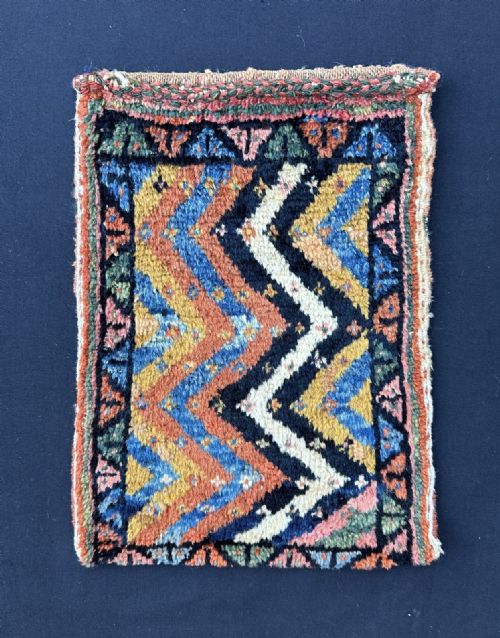
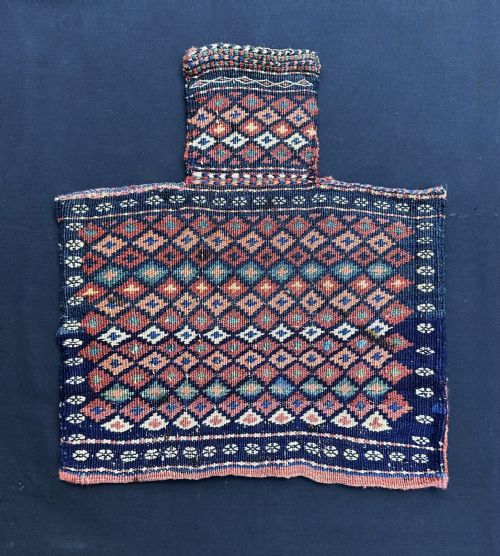

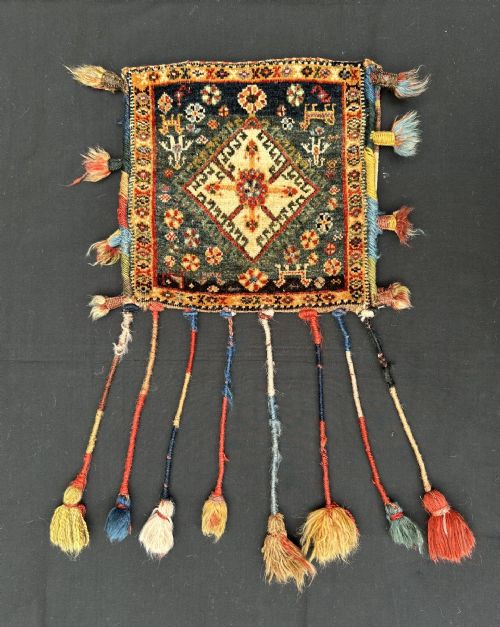

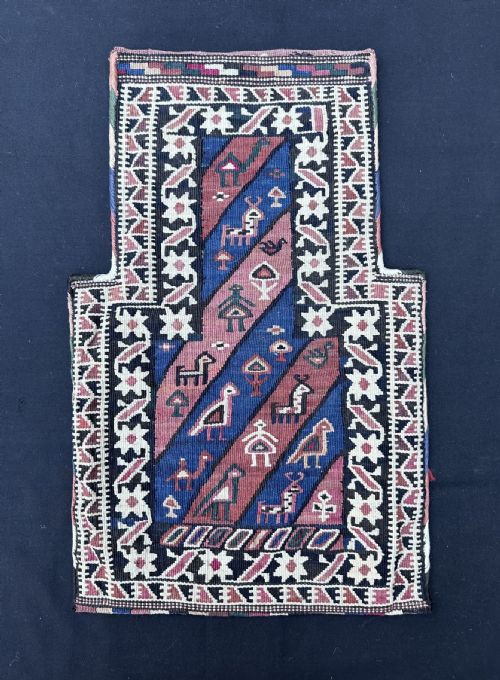



Antique Persian Rug Bag
An antique persian rug bag brings nomadic textile art into a modern interior, offering portable domestic storage woven by tribal groups.
Antique Persian Rug Bag
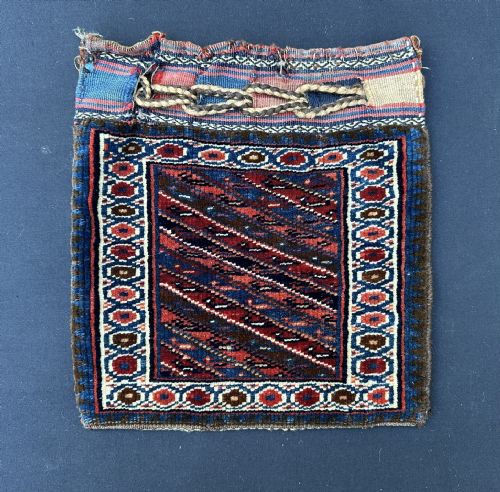
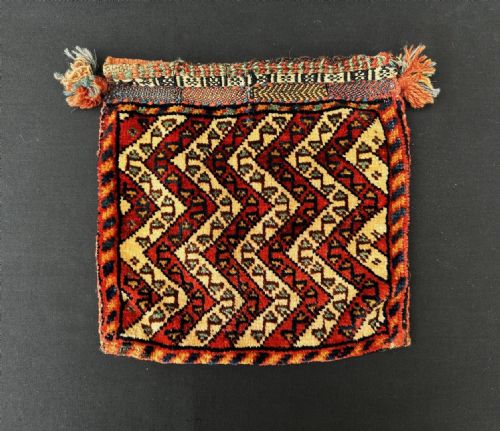
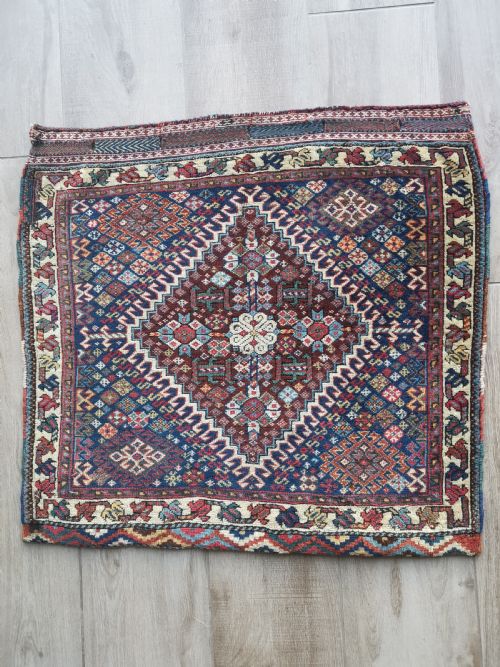
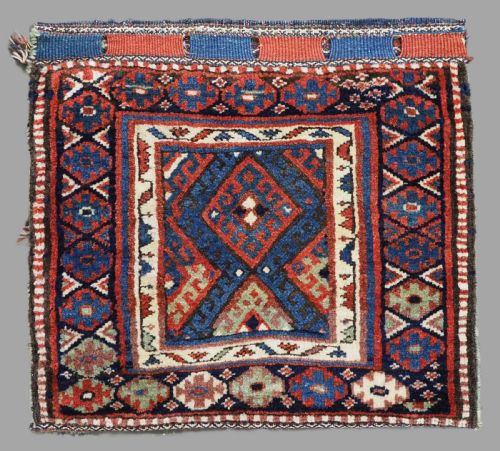
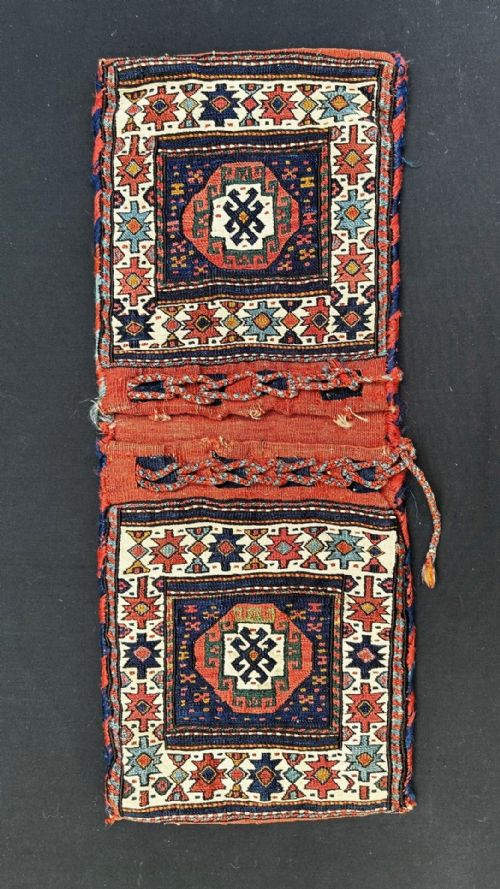
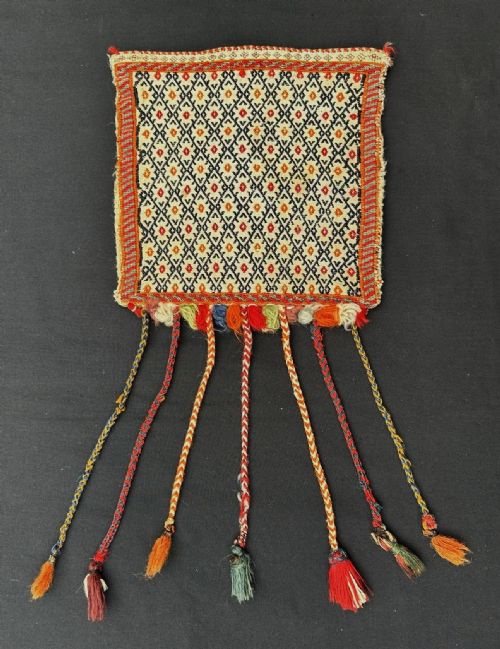
An antique persian rug bag originates from nomadic and village tribes across Persia, including the Qashqai, Afshar, Shahsavan, and Baluch confederacies. These pieces served practical functions for transport and storage, functioning as salt bags, vanity bags, saddle bags, and grain pouches.
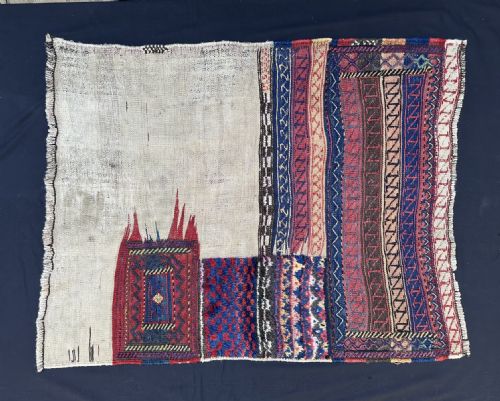
The format typically appears as a single bag face or a complete double-sided khorjin, often retaining flatweave backs or suspension loops. Surviving examples date predominantly from the nineteenth and early twentieth centuries, reflecting the traditional weaving practices of specific tribal regions.
Makers produced these textiles for personal domestic use rather than commercial export, resulting in authentic tribal designs and localized colour palettes. Collectors encounter varied forms such as chantehs, tachehs, and specialised pouches designed for specific household or transport duties.
Materials and methods
Weavers utilised hand-spun wool and cotton foundations, frequently incorporating goat hair for added durability along high-wear edges and structural seams. Natural dyes provide the underlying palette, yielding deep tones that age gracefully with exposure to light and handling.
Construction techniques combine symmetrical and asymmetrical knotting with flatweave soumak work, tapestry weaving, and plain weave sections. Artisans occasionally embellished utilitarian pouches with functional additions such as cowrie shells to complete the textile.
Antique Persian Rug Bag Retail Price Guide 2026
Typical asking prices for persian rug bag among the pieces listed under this phrase on Sellingantiques today, from the lower quarter to the upper quarter. They describe what is for sale here now, not the wider market.
Certain nomadic utility bags incorporate real cowrie shells, added historically to ward off the evil eye during desert travels.
Factors of distinction
Quality rests upon the fineness of the weave, the clarity of the tribal iconography, and the integrity of the natural dyes. Tighter knotting and precise geometric or medallion layout distinguish superior weaving from coarser utilitarian output.
The retention of original complete backs, closure mechanisms, and selvedges elevates a piece, as many surviving items survive only as isolated bag faces. Provenance to specific sub-tribes within major confederacies further defines the distinction between standard village work and master tribal production.
The Antique Persian Rug Bag Glossary
- Khorjin
- A traditional double saddle bag designed for transport on pack animals, often separated over time into individual bag faces.
- Chanteh
- A small nomadic vanity bag or personal pouch used for carrying small personal effects, typically featuring intricate pile or flatweave decoration.
- Soumak
- A supplementary weft-wrapping technique that produces a durable, textured surface resembling embroidery on the face of the textile.
- Tacheh
- A large square storage bag or cover woven by nomadic groups in western regions for household provisions and bedding.
- Balisht
- A pillow or bolster bag face woven for domestic comfort inside nomadic tents and dwellings.
Antique Persian Rug Bag: Frequently Asked Questions
What is a persian rug bag used for?
Nomadic groups utilised these portable containers for storing salt, grain, vanity items, and household possessions during seasonal migrations. They functioned as functional transport gear across pack animals as well as domestic storage within tents.
Today, these textiles transition easily into modern homes as decorative wall hangings, small floor mats, or stuffed floor cushions. Their compact dimensions allow them to fit into spaces where full-sized carpets are impractical.
How do you tell tribal groups apart?
Tribal attribution relies on distinctive structural traits, wool characteristics, and specific geometric or pictorial design repertoires. For instance, Afshar pieces often display boteh motifs and rich dark blues, while Shahsavan items frequently feature crisp soumak weave structures.
Geographic origins further clarify the maker, linking specific river valleys and mountain ranges to distinct colour combinations and knotting densities. Reference literature helps connect minor motifs to particular confederacies like the Qashqai or Baluch.
Are bag faces sold complete?
Many surviving examples on the market consist solely of the decorative front panel, known as a bag face. This occurred because heavy use wore out the plain weave backs, or owners separated paired saddle bags for independent display.
Complete pieces featuring original flatweave backs and closure systems remain available, offering a glimpse into the full construction of nomadic containers. Both formats hold distinct places in textile collections depending on preservation.
How do you care for a tribal bag?
Maintenance requires gentle handling, regular light vacuuming without a rotating power brush, and protection from direct, harsh sunlight. Keeping the natural wool fibres clean prevents dust accumulation within the foundation.
Professional textile conservators should handle any deep cleaning or structural stabilization to protect natural dye integrity and hand-spun materials. Proper placement away from high-traffic floor areas ensures long-term preservation.