

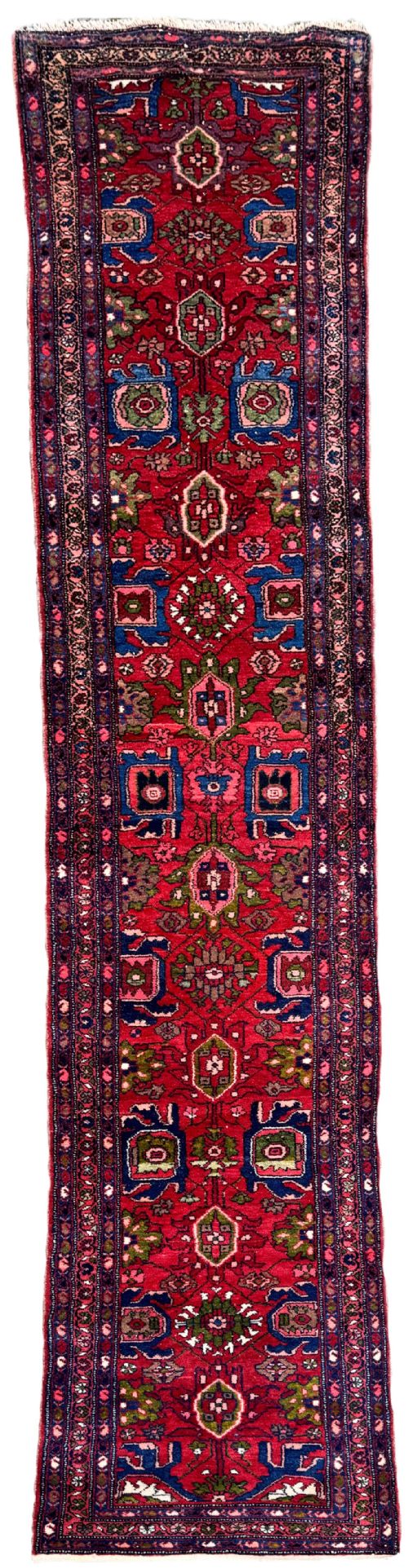
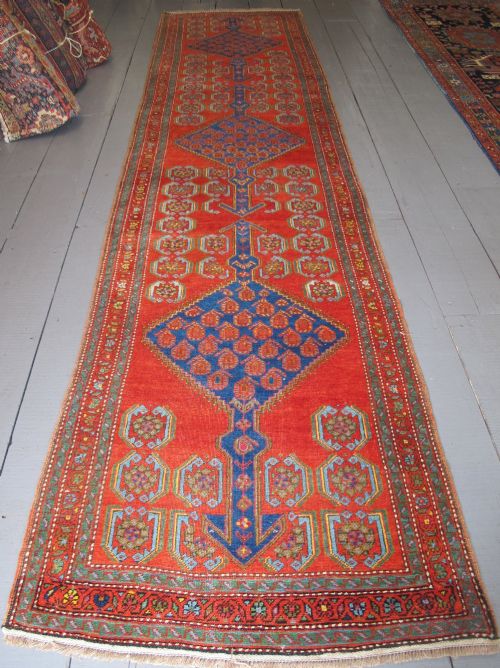


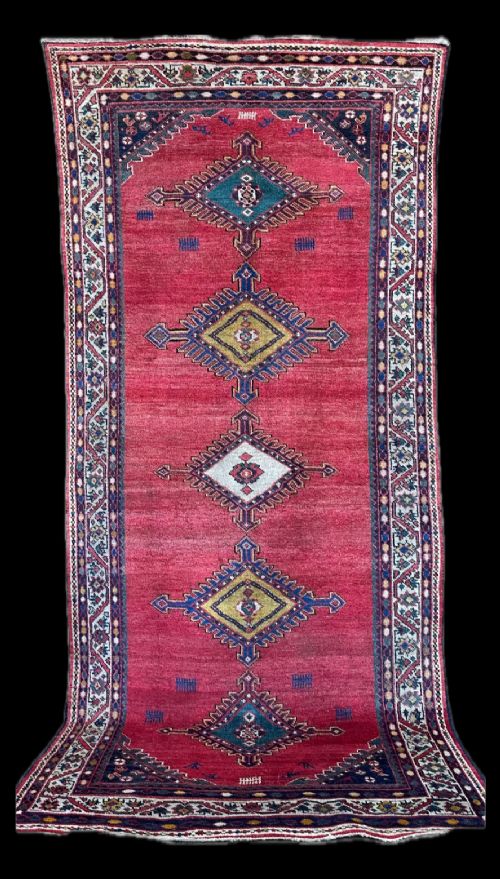


Antique Persia Hallway Carpet
An antique persia hallway carpet brings enduring floorcraft into domestic passages through time-tested village and tribal designs.
Antique Persia Hallway Carpet
These floor coverings emerge from diverse tribal and regional traditions including Feraghan, Bakhtiari, Kelardasht, Senneh, and Sarab. The designs range from geometric repeat patterns and medallion layouts to pictorial elements like birds perched on trees or tribal figures woven by village weavers.
Materials and construction methods
The physical structure relies fundamentally on wool piles knotted onto cotton or wool foundation warps and wefts. This combination provides the necessary density and tensile strength required to withstand centuries of foot traffic in busy hallways.
Weavers utilised natural dye sources to achieve deep saturations of colour within intricate borders and field motifs such as the boteh or harshang crab pattern. The knotting technique and tension vary according to whether the piece originated from a sedentary village workshop or a nomadic tribal camp.
Listings feature pieces utilising wool and cotton, spanning production dates from the eighteen-sixties through the nineteen-twenties across multiple Persian regions.
Assessing quality in regional runners
The upper tier of these hallway textiles displays exceptional crispness in drawing, particularly in complex geometric or medallion outlines where knot density supports fine detail. Handle and suppleness of the foundation also separate superior pieces, reflecting the quality of the wool and the precision of the beating of the weft during production.
Condition and integrity of the original side cords and end finishes heavily influence the standing of an individual carpet. Pieces retaining their full original narrow proportions without excessive side-cord reweaving demonstrate greater preservation of their historical fabric.
Waring and Gillow
The Antique Persia Hallway Carpet Glossary
- Boteh
- A stylised almond or pear-shaped motif representing a floral spray or cypress tree. This ancient symbol appears frequently in Persian runner fields.
- Kelleh
- A specific rectangular rug format that is longer than a standard room rug but wider than a traditional narrow corridor runner.
- Harshang
- A recurring geometric crab pattern often found in the border systems of Northwest Persian carpets. It provides a structured frame for the central field.
- Kilim
- A flat-woven carpet or runner produced without a knotted pile. These pieces rely on interlocking weft threads to create geometric patterns.
- Warps
- The longitudinal threads stretched vertically on the loom before knotting begins. The foundation yarns support the entire structural weight of the pile.
Antique Persia Hallway Carpet: Frequently Asked Questions
How are antique hallway carpets constructed?
These runners typically feature a dense wool pile hand-knotted onto a sturdy cotton or wool foundation. The warp and weft threads work together to create a durable textile designed for heavy corridor use.
Natural dye methods fix the rich colour palettes into the fibres, ensuring the geometric and floral motifs maintain their structural integrity over generations of domestic wear.
Where were these tribal runners made?
Production centres span various distinct regions of Persia, including the Northwest provinces, Hamadan, Kurdistan, and the Chahar Mahal valley. Each area developed unique tribal iconography and weaving signatures.
Village weavers and nomadic groups adapted these traditional patterns to suit the narrow architectural proportions demanded by long hallways and corridors.
How do I identify different regional styles?
Distinguishing between styles involves examining specific border patterns, such as the harshang crab motif, alongside primary field geometry like repeated medallions or boteh sprays. Northwest Persian pieces often show bolder architectural framing.
Kurdish and Hamadan runners frequently display denser, more spontaneous tribal village filler motifs, including small animal or human figures integrated among the central field designs.
How do I care for an old runner?
Protecting a vintage corridor carpet requires placing a quality underlay beneath it to prevent slipping and reduce friction against hard floors. Regular gentle vacuuming without a rotating power head keeps grit from settling into the wool pile.
Professional specialist cleaning is recommended for washing, while keeping the textile out of direct, harsh sunlight prevents premature fading of the natural dye colours.