







Antique Pedestal Worktable
An antique pedestal worktable is a versatile piece of nineteenth-century furniture designed for sewing and needlework that brings elegance to any room.
Antique Pedestal Worktable
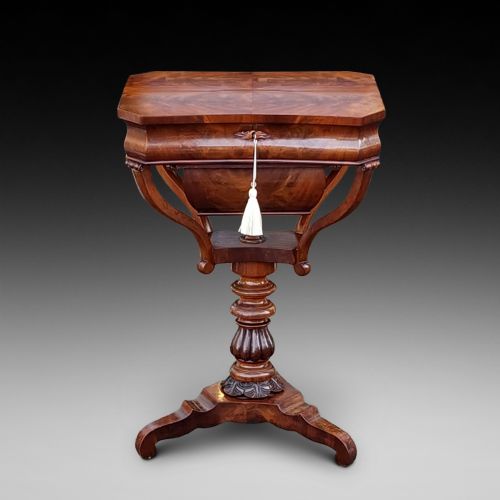
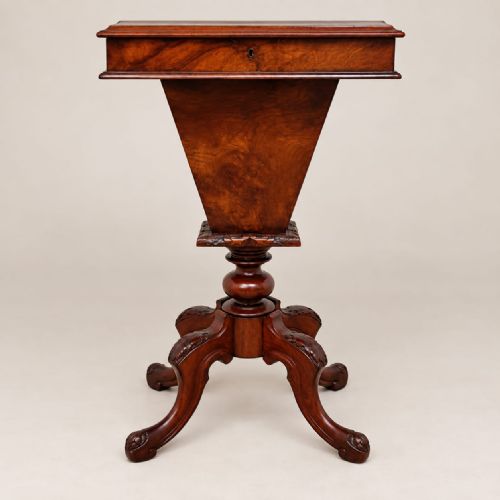
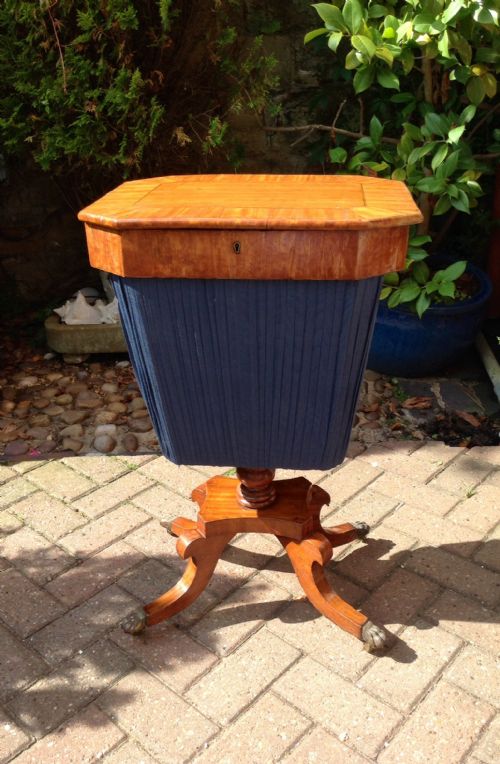
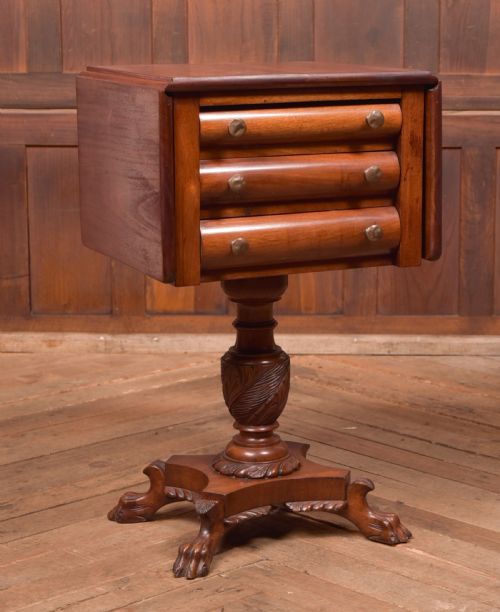
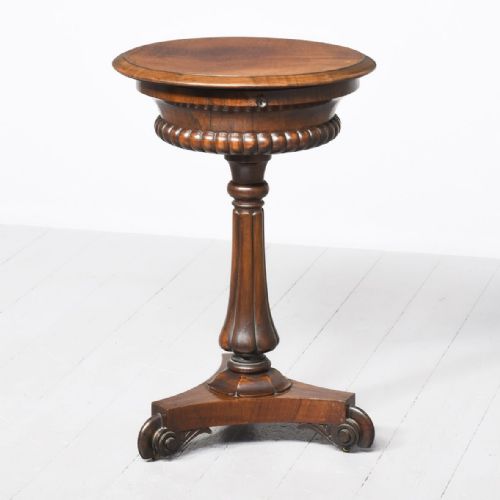
When you search for an antique pedestal worktable, you encounter nineteenth-century items built for sewing, games, and occasional use. These pieces typically feature a central pillar standing on a platform or footed base, supporting a top fitted with internal compartments.
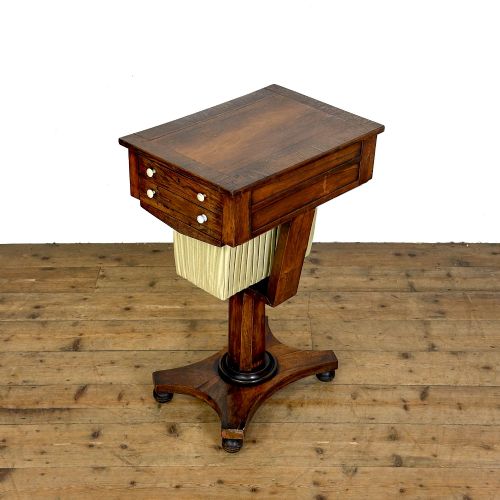
The versions most commonly met on this page belong to the Regency, William IV, and Victorian periods. They take various forms, including sewing tables, games tables, work tables, lampstands, and writing or occasional tables.
Originating as functional items for ladies to store needlework and crafts, these tables now serve flexibly in modern interiors as small side tables or lampstands. Their combination of enclosed storage and decorative woodwork makes them enduringly popular.
How they were made
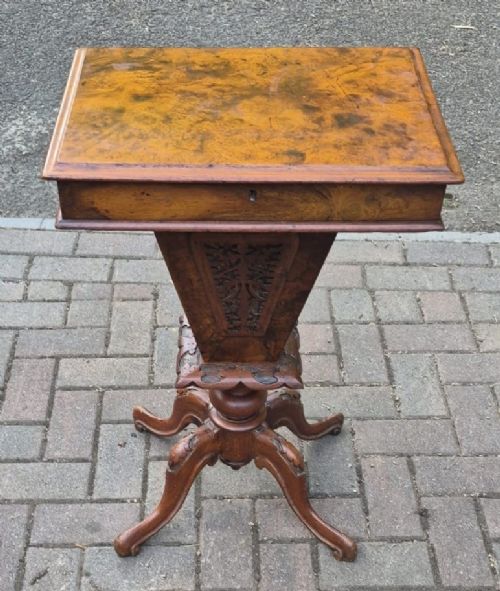
Cabinet makers utilised choice timbers such as mahogany, rosewood, walnut, burr walnut, and satinwood to construct these pieces. Many examples incorporate intricate wood inlay or marquetry decoration across the tops and surfaces.
Structural elements frequently feature turned or carved pedestals mounted on solid wooden bases, occasionally accented with brass fittings. Interiors often contain fabric-lined compartments or fitted workboxes designed to hold sewing implements.
Antique Pedestal Worktable Retail Price Guide 2026
Typical asking prices for pedestal worktable among the pieces listed under this phrase on Sellingantiques today, from the lower quarter to the upper quarter. They describe what is for sale here now, not the wider market.
Materials recorded across the inventory include mahogany, rosewood, walnut, burr walnut, satinwood, brass, fabric, and wood inlay.
What varies in quality
The distinction between standard examples and the finest pieces lies in the choice of timber figure and the execution of decorative details. Dense mahogany, rich burr walnut, and figured rosewood indicate superior material selection by the original maker.
Carving precision and the complexity of wood inlay or marquetry further separate ordinary items from exceptional ones. The sophistication of the internal compartments and the condition of the pedestal base also contribute significantly to the overall merit of a piece.
The Antique Pedestal Worktable Glossary
- Pedestal worktable
- A freestanding table supported by a central pillar and base, containing compartments for sewing materials. These tables date predominantly from the nineteenth century.
- Marquetry
- Decorative woodwork where pieces of veneer are fitted together to form pictorial patterns on furniture surfaces. This technique appears on late nineteenth-century examples.
- Regency
- An English stylistic period spanning the early nineteenth century, known for classical restraint and refined proportions. Pieces from this era often utilise mahogany or rosewood.
- William IV
- A transitional style period falling between the Regency and Victorian eras, characterised by robust proportions and bold carved details. Furniture from this time frequently employs dark hardwoods.
- Burr walnut
- Timber taken from the gnarled growth of a walnut tree, yielding highly figured and swirling grain patterns. It was favoured by Victorian cabinet makers for luxury pieces.
Antique Pedestal Worktable: Frequently Asked Questions
How were these tables used originally?
Originally, these tables were utilised by ladies of the household to store threads, needles, and fabric for sewing and crafting tasks.
Many examples included integrated fabric bags or internal trays to organise these materials while serving as decorative occasional furniture in drawing rooms.
How do I tell Regency from Victorian pieces?
Regency tables generally display cleaner classical lines and restrained proportions typical of the early nineteenth century. Mahogany and rosewood are frequent timber choices for this era.
Victorian and William IV pieces often feature heavier proportions, bolder carved pedestals, and sometimes elaborate burr walnut veneers or marquetry decoration.
Can I use an antique worktable today?
These tables adapt easily to modern homes as lampstands, side tables, or small writing desks in living spaces and hallways. Their enclosed compartments remain practical for storing small household items.
Placing them away from direct heat sources helps protect the polished wood surfaces and delicate veneers from drying out.