



Antique Parquetry Stand
An antique parquetry stand brings geometric woodwork and refined display surfaces into a room, offering both decorative presence and practical utility.
Antique Parquetry Stand
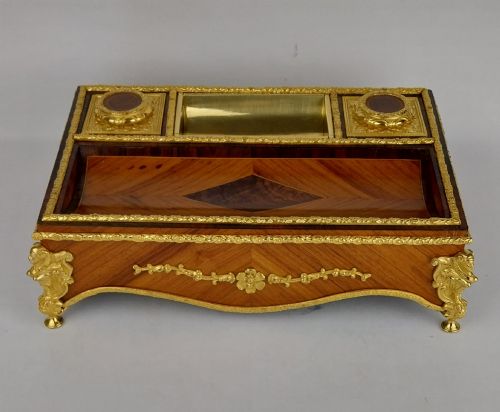
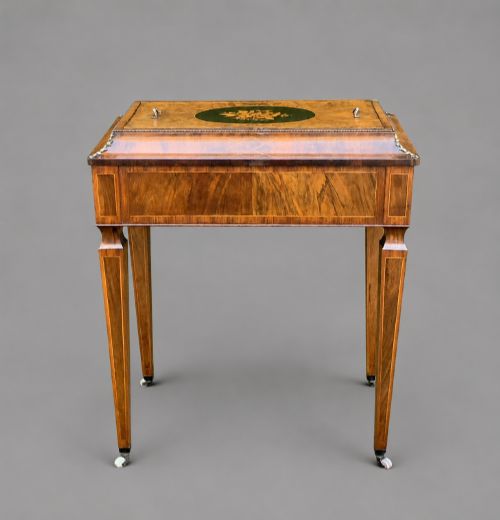
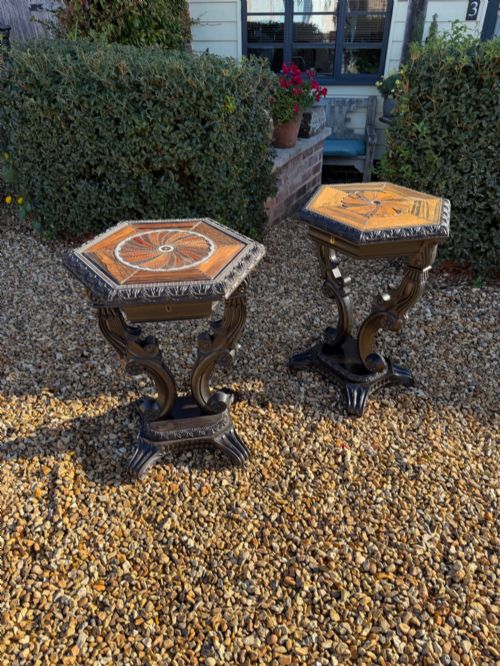
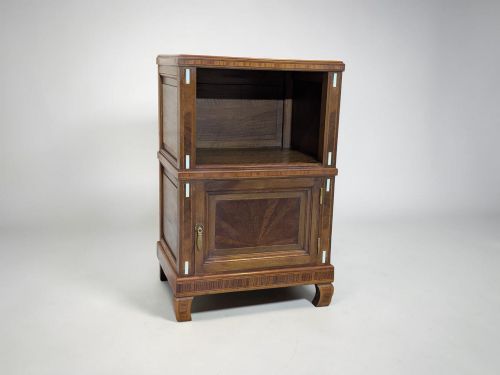
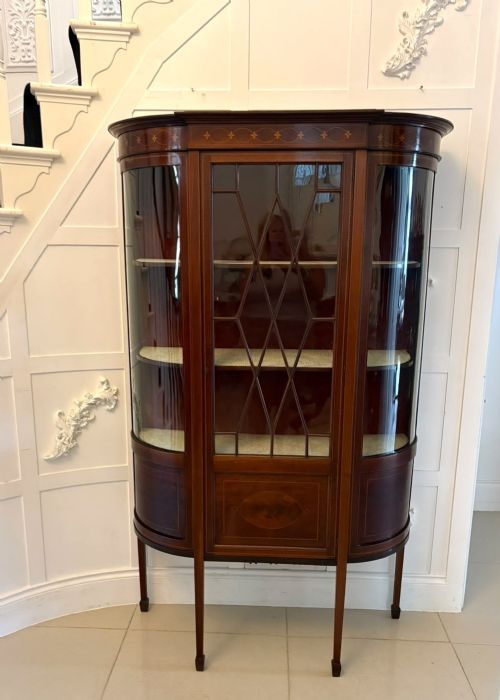
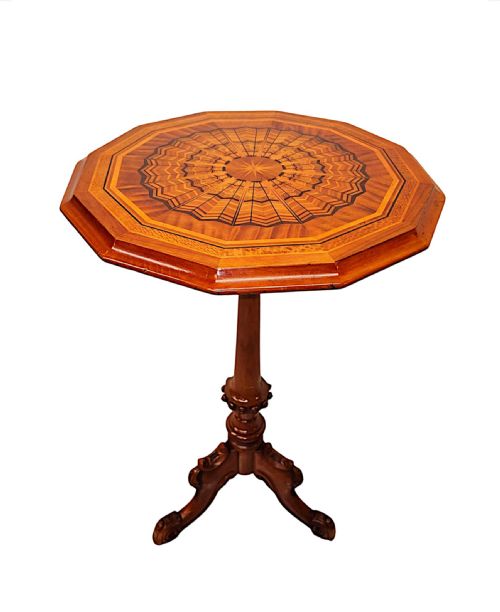
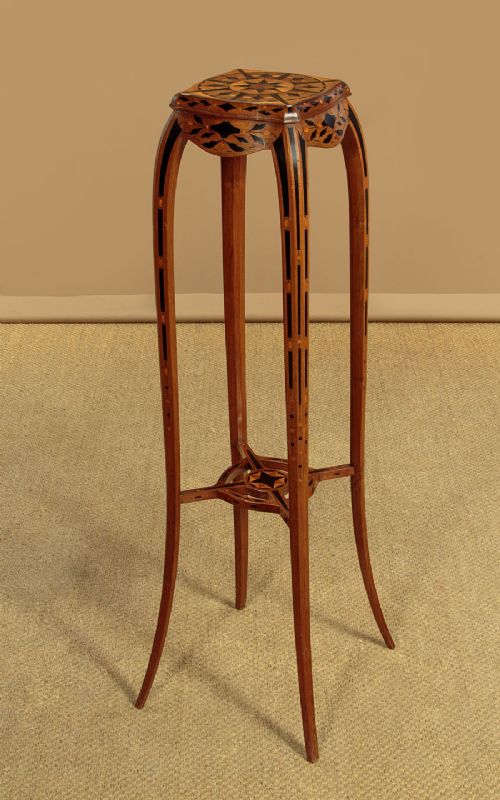
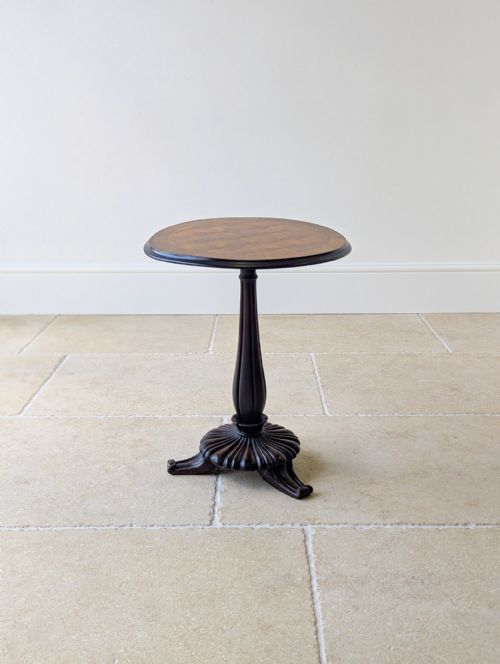
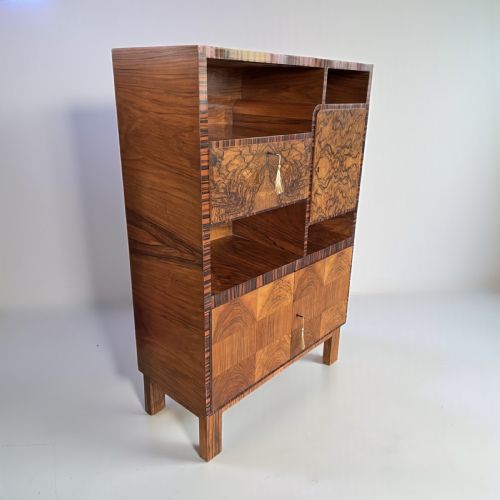
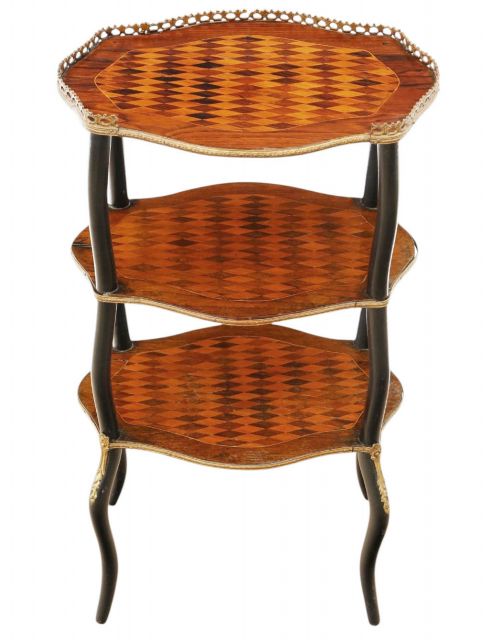
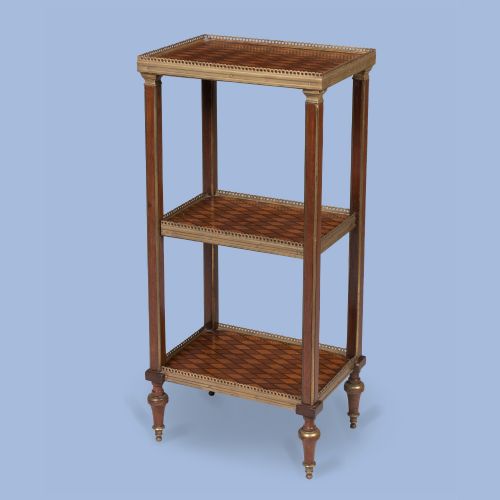
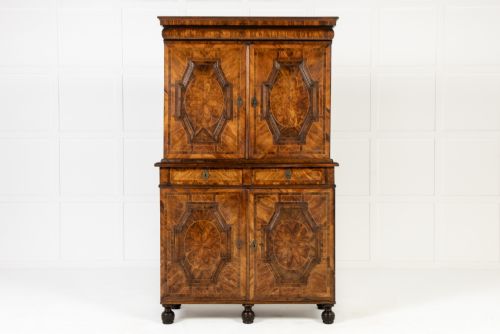
An antique parquetry stand serves as a small table, side support, or display piece featuring patterned wood veneers arranged in geometric motifs. These furnishings appear across various forms, including occasional tables, etageres, cabinets on stand, and plant holders.
The pieces originating from this selection span several centuries and styles, ranging from 17th-century craftsmanship to Edwardian and later 20th-century revivals. French influence runs strong through Louis XV and Louis XVI revivals, alongside Victorian and Edwardian British examples.
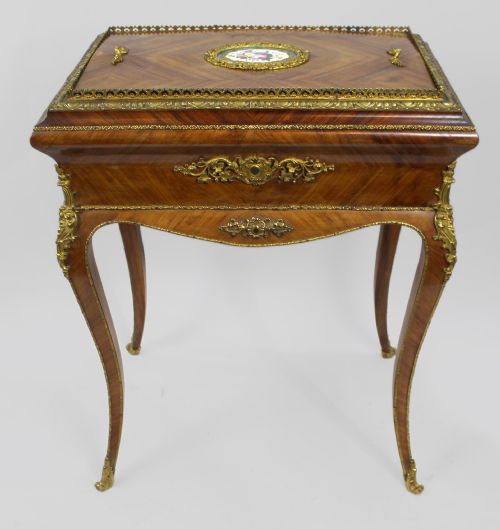
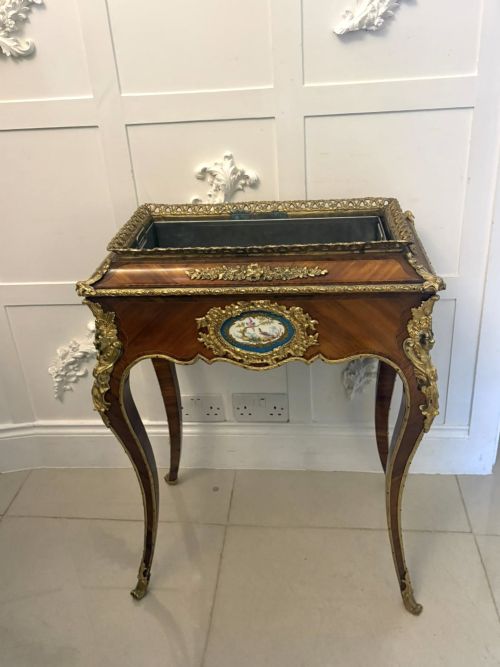
Buyers encounter frequent variations in timber, with kingwood, walnut, mahogany, and satinwood dominating the available selection. Many incorporate brass mounts, ormolu, porcelain plaques, or marble tops to elevate their visual weight.
How they were made
Cabinetmakers constructed these stands by applying thin veneers of contrasting hardwoods onto solid carcase woods like oak or mahogany. Small geometric wood segments were meticulously cut and fitted together by hand to create the characteristic parquetry patterns on tabletops and shelves.
Metal components such as brass gallery rails and cast ormolu mounts were secured to edges and corners to provide structural definition and decorative contrast. Many pieces also integrate polished marble inserts or hand-painted porcelain plaques into the wooden framework.
Antique Parquetry Stand Retail Price Guide 2026
Typical asking prices for parquetry stand among the pieces listed under this phrase on Sellingantiques today, from the lower quarter to the upper quarter. They describe what is for sale here now, not the wider market.
Some stands feature secret drawers cunningly concealed beneath their parquetry tops for safekeeping of small treasures.
What varies in quality
The precision of the veneer work dictates the standing of an individual piece, where tighter joints and well-chosen grain directions separate standard examples from finer items. The complexity of the underlying timber selection, such as figured kingwood or specimen woods, also alters the character of the parquetry.
Hardware execution plays a major role, with chased ormolu mounts and heavy cast brass fittings indicating superior workshop production compared to simpler stamped metal elements. The integration of secondary materials like inset marble and porcelain plaques points toward higher-tier manufacturing.
Gillows·Anton Seuffer·Donald Ross·Liberty's of London·Zweiner·François Linke
The Antique Parquetry Stand Glossary
- Parquetry
- Woodwork formed by geometric patterns of wood veneer applied to a backing. It creates interlocking designs such as cubes, lozenges, and herringbones across tabletops and cabinet doors.
- Etagere
- A set of open display shelves supported by columns or slender legs. It provides multiple tiers for holding small decorative objects.
- Ormolu
- Gilt bronze ornamentation mounted onto furniture. It adds metallic lustre and decorative relief to corners, legs, and aprons.
- Jardiniere
- A decorative stand or container designed to hold plants or flowers. Examples often incorporate waterproof liners and galleried tops.
- Torchere
- A tall, slender stand meant to support a lamp or candle. It occupies minimal floor space while elevating a light source.
Antique Parquetry Stand: Frequently Asked Questions
What is an antique parquetry stand used for?
These stands serve multiple domestic purposes, traditionally holding lamps, decorative porcelain, small clocks, or indoor plants.
Their compact size allows them to sit easily beside seating or in corners where larger furniture does not fit.
How do I identify Louis XVI style features?
Louis XVI style pieces display a turn towards neoclassical straight lines, symmetrical geometry, and restrained ornamentation.
Look for fluted legs, rectangular silhouettes, and formal parquetry arrangements rather than flowing curves.
What woods are used in parquetry stands?
Cabinetmakers utilised dense and highly figured exotic and native timbers to create visual contrast in the geometric patterns.
Commonly seen woods include kingwood, walnut, mahogany, rosewood, and satinwood, often paired with ebonised elements.
Where were these stands made?
The surviving pieces originate primarily from British and French workshops working through the nineteenth and early twentieth centuries.
French makers frequently incorporated ormolu mounts and porcelain plaques, while British makers favoured walnut and mahogany.