




Antique Parquetry Console
An antique parquetry console brings geometric timber work and gilt mounts into a room, offering both a surface and a statement.
Antique Parquetry Console
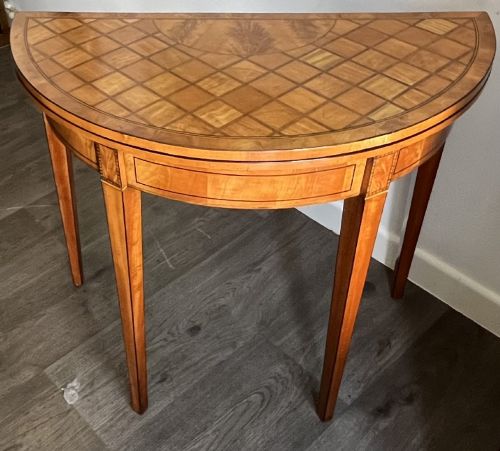
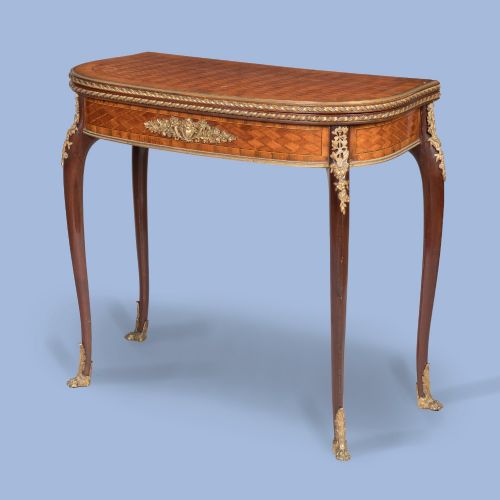
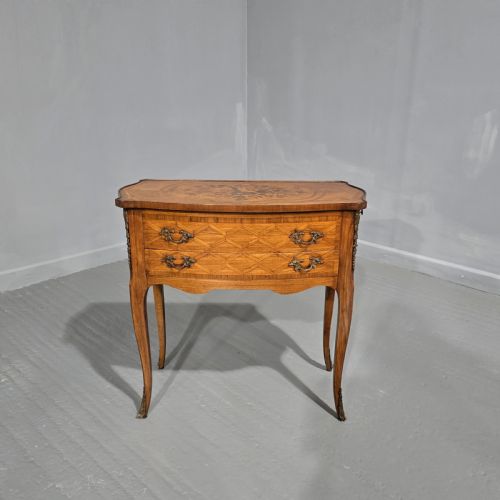
An antique parquetry console is typically a side, games or card table built with a patterned timber surface, often drawing on French revival designs. The forms on this page span from eighteenth-century Italian pairs to nineteenth-century card tables and twentieth-century writing desks.
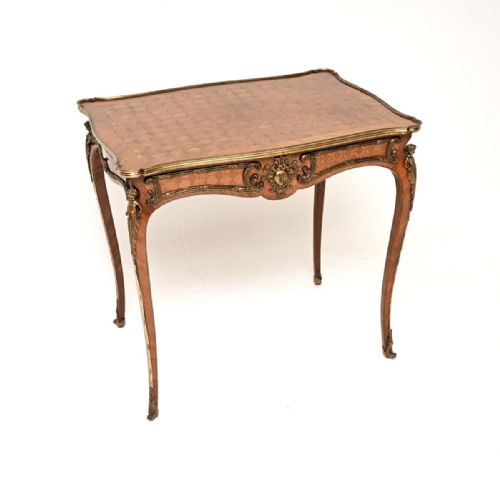
Most examples lean towards Louis XV and Louis XVI styles, where curved or straight frames meet intricate wood veneers arranged in geometric cubes or diagonal bands. Side tables and console tables dominate the selection, frequently paired with folding tops for dual use as card or games tables.
Origins stretch across the eighteenth, nineteenth and twentieth centuries, with Victorian interpretations sitting alongside continental European workshops. Walnut, kingwood and satinwood provide the ground for these patterned tops, supported by slender cabriole or tapered legs.
How they were made
Cabinetmakers constructed these pieces using fine timber veneers laid onto carcase woods like mahogany or walnut, cutting small geometric tiles of kingwood, tulipwood and satinwood by hand. These individual pieces of wood were arranged precisely to create three-dimensional cube patterns or diagonal layouts.
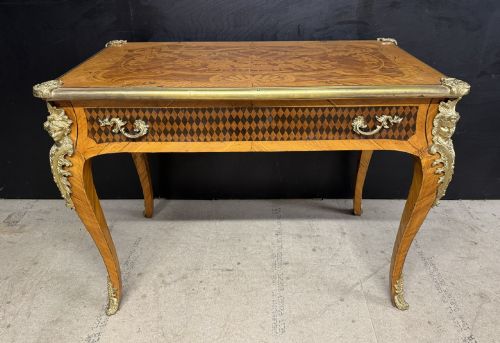
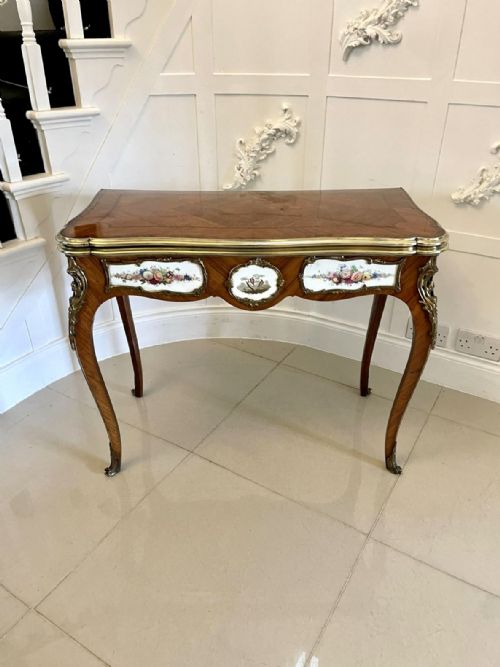
Ormolu and gilt bronze mounts were cast and chased to protect corners and frame aprons, fixed with small brass screws. Brass edging and porcelain plaques occasionally integrated into the design, complementing the polished timber surfaces.
Listings span the eighteenth century to the twentieth century, with nineteenth-century Louis XVI revival styles representing a significant portion of the available parquetry console tables.
What varies in quality
The precision of the veneer work defines the upper tier of these tables, where individual timber blocks align without visible gaps or thick glue lines. Lesser pieces show coarser cutting where the grain direction ignores the geometry of the pattern.
Mount quality separates standard production from exceptional workshops, visible in the crispness of chased ormolu and the weight of the cast bronze. Finer tables maintain synchronized folding mechanisms and balanced proportions that hold the eye from any angle.
G T Morant·François Linke·Maison Mottheau·Joseph-Emmanuel Zwiener·Donald Ross
The Antique Parquetry Console Glossary
- Parquetry
- A geometric mosaic of wood veneers used to cover floors or furniture surfaces. Triangles, squares and lozenges create repeating patterns across the top of a table.
- Ormolu
- Gilded bronze used for decorative mounts on furniture. It provides a bright metallic contrast to dark timber veneers.
- Bureau plat
- A flat-topped writing desk, often freestanding with drawers beneath the writing surface. Many examples incorporate parquetry tops and gilt bronze mounts.
- Kingwood
- A dense, richly figured Brazilian timber with dark violet-brown tones. It appears frequently in eighteenth and nineteenth-century veneered furniture.
- Demi-lune
- Half-moon shape, applied to tables designed to stand flat against a wall. This profile is common among French games and console tables.
Antique Parquetry Console: Frequently Asked Questions
How do I use a console table?
Console tables sit against walls in hallways or living rooms, holding lamps, mirrors or decorative objects without taking up much floor space. Many versions on this page double as card or games tables with folding tops.
When opened, they provide a baize-lined surface for cards or writing, returning to a slim profile when closed.
Are these tables French or English?
The selection includes both, though French eighteenth-century designs and nineteenth-century French revivals strongly influence the aesthetic. Makers in London and across Britain also produced similar parquetry furniture using imported timbers.
Stylistic cues like Louis XVI tapered legs or Louis XV curves point to continental inspiration, while walnut and mahogany choices often reflect British tradition.
How do I care for parquetry surfaces?
Keep these tables out of direct sunlight and away from radiators to prevent the delicate wood veneers from shrinking or cracking. Dust regularly with a soft, dry cloth and avoid silicone polishes that build up over time.
Applying a traditional beeswax occasionally helps nourish the kingwood, walnut or satinwood without harming the finish.
What is the difference between a console and a side table?
Console tables traditionally stood against a wall, sometimes supported by brackets or legs at the front only, though many surviving examples have four legs. Side tables are freestanding pieces finished on all sides to sit anywhere in a room.
Both forms appear frequently with parquetry tops and ormolu mounts across the nineteenth-century listings.