

Antique Parlor Bookcase
An antique parlor bookcase brings warmth to a reception room, offering refined shelving and glazed doors to display cherished volumes and porcelain.
Antique Parlor Bookcase
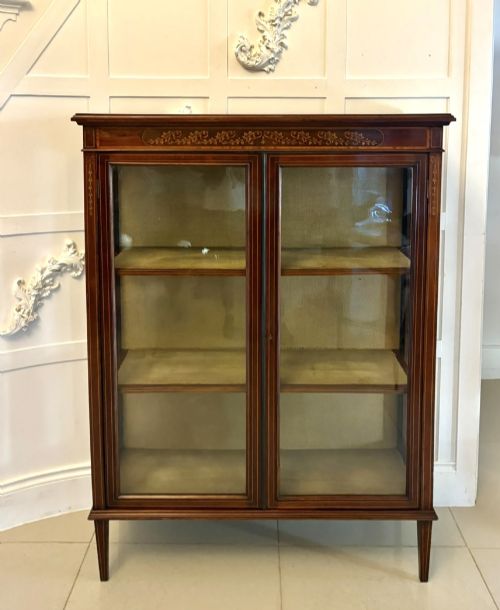
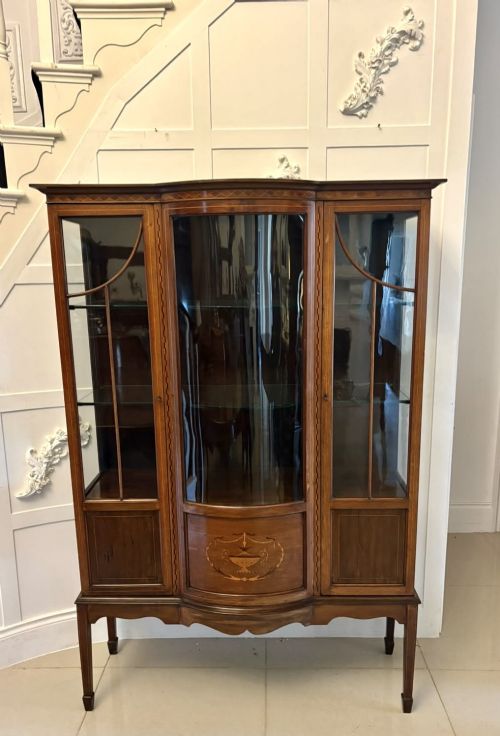
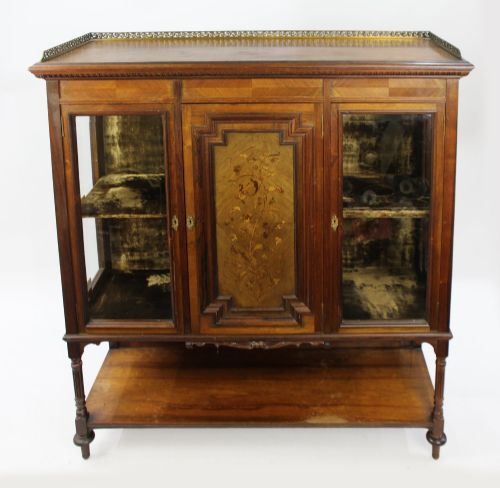
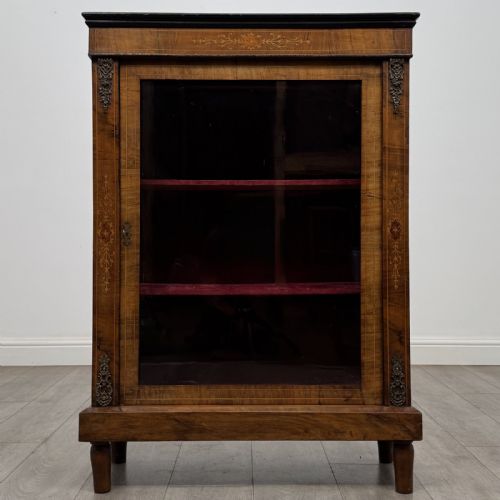
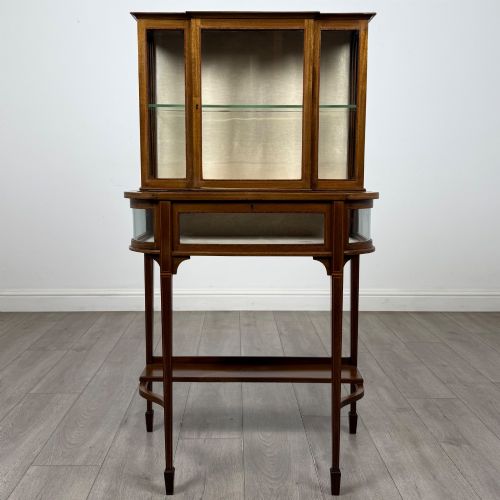
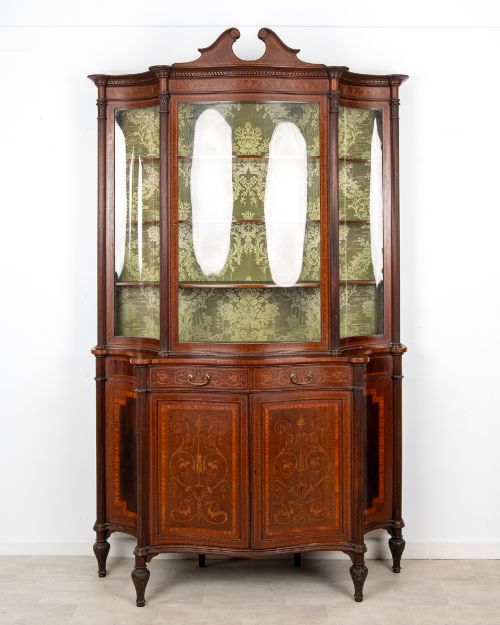
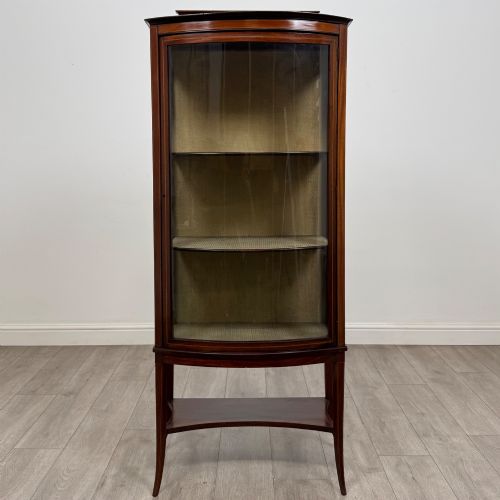
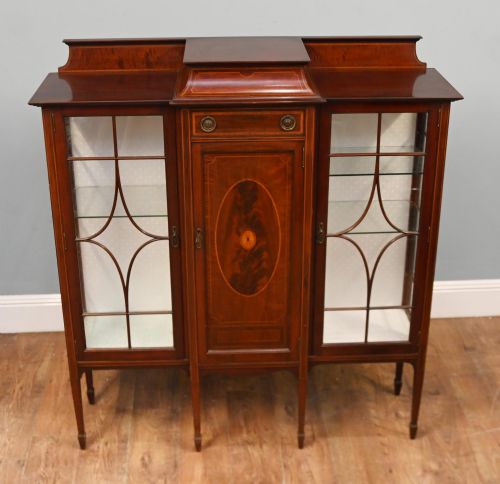
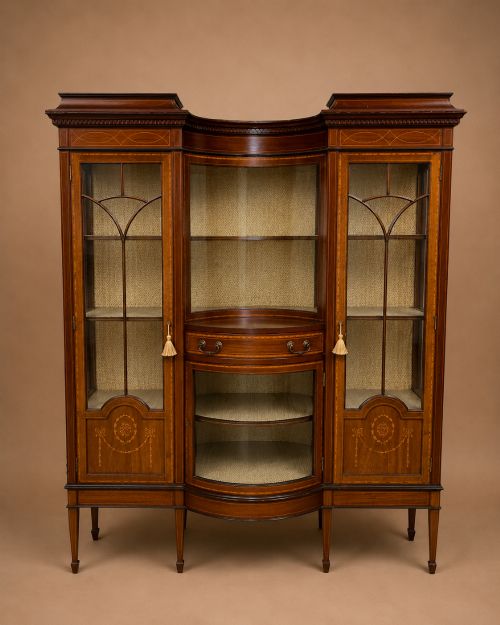
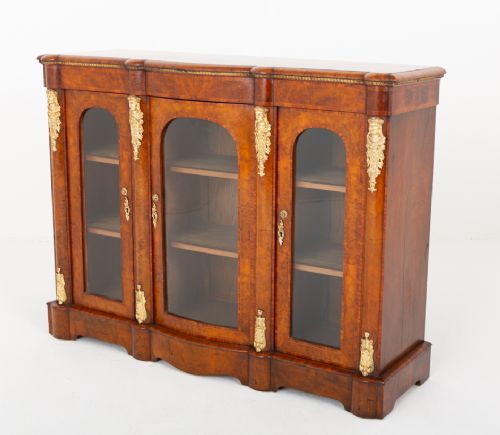
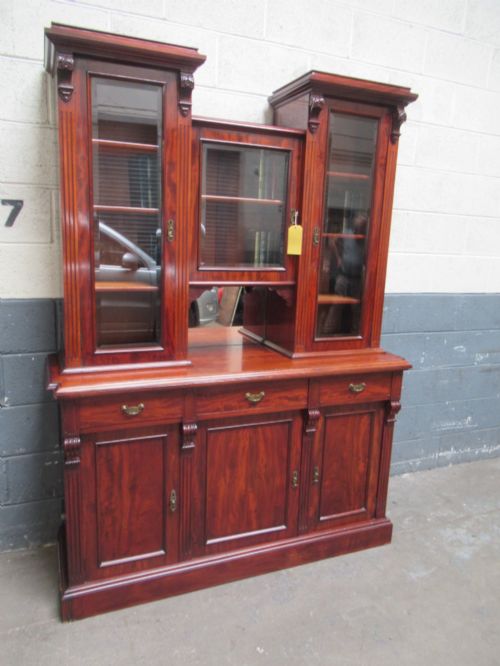
When searching for an antique parlor bookcase, buyers encounter a diverse selection of refined storage furniture originating predominantly from the Victorian and Edwardian eras. These pieces encompass display cabinets, side cabinets, credenzas, and glazed bookcases designed to hold books and decorative objects in principal reception rooms.
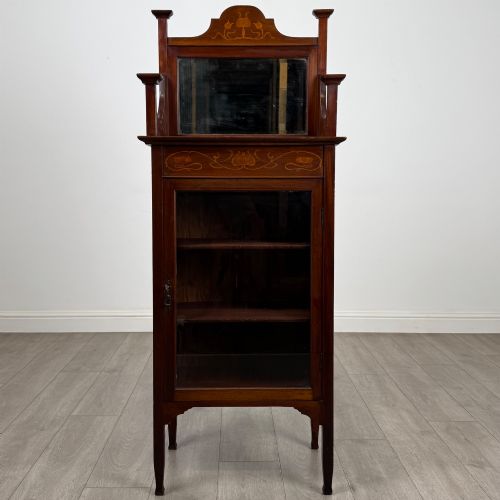
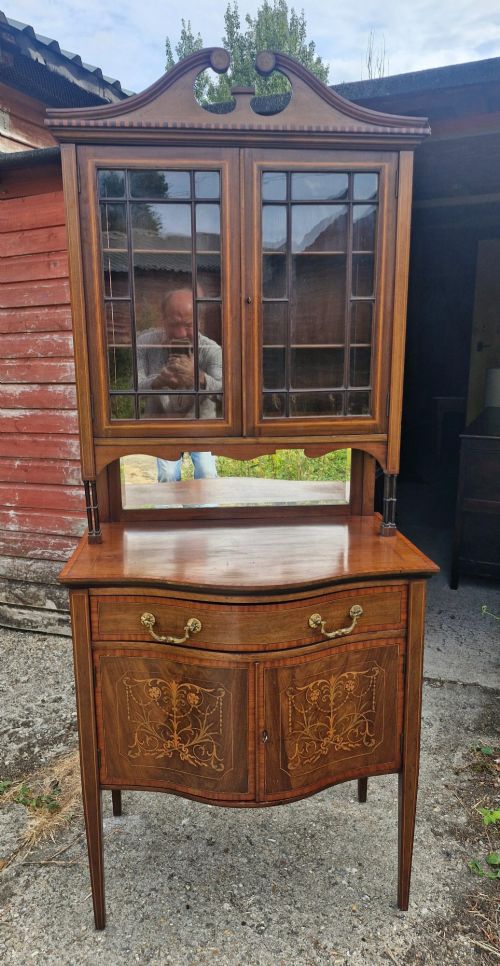
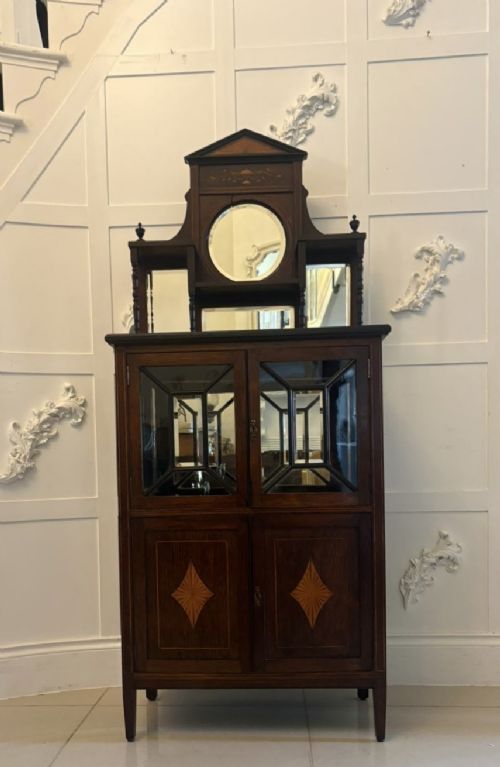
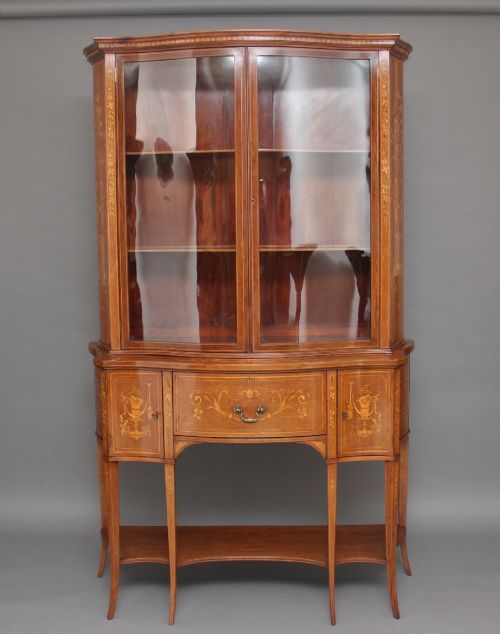
The most common examples on this page are Edwardian and Victorian mahogany display cabinets, often detailed with delicate satinwood inlay, bow fronts, and mirror backs. These variations reflect the changing interior fashions of the late nineteenth and early twentieth centuries, moving from heavier walnut credenzas to lighter Sheraton Revival and Art Nouveau forms.
Makers and designers of the period utilised various timber configurations, incorporating glass doors and brass hardware to balance utility with visual elegance. Whether configured as a two-part display cabinet or an open-ended walnut credenza, each piece serves the traditional function of organising a formal room's literature and treasures.
Materials and construction methods
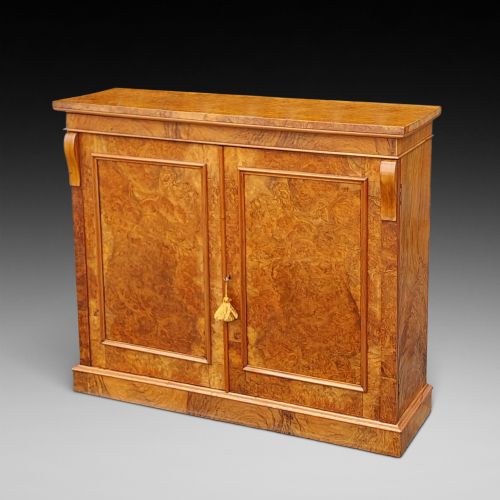
Cabinet makers constructed these pieces primarily using solid mahogany, burr walnut, and rosewood, frequently applying contrasting satinwood, marquetry, and delicate stringing for decorative effect. Structural carcass work relied on traditional joinery, while secondary timbers such as pine or oak were used for interior shelving and drawer linings.
Glazing techniques involved framing individual glass panes within wooden muntins to protect contents while maintaining visibility. Many examples incorporated brass mounts, mirrored glass backings, and fabric-lined interiors to enhance the reflection of light within the parlour space.
Antique Parlor Bookcase Retail Price Guide 2026
Typical asking prices for parlor bookcase among the pieces listed under this phrase on Sellingantiques today, from the lower quarter to the upper quarter. They describe what is for sale here now, not the wider market.
Some Edwardian models include mirror backs specifically angled to reflect the flickering parlour hearth.
Distinguishing quality across examples
Quality in these pieces is dictated by the selection of timber veneers and the precision of the marquetry inlay. Superior examples display tightly figured mahogany or burr walnut alongside meticulous hand-cut stringing rather than printed or superficial decoration.
Maple and Co·Edwards and Roberts·Linke
The Antique Parlor Bookcase Glossary
- Marquetry
- Decorative veneer work forming pictures or geometric patterns using various woods. Craftsmen cut thin slices of different timbers to fit together precisely within the cabinet surface.
- Satinwood
- A lustrous yellowish-grey timber native to India and Ceylon, frequently used for contrasting stringing and inlay. It provides a bright visual accent against darker woods like mahogany.
- Credenza
- A sideboard or cabinet designed for formal reception rooms, often featuring glass-fronted side cupboards and an open centre. Victorian examples frequently include elaborate marquetry and ormolu mounts.
- Vitrine
- A glass-fronted cabinet specifically designed for displaying porcelain or objets d'art. These pieces prioritise visibility through glass panels on the sides as well as the front doors.
- Bow front
- A cabinet front that curves outward in a convex shape. This configuration requires skilled carpentry to bend wood and glass to fit the harmonious radius.
Antique Parlor Bookcase: Frequently Asked Questions
What is an antique parlor bookcase?
An antique parlor bookcase is a refined storage piece built during the Victorian or Edwardian periods to house books and display decorative items in a formal reception room.
These items range from glazed display cabinets to open-ended credenzas, combining practical shelving with polished timber facades and glass panels.
How do I date an antique parlor bookcase?
Dating relies on observing stylistic markers, timber choices, and construction techniques associated with specific eras like the Victorian or Edwardian periods.
Earlier pieces often feature heavier burr walnut and robust proportions, while later Edwardian examples tend to use lighter mahogany with delicate satinwood inlay and mirror backs.
Where should I place a parlor bookcase?
These cabinets suit principal reception rooms, studies, or libraries where their glazed doors protect books and ornaments from dust while remaining visible.
Positioning them away from direct sunlight preserves the polished mahogany, rosewood, and inlaid satinwood surfaces from fading over time.
Can these cabinets hold standard books?
Most parlor bookcases feature adjustable or fixed wooden shelving designed to accommodate octavo volumes and standard library collections of the nineteenth century.
Buyers should verify internal shelf depths and heights if intending to store particularly large volumes or folio editions.