



Antique Paper Bound Books
Antique paper bound books bring tactile history to your shelf, offering stories and illustrations preserved in original bindings.
Antique Paper Bound Books
Antique paper bound books encompass volumes produced across the eighteenth and nineteenth centuries, featuring works of fiction, history, and travel. These pieces frequently appear in French and Victorian editions, ranging from single volumes to matching sets.
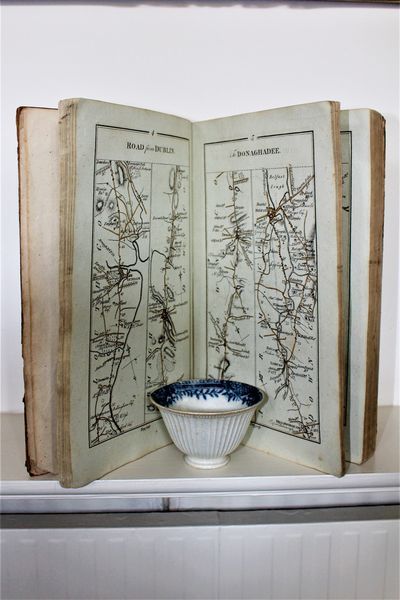
The selection includes specialised formats such as illustrated literature, atlases, and collections by authors like Goethe and Cervantes. Buyers encounter both individual antique books and assembled groups bound in calfskin, vellum, or marbled paper.
Originating largely from British and French sources, these items reflect the publishing standards of the Georgian and Victorian eras. Their presence ranges from modest nineteenth-century prints to substantial illustrated works.
Materials and construction
Production relied on traditional methods utilising paper, cardboard, and ink for the primary text blocks. Bindings frequently employed leather, calfskin, and vellum to protect the inner pages.
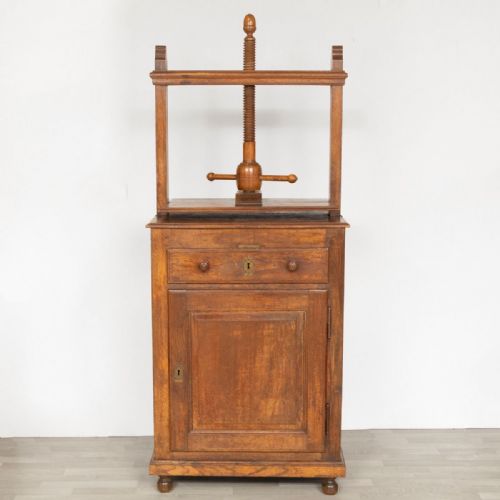
Decoration involved gold leaf application alongside marbled paper finishes for endpapers and covers. Structural elements occasionally incorporated oak, particularly in associated items such as book presses.
Materials documented in these listings include paper, ink, leather, gold leaf, marbled paper, cardboard, calfskin leather, and oak.
Factors of quality
Quality separates through the uniformity of matching sets and the presence of significant artistic contributions, such as illustrations by Gustave Dore. Uniform bindings across multiple volumes elevate the desirability of a collection.
Material choice dictates distinction, with calfskin and vellum bindings displaying greater resilience than simpler cardboard structures. The preservation of original gold leaf detailing and marbled paper further distinguishes finer examples.
The Antique Paper Bound Books Glossary
- Vellum
- A fine parchment made from calfskin, utilised for durable and prestigious book bindings. It provides a smooth surface that yellows gracefully with age.
- Calfskin leather
- A supple leather derived from the skin of a calf, chosen for high-end book covers. This material often accepts gold leaf tooling exceptionally well.
- Marbled paper
- Paper decorated with a patterned colourful swirl resembling marble, traditionally used for endpapers. Artisans float pigments on a liquid bath before transferring them to the paper.
- Gold leaf
- Gold beaten into extremely thin sheets, applied to book spines and covers for lettering and decoration. It resists tarnishing over centuries.
Antique Paper Bound Books: Frequently Asked Questions
What periods do these books span?
The available selection spans from the eighteenth century through the Victorian era and into the early twentieth century. Most pieces originate from the nineteenth century.
These dates appear in the publishing details and stylistic markers of the volumes, including French provincial and Georgian designs.
Are these books sold individually or in sets?
Both options appear in the inventory, ranging from single volumes to matching sets of several books. Multi-volume collections often share uniform bindings.
Buyers can find groups of uniform books alongside standalone antique volumes and specialised illustrated editions.
What materials were used for the bindings?
Bindings feature materials such as leather, calfskin, vellum, and marbled paper over cardboard cores. Many incorporate gold leaf accents on the covers and spines.
These traditional materials provided both structural protection and decorative appeal for readers of the period.
How are French editions identified?
French editions are typically recognised through their publishing origins, language, and stylistic periods such as French Provincial or nineteenth-century French binding styles.
These books often include works by continental authors and distinct regional design characteristics.