



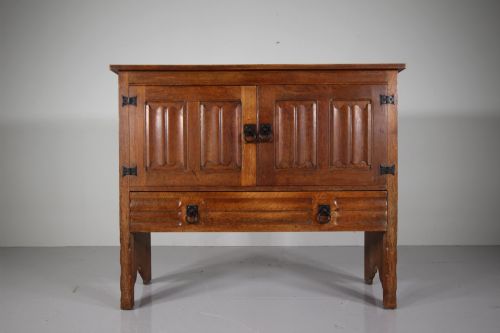
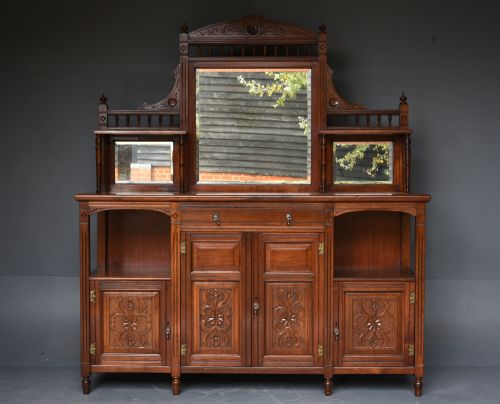
Antique Panelled Buffet
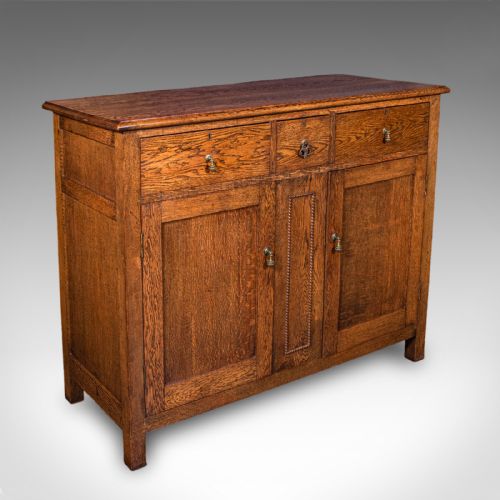
An antique panelled buffet is a sturdy storage piece built from oak, walnut or mahogany, bringing centuries of practical craftsmanship and rich timber grain to a dining room or hallway.
Antique Panelled Buffet
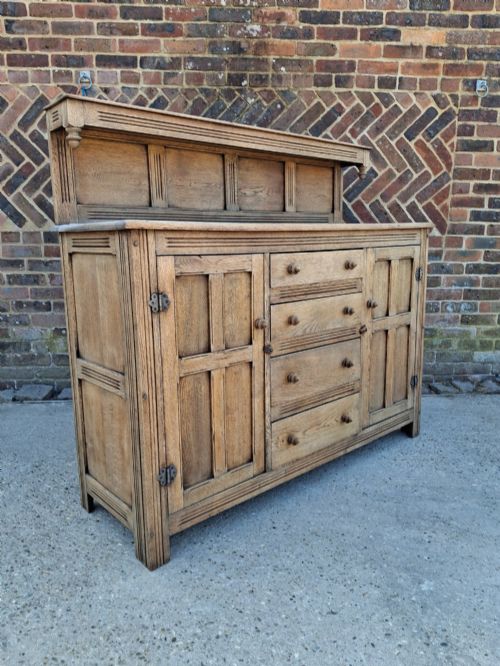
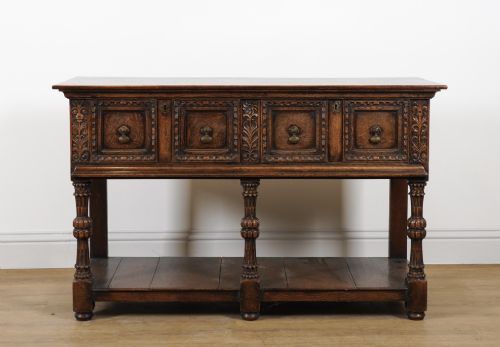
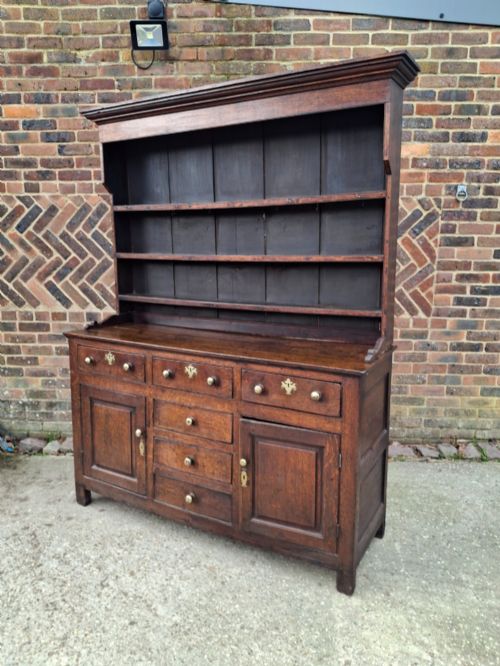
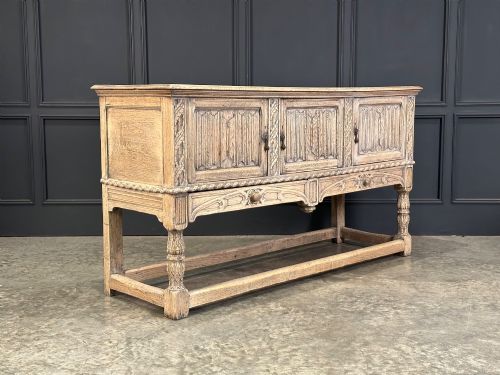
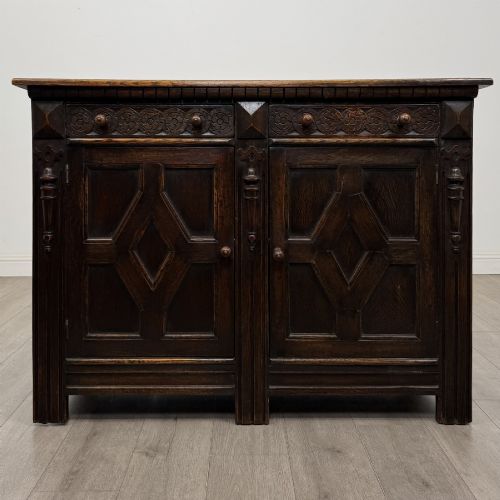
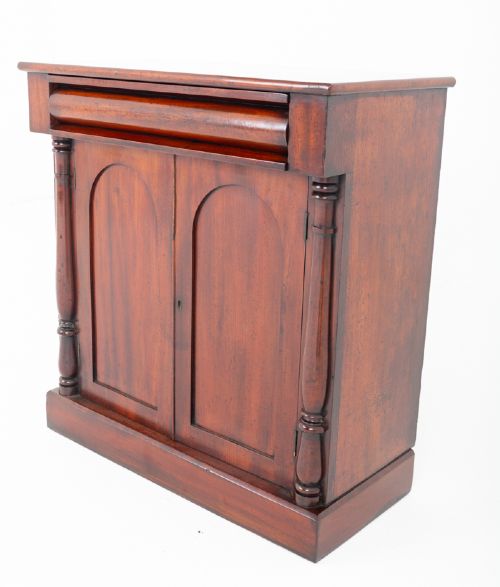
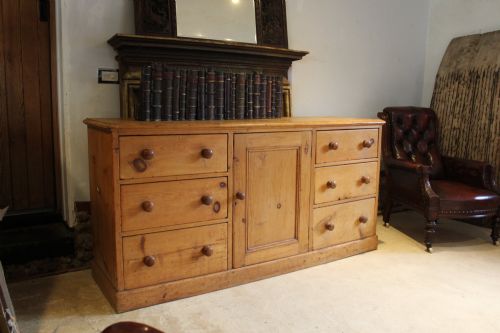
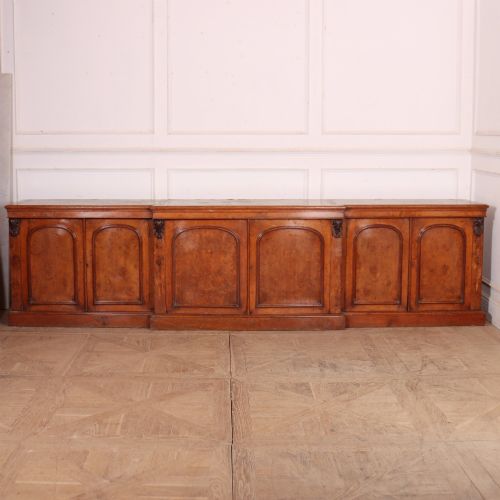
An antique panelled buffet functions primarily as a substantial storage cabinet and serving surface, appearing across this selection in forms such as sideboards, court cupboards, dresser bases and server cabinets. These pieces serve dining rooms, kitchens and hallways with enclosed cupboard space and drawer storage.
The pieces span from the 17th century through the Georgian, Victorian and Edwardian periods up to 1920, incorporating revival movements like Jacobean, Renaissance and Gothic styles alongside French Provincial and Arts & Crafts designs.
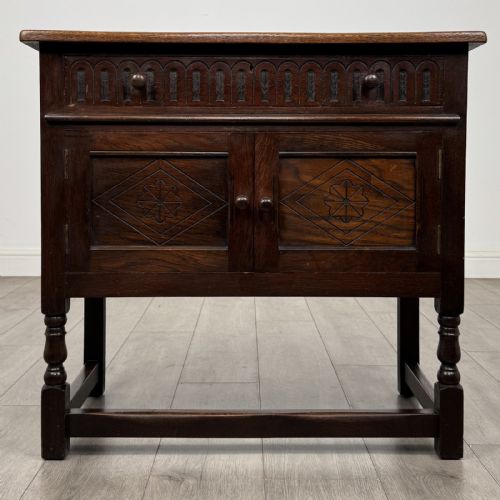
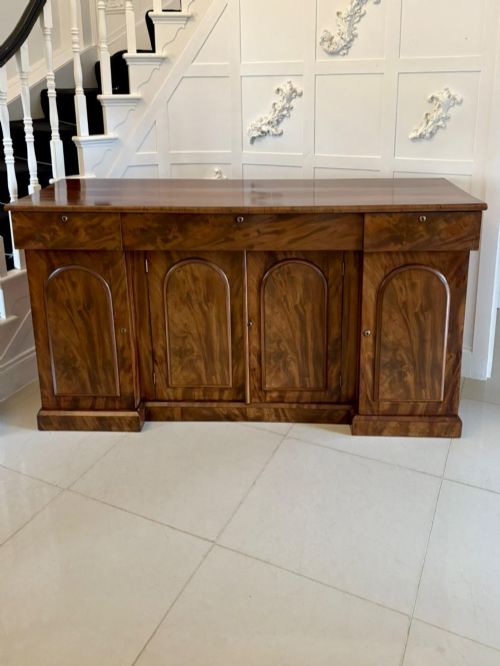
Buyers will most frequently encounter oak examples featuring fielded or geometric panels, often constructed as dresser bases or court cupboards, alongside walnut and mahogany sideboard variations from later centuries.
How they were made
Joiners and cabinetmakers relied heavily on solid oak during the earlier centuries, building frames with pegged mortise and tenon joints while incorporating fielded, carved or geometric panels into the doors and sides. Later 19th-century and 20th-century examples introduce mahogany, walnut and pollard oak, sometimes paired with brass hardware, iron details and inset glass or pink marble tops.
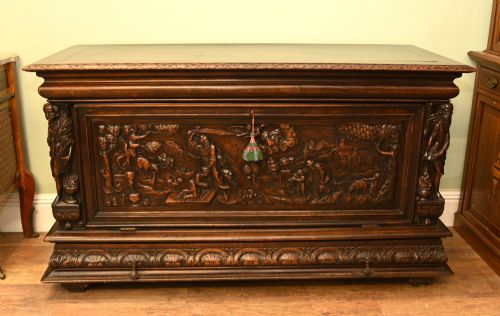
Surface ornamentation ranges from deep hand-carving and applied mouldings on Jacobean and Renaissance revival pieces to turned legs, barley twist supports and stretcher bases. Timber selection dictates the visual weight, with burr walnut, figured mahogany and tiger oak providing distinct grain patterns across the front elevations.
Antique Panelled Buffet Retail Price Guide 2026
Typical asking prices for panelled buffet among the pieces listed under this phrase on Sellingantiques today, from the lower quarter to the upper quarter. They describe what is for sale here now, not the wider market.
Listings feature pieces spanning from the 17th century to 1920, constructed primarily in oak, mahogany and walnut.
What varies in quality
The standard of an antique panelled buffet rests on the depth and crispness of the timber carving, the selection of figured or quarter-sawn grain, and the integrity of the panel construction. Pieces featuring hand-carved details, robust stretcher bases and well-fitted drawers display a higher tier of workshop execution.
Construction methods also separate utilitarian items from finer decorative commissions, visible in the thickness of the solid timber boards, the precision of the joinery, and the retention of original brass or iron hardware rather than later replacements.
M. D. Miller & Sons
The Antique Panelled Buffet Glossary
- Fielded panel
- A wooden panel with bevelled edges that fit into a grooved frame, allowing the wood to expand and contract naturally with humidity changes.
- Court cupboard
- A traditional two-stage enclosed cupboard, often built in oak during the 17th or 18th century, featuring a recessed upper tier supported by pillars.
- Dresser base
- A low wooden storage unit with drawers and cupboards beneath a flat top, historically used in kitchens and dining spaces for serving and storage.
- Stretcher base
- A system of horizontal wooden bars connecting the lower legs of a cabinet or table to provide structural rigidity and support.
- Barley twist
- A decorative turning technique shaped like a spiral helix, commonly found on the legs and supports of 17th-century style revival furniture.
- Pollard oak
- Timber taken from trees that have been pollarded, producing a dense wood marked by distinctive clustered growth rings and intricate patterns.
Antique Panelled Buffet: Frequently Asked Questions
What is an antique panelled buffet used for?
These versatile timber cabinets provide deep enclosed storage behind panelled doors alongside surface space for serving food or displaying objects. They fit naturally into dining rooms, large hallways and living spaces.
Historically designed to hold tableware, linens or provisions, they continue to serve these same storage functions in modern homes while anchoring a room with period character.
How do I tell an 17th century buffet from a later revival piece?
Examining the timber joints, tool marks and construction symmetry reveals the age of a piece. Earlier examples show hand-riven boards, pegged joints and natural wear patterns built up over centuries of use.
Revival pieces made during the Edwardian period often use machine-cut elements or standard hardware while accurately copying Jacobean or Elizabethan panel styles.
What woods were used for these cabinets?
Oak is the predominant timber found in the earlier centuries, prized for its strength and suitability for pegged joinery and carved panels. Walnut and mahogany appear with increasing frequency in 19th-century examples.
Variations also include fruitwood, chestnut and pollard oak, each bringing unique grain patterns and surface tones to the finished sideboard or dresser base.
How do I care for an antique oak buffet?
Maintaining these wooden pieces involves keeping them away from direct heat sources and sudden temperature fluctuations that can cause timber to split. Regular dusting with a dry cloth preserves the finish.
Applying a traditional beeswax periodically helps nourish the wood grain and maintains a natural sheen without building up synthetic residues.