

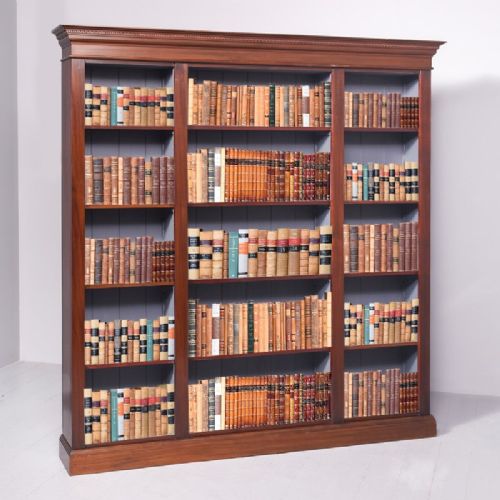


Antique Painted Library Shelves
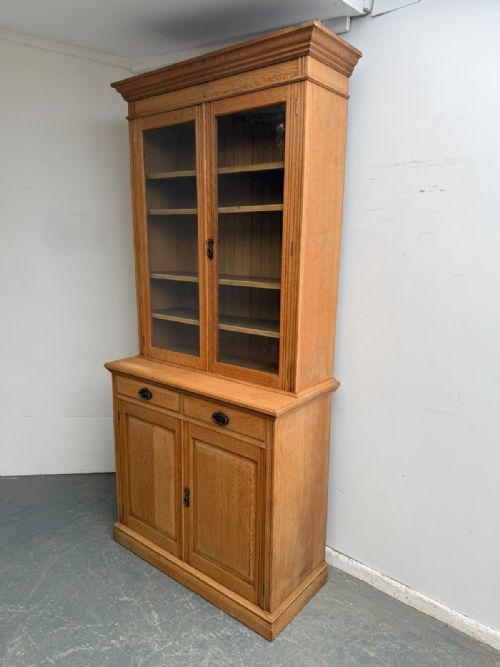
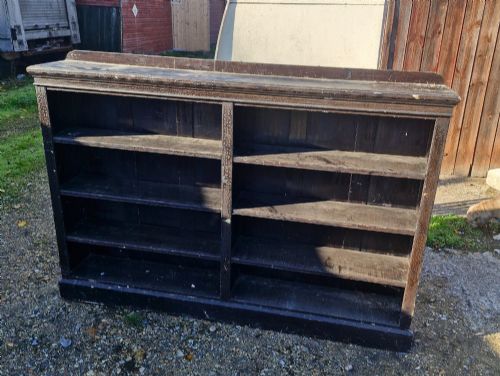
Antique painted library shelves bring practical storage and architectural character to a room, ranging from grand breakfront bookcases to simpler open shelving units.
Antique Painted Library Shelves
When you search for antique painted library shelves, you are looking at substantial storage furniture designed to hold books and display volumes in a home. The pieces found here span the nineteenth century up to the nineteen-thirties, encompassing Victorian, Edwardian, and later periods.
How they were made
Makers constructed these bookcases using solid timbers like pine, softwood, and mahogany, often applying painted finishes or ebonisation to achieve a specific surface appearance. Details such as brass mounts, glass panels, and adjustable shelving provided both structural utility and decorative refinement.
Workshop methods combined traditional cabinet-making carpentry with surface treatments, ranging from faux wood grain effects to solid painted colours and polished mahogany or ebonised wood surfaces.
Antique Painted Library Shelves Retail Price Guide 2026
Typical asking prices for painted library shelves among the pieces listed under this phrase on Sellingantiques today, from the lower quarter to the upper quarter. They describe what is for sale here now, not the wider market.
What varies in quality
The distinction between standard utility items and finer cabinet-making lies in the choice of timber and the execution of architectural details such as breakfront cornices and brass hardware. Superior examples display balanced proportions, clean joinery, and carefully applied finishes that have aged gracefully.
Simpler pieces intended for schools or provincial settings rely on straightforward softwood construction and plain painted surfaces, whereas high-status library bookcases utilise mahogany, ebonised timber, and sophisticated glazing bars.
The Antique Painted Library Shelves Glossary
- Breakfront
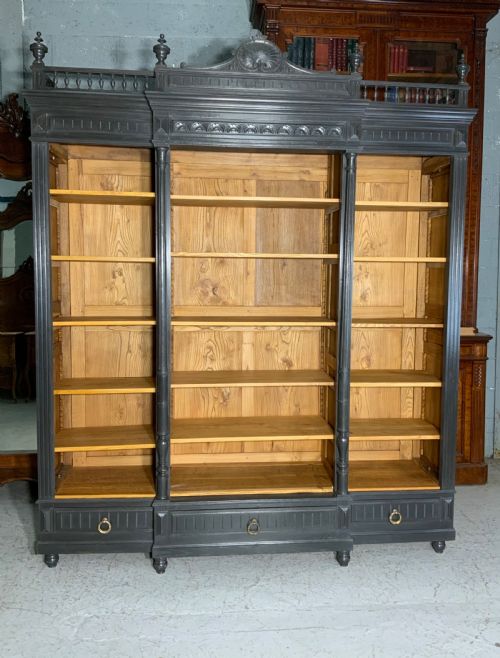
- A piece of furniture where the central section projects forward from the flanking outer sections. This arrangement creates a varied and imposing architectural profile on large library bookcases.
- Ebonised
- Wood finished to resemble ebony through staining or painting. This dark, formal treatment was popular for nineteenth-century library and display furniture.
- Glazed
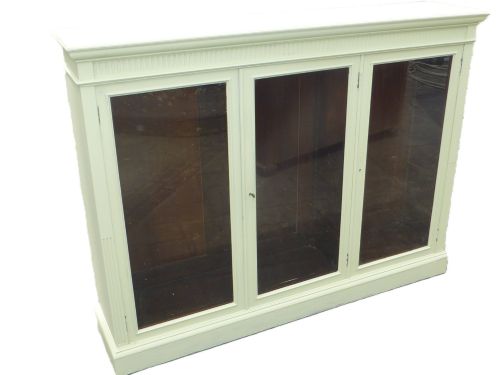
- Fitted with glass panels within doors or frames. Glazed sections protected valuable volumes from dust while keeping them visible.
- Softwood
- Timber from coniferous trees, such as pine, utilised widely for painted carcases and provincial shelving units.
Antique Painted Library Shelves: Frequently Asked Questions
What periods do these bookcases cover?
The pieces span from the nineteenth century through the Victorian era and into the nineteen-thirties. This includes items made around eighteen-eighty, eighteen-ninety, and nineteen-hundred.
Styles range from early Victorian and Georgian revival to French provincial and industrial institutional designs.
What materials were used?
Construction materials include traditional hardwoods like mahogany alongside softwoods and pine. Surfaces are frequently painted, ebonised, or finished to imitate burr walnut.
Accompanying materials such as brass mounts and glass door panels frequently appear on finer examples.
How do I choose the right size?
Library bookcases vary from tall, imposing breakfront cabinets to smaller open shelving units. Consider the height of your ceiling and the available wall space before selecting a piece.
Breakfront forms require more floor space and command a dominant presence in a room.