




Antique Painted Brooch
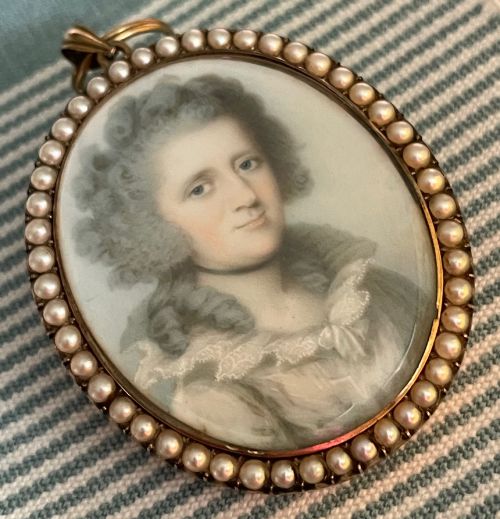
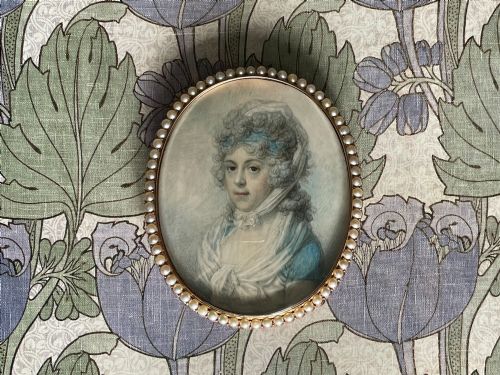
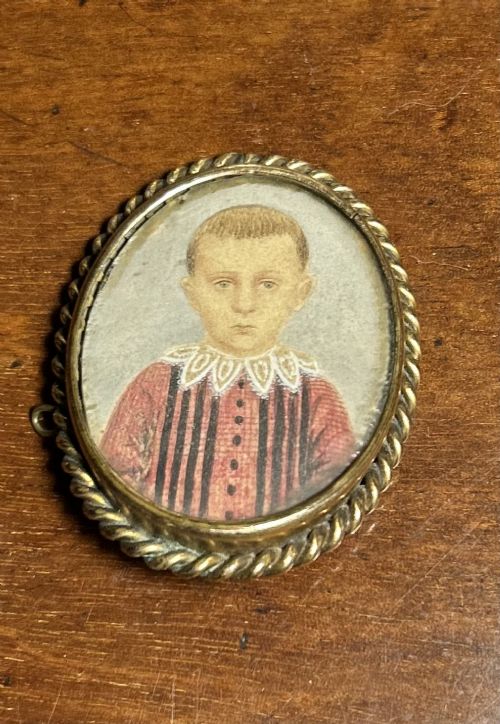
An antique painted brooch brings miniature art and portraiture into personal wear, offering miniature paintings and portraits mounted in gold, silver, and gilt metal.
Antique Painted Brooch
An antique painted brooch combines portrait miniature painting and wearable jewellery, taking forms such as stick pins, pendants, and brooches. The selection spans the 18th century, Victorian era, Edwardian period, and the 1930s, featuring portrait miniatures, sentimental love tokens, and novelty pieces.
The versions most frequently met on this page include Georgian and Victorian portrait miniatures of ladies and young boys, alongside Edwardian enamel religious pieces and Art Deco celluloid designs. Pieces range from fine gold settings with crystal to silver and china pendant-brooches.
Makers and subjects represented include Richard Cosway, Christian Friedrich Zincke, and John Barry, working within Georgian Neoclassical, Victorian sporting, and traditional painted portrait styles. Each object bridges portable fine art with personal adornment.
How they were made
Makers utilised watercolour and paint on mediums such as glass, china, and crystal, creating detailed miniature paintings that required steady brushwork. These delicate painted elements were then secured within metal frames.
Settings were fashioned from gold, 14ct yellow gold, 18ct gold, silver, and gilt metal, housing the painted panels or acting as structural mounts. Essex crystal pieces involved reverse-carving and painting beneath rock crystal to achieve a three-dimensional effect.
Antique Painted Brooch Retail Price Guide 2026
Typical asking prices for painted brooch among the pieces listed under this phrase on Sellingantiques today, from the lower quarter to the upper quarter. They describe what is for sale here now, not the wider market.
Materials utilised across the pieces include watercolour, paint, glass, rock crystal, celluloid, silver, gold, and gilt metal.
What varies in quality
The distinction between tiers rests on the fineness of the miniature brushwork and the artistic attribution of the portrait. Master painters like Richard Cosway or John Barry achieve a level of lifelike detail that simpler anonymous works do not reach.
Mounting materials dictate the calibre of the piece, moving from base gilt metal and celluloid up to substantial yellow gold and silver settings. The clarity of the rock crystal or glass protecting the painted surface also affects the overall standard.
Richard Cosway·Christian Friedrich Zincke·John Barry
The Antique Painted Brooch Glossary
- Portrait miniature
- A small, highly detailed painting, usually a portrait, executed on media such as vellum, card, enamel, or ivory. These works were often kept in lockets or mounted directly into jewellery.
- Essex crystal
- A technique where rock crystal is cut into a cabochon, reverse-carved on the flat back, and painted to create a lifelike, three-dimensional image when viewed from the front.
- Stick pin
- A long pin with a decorative head, worn upright in a tie, lapel, or cravat, frequently adapted to display miniature paintings and portraits.
- Sentimental love token
- Jewellery commissioned or given to express affection, fidelity, or remembrance, often incorporating specific motifs, hairwork, or painted portraits.
- Neoclassical
- A style spanning the 18th and early 19th centuries that drew inspiration from the classical art and culture of ancient Greece and Rome, visible in portraiture backgrounds and attire.
Antique Painted Brooch: Frequently Asked Questions
What is an antique painted brooch?
An antique painted brooch is a piece of personal jewellery featuring a miniature painting, portrait, or enamel work set into gold, silver, or gilt metal. These items combine the fine art of portraiture with wearable accessories.
They reflect various historical periods, ranging from 18th-century portrait miniatures to 1930s novelty pieces, serving historically as keepsakes or wearable portraits.
How were portrait miniatures worn?
Portrait miniatures were frequently mounted as brooches, pinned to garments, or adapted as pendants and stick pins for lapels and cravats. This allowed the wearer to keep likenesses of family members or loved ones close at hand.
During the Georgian and Victorian eras, such pieces functioned both as fashion statements and as sentimental love tokens exchanged between individuals.
What is Essex crystal jewellery?
Essex crystal pieces feature a domed rock crystal cabochon that has been reverse-carved and painted on the flat underside. This technique creates an optical illusion where the subject appears lifelike and three-dimensional.
Such stones were typically mounted in gold or silver as stick pins and brooches, showcasing subjects like animals and portraits.
How do I date a painted brooch?
Dating relies on the painting style, clothing of the subject, framing materials, and construction techniques. Georgian pieces often show Neoclassical influences, while Victorian examples span mourning and sporting themes.
Later pieces from the 1930s introduce alternative materials like celluloid and simpler silver and china combinations, distinguishing them from earlier gold and crystal works.