


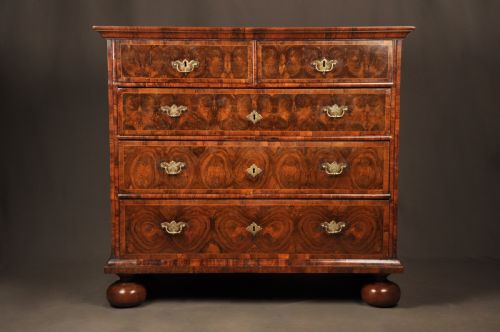


Antique Oyster Veneer
Antique oyster veneer furniture consists of cross-cut branch sections laid into geometric patterns, prized for rich circular grain movement.
Antique Oyster Veneer
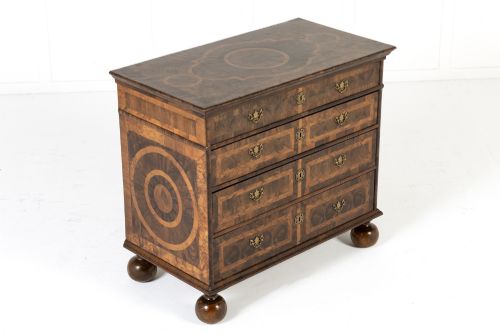
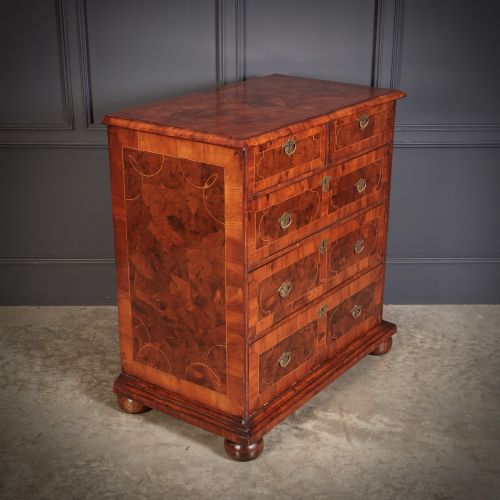
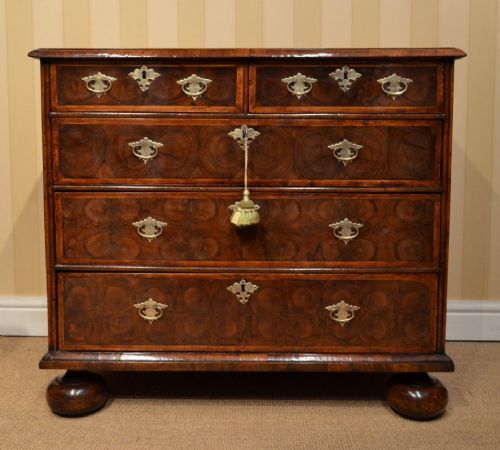
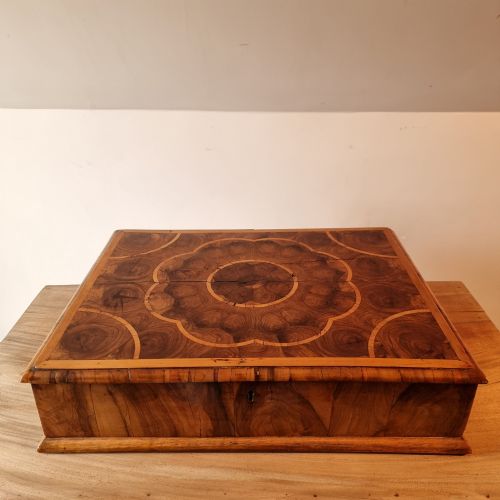
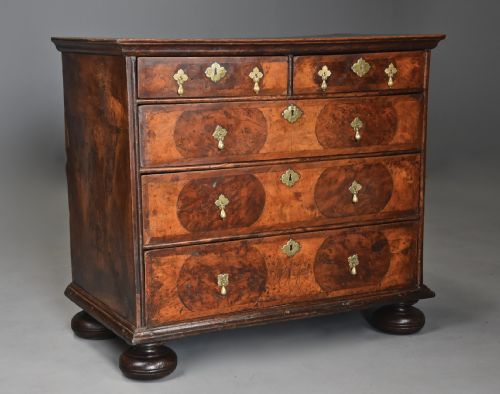
When searching for antique oyster veneer, you encounter distinctive circular cross-section roundels cut from small timber branches. These patterned surfaces appear predominantly on seventeenth-century chests of drawers, cabinets on stand, and small boxes from the William and Mary period.
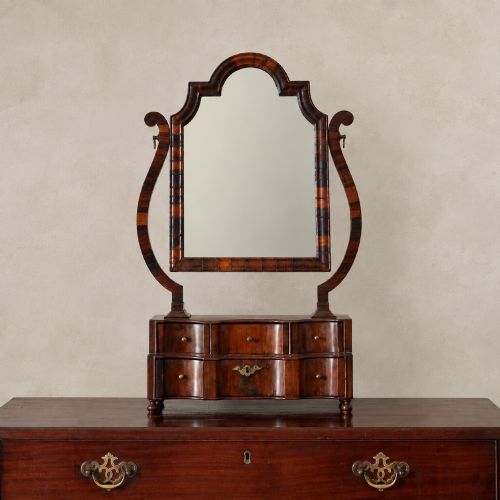
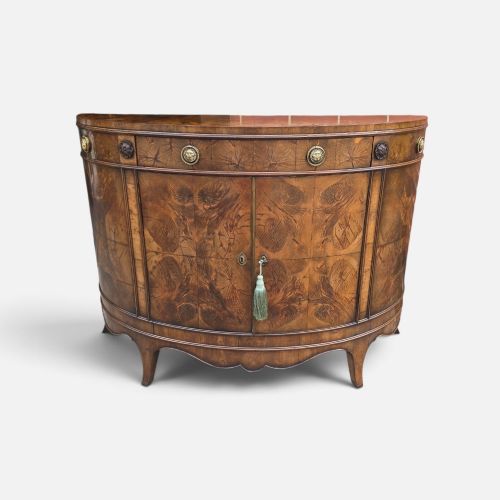
The selection extends into twentieth-century revival pieces, including Edwardian serving trays and coffee tables mimicking earlier seventeenth-century cabinetwork. Forms range from compact lace boxes to large chests of drawers and console tables.
Primary structural carcases utilise oak or walnut, providing stable foundations for the decorative circular roundels applied across the exterior surfaces. Regional seventeenth-century examples rely heavily on native and exotic timbers arranged in formal geometric repeats.
How they were made
Cabinetmakers sliced thin circular roundels across smaller branches rather than cutting straight down long trunks, producing the characteristic oyster motif. These cross-cut discs reveal tight concentric growth rings that resemble the shell of an oyster.
Makers laid the individual veneer roundels side by side in repeating patterns, often combining walnut, laburnum, olive wood, and kingwood. Fine stringing lines in boxwood or holly frequently border the panels to frame the circular grain.
Glue was applied to sturdy carcases of oak or pine before clamping the small timber sections tightly into place. Surface finishing required extensive hand-planing and polishing to level the uneven end-grain across the assembled pattern.
Antique Oyster Veneer Retail Price Guide 2026
Typical asking prices for oyster veneer among the pieces listed under this phrase on Sellingantiques today, from the lower quarter to the upper quarter. They describe what is for sale here now, not the wider market.
The listings show oyster veneer applied primarily to seventeenth-century forms, supplemented by twentieth-century revival pieces in walnut, laburnum, and kingwood.
What varies in quality
Quality rests upon the precision of the cutting and the tightness of the timber's annual growth rings. Tighter, more uniform circular patterns demand superior material selection compared to scattered or distorted roundels.
The harmony of the timber selection dictates visual success, with premier examples maintaining consistent tone and species across entire drawer fronts or table tops. Secondary timbers and internal construction methods similarly separate standard utility pieces from high-status cabinetwork.
The Antique Oyster Veneer Glossary
- Oyster veneer
- A method of cutting branch wood transversely to create small oval or circular roundels that display annual growth rings. This technique creates a decorative, patterned surface resembling the inside of an oyster shell.
- Cabinet on stand
- A raised storage unit comprising a main enclosed cupboard section supported by a separate frame with legs. These elevated forms showcase decorative veneer work at eye level.
- Coffre forte
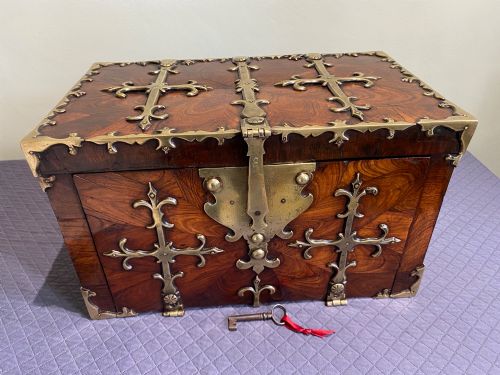
- A strong box or small portable chest fitted with internal locking mechanisms for securing valuables. Seventeenth-century versions frequently employ elaborate external veneer work.
- Stringing
- Thin inlaid lines of contrasting timber used to outline panels or borders. Makers utilise boxwood or holly to create sharp linear contrast against dark walnut or olive grounds.
- Escritoire
- A drop-front writing cabinet enclosing a fitted interior of small drawers and pigeonholes. These standing desks often feature elaborate geometric veneer patterns across the fall front.
Antique Oyster Veneer: Frequently Asked Questions
What is antique oyster veneer?
Antique oyster veneer is a decorative woodworking technique involving thin cross-sections cut from small timber branches. These roundels display concentric growth rings arranged into repeating geometric patterns across furniture surfaces.
Craftsmen primarily utilised this method during the late seventeenth century on walnut, olive wood, and laburnum. The resulting surfaces create undulating visual movement across chests of drawers and small boxes.
How do I date antique oyster veneer furniture?
Dating relies upon examining the underlying carcase construction, handle mounts, and timber species alongside stylistic traits. Seventeenth-century pieces typically feature oak framing and hand-cut dovetails beneath the decorative surface.
Revival pieces from the Edwardian era and twentieth century emulate these earlier William and Mary forms but employ machine-cut elements and modern internal fixings. Secondary woods inside drawers provide reliable clues regarding the period of manufacture.
Which woods were used for oyster veneer?
Makers selected dense hardwoods capable of holding fine circular grain patterns when sliced transversely. Walnut, laburnum, and olive wood appear most frequently in seventeenth-century English and continental workshops.
Exotic species like kingwood also occur on high-status cabinetwork, offering richer colour contrast. Inlaid stringing lines often incorporate lighter timbers such as boxwood or holly to frame the roundels.