


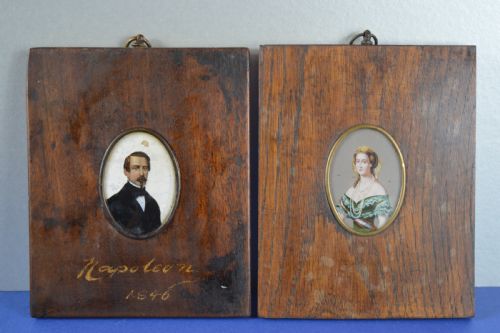


Antique Oval Portrait Plaque
These antique oval portrait plaques capture the human likeness in enamel, porcelain, marble and metal, offering a tangible link to past figures.
Antique Oval Portrait Plaque
An antique oval portrait plaque represents a specific likeness rendered in miniature, often framed for wall hanging or mounted as a wearable piece. When exploring the category of antique oval portrait plaque, buyers encounter everything from painted porcelain to carved marble profiles.
The pieces on offer span the eighteenth and nineteenth centuries, including Regency and Victorian examples. Common forms include framed wall plaques, relief sculptures, and dual-purpose pendant brooches.
Subjects range from literary figures and historical rulers to anonymous sitters and classical profiles. Pairs appear frequently, often depicting notable historical or poetic counterparts.
How They Were Made
Enamel plaques rely on fused glass powders applied to metal bases like copper or brass, fired at high temperatures to achieve permanent colour and glossy surfaces. South Staffordshire workshops perfected this technique during the eighteenth century.
Porcelain plaques utilise fine ceramic bodies painted with enamels and fired again, a method mastered by factories such as Berlin and KPM. Marble and stone versions employ low relief carving to project the profile against a contrasting background.
Mounting hardware incorporates gilt metal, ormolu, and wooden frames, while smaller wearable versions combine silver with china.
Antique Oval Portrait Plaque Retail Price Guide 2026
Typical asking prices for oval portrait plaque among the pieces listed under this phrase on Sellingantiques today, from the lower quarter to the upper quarter. They describe what is for sale here now, not the wider market.
Byron and Virgil stare across the centuries from identical marble profiles.
What Varies in Quality
The finesse of the likeness dictates the standing of a portrait, distinguishing skilled hand-painted detail from mechanical production. Subtle shading in enamel and precise depth in marble relief elevate individual works.
The integrity of the original frame or mount matters considerably, as original ormolu, gilt metal, and bespoke wooden surrounds complement the plaque. Associated elements like period suspension rings or fitted cases contribute to overall completeness.
George Atkinson·Thorvalsen Workshop·K P M·Berlin
The Antique Oval Portrait Plaque Glossary
- Ormolu
- Gilded bronze or brass applied to decorative arts. This technique provides a rich metallic border that enhances the framed profile.
- Enamel
- Powdered glass fused to a metal substrate by firing. It yields a durable, glossy surface capable of holding fine miniature painting.
- Relief sculpture
- Carving where the figure projects from a flat background. Marble examples use this method to capture profile portraits.
- Portrait miniature
- A small, highly detailed painting of a person. These often appear mounted within protective frames or wearable settings.
- South Staffordshire
- An English region renowned for eighteenth-century enamel production. Workshops here specialised in small decorative plaques and boxes.
Antique Oval Portrait Plaque: Frequently Asked Questions
How were portrait plaques displayed?
Most wall plaques feature built-in loops or rings for hanging directly on timber-panelled or plastered walls. Smaller wearable examples function as brooches or pendants.
Heavier marble and stone reliefs were designed to rest flush against walls, sometimes supported by dedicated architectural brackets.
What subjects appear on these plaques?
Literary figures, poets, and classical heroes form a significant group, including likenesses of Dante, Virgil, and Lord Byron. Rulers and historical figures such as Napoleon and Empress Eugenie also appear frequently.
Other pieces depict anonymous young women and gentlemen captured in profile during the eighteenth and nineteenth centuries.
How do I date a porcelain plaque?
Dating relies on factory marks stamped or painted on the reverse, alongside the painting style and framing materials. Earlier eighteenth-century examples differ noticeably in palette and mounting from Victorian productions.
Examining the back of the plaque often reveals kiln stilt marks or handwritten inscriptions left by the decorator.
Are enamel plaques fragile?
Enamel consists of fused glass, meaning it resists fading but remains vulnerable to sharp impacts that can cause chipping or cracking. Protective framing generally shields the delicate surface from daily handling.
Displaying them away from direct heat sources and high humidity ensures the metal substrate and glass layer remain stable.