
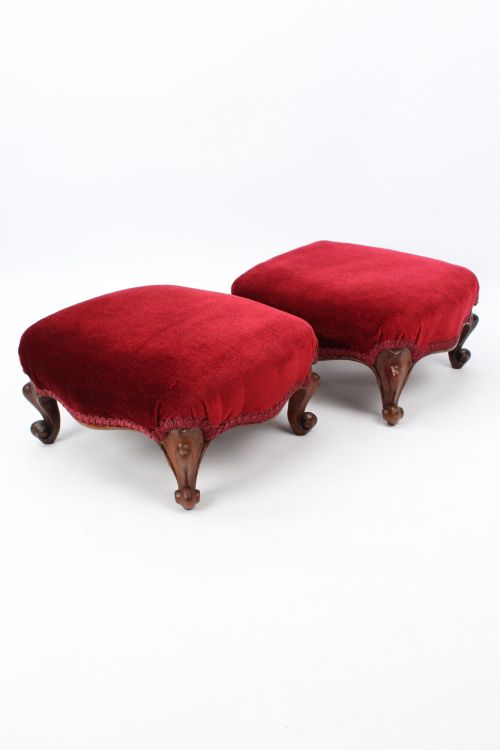
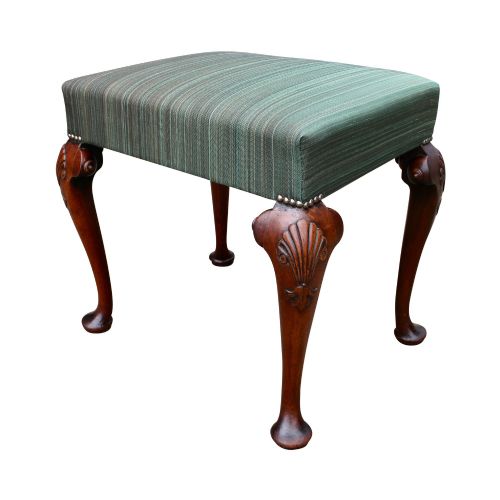
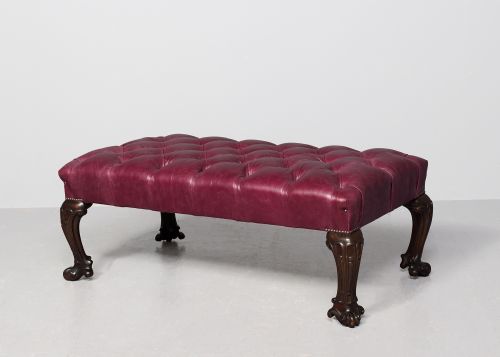
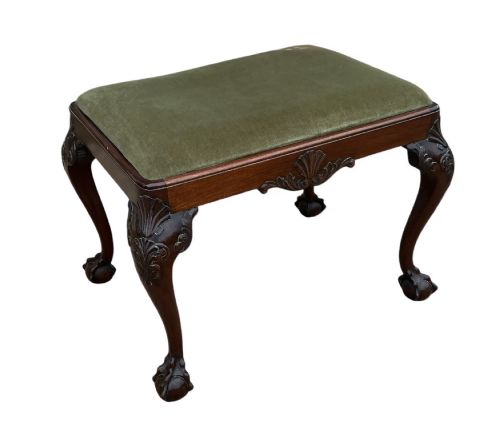
Antique Ottoman Footrest
An antique ottoman footrest brings low seating and upholstered comfort into a room, spanning periods from Regency to Art Deco.
Antique Ottoman Footrest
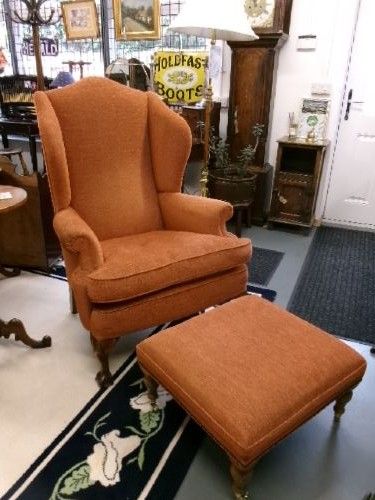
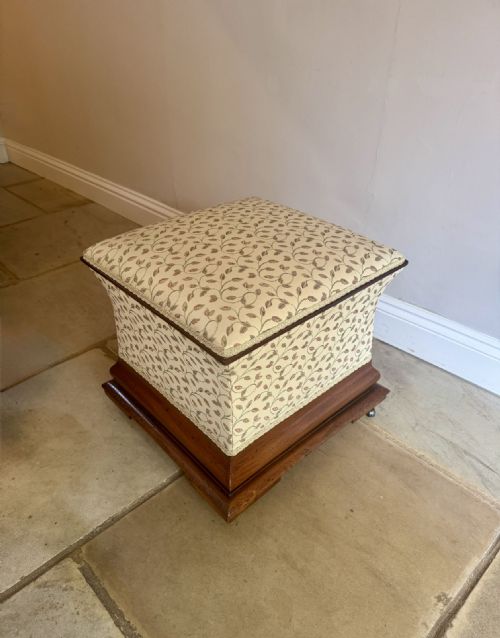
When you search for an antique ottoman footrest, you encounter low seats and footstools produced across the nineteenth and early twentieth centuries. These pieces take forms such as long footstools, dressing stools, and fireside seats designed for resting the feet or sitting low by the hearth.
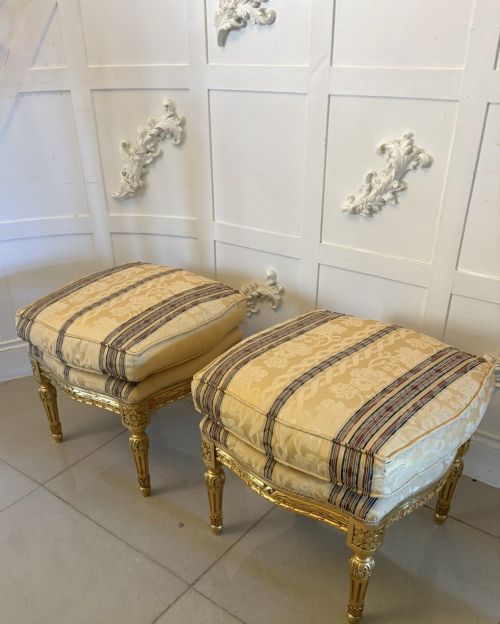
The versions most common on this page date from the Victorian and Edwardian eras, alongside pieces from the Regency and 1920s periods. They appear in styles including Queen Anne revival, Victorian Rococo, and Louis XV style, with occasional French and Anglo-Indian variants.
Makers and manufacturers produced these low seats for domestic comfort, ranging from simple pitch pine frames to elaborate carved rosewood and walnut designs. Many incorporate storage or specialised mechanisms like rocking actions for gout stools.
How they were made
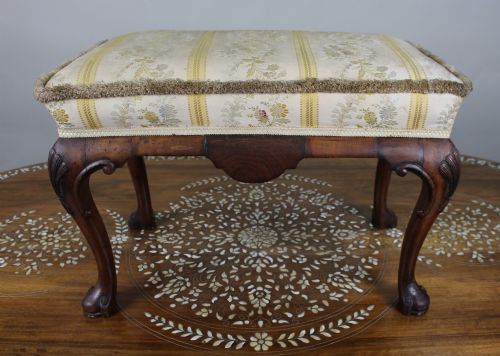
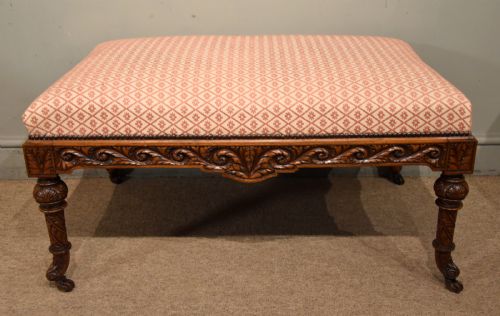
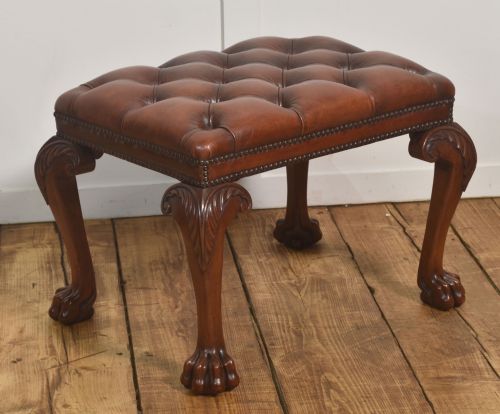
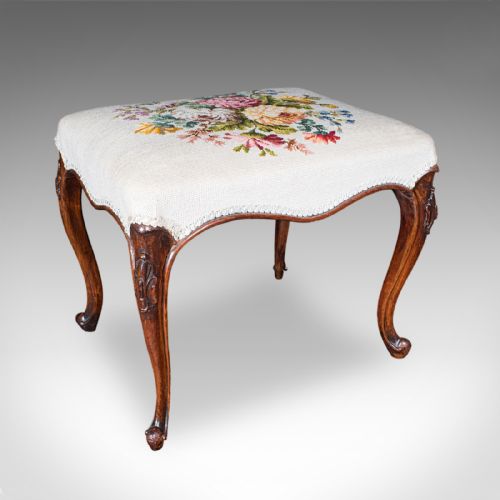
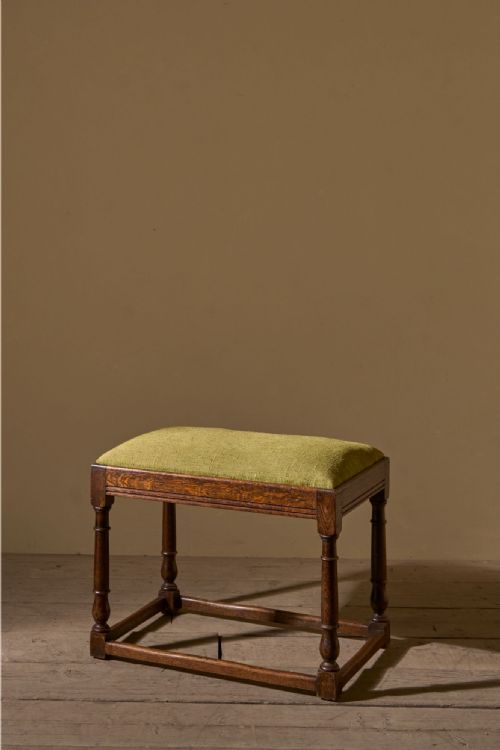
Cabinet makers constructed the frames of these footstools and ottomans using timbers such as mahogany, walnut, rosewood, oak, beech, and pitch pine. Turnings, carved details, and cabriole legs shaped the wooden supports, sometimes finished with brass castors or giltwood.
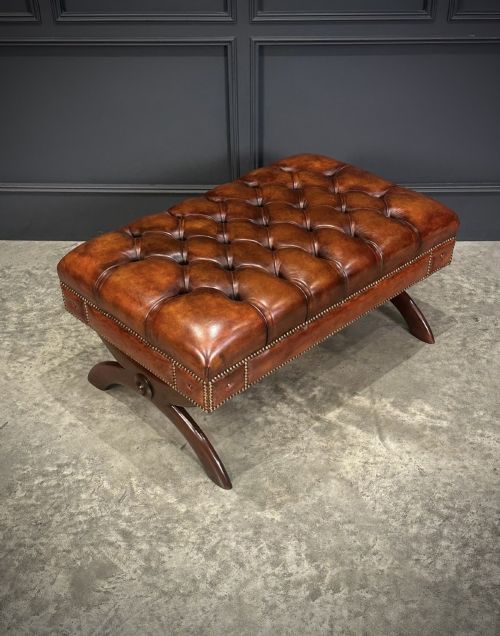
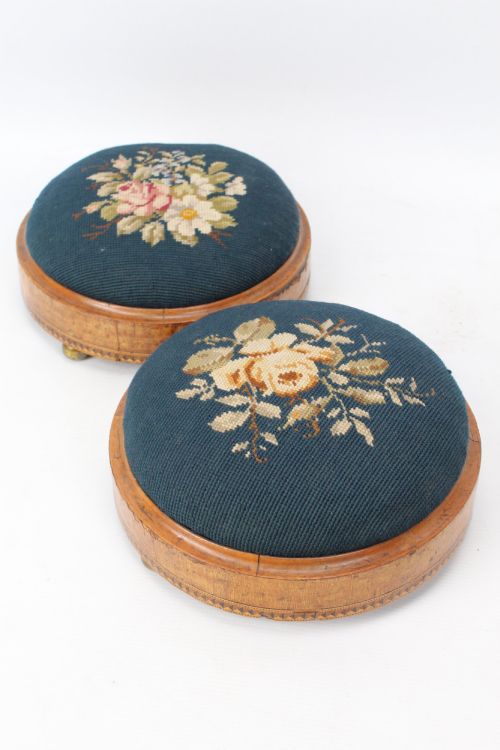
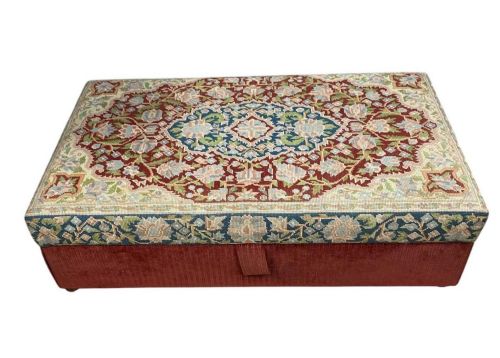
Upholstery completed the pieces, utilising fabrics like needlepoint, heavy green linen, leather, velvet, tapestry, and other textiles. Many examples retain traditional stuffing and webbing beneath the top covers, while others present bare frames ready for new upholstery.
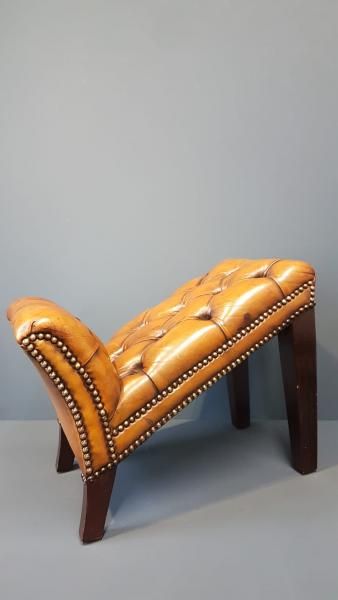
A leather dog footstool by Omersa for Liberty stands ready to guard the hearth alongside conventional Victorian and Edwardian timber frames.
What varies in quality
Quality in these low seats rests upon the crispness of the timber carving and the selection of fine woods such as figured rosewood or burr walnut. Substantial frames with robust joinery and original brass hardware distinguish finer workshops from simpler domestic pieces.
The execution of the upholstery and the choice of covering material, whether finely worked needlepoint or hand-tooled leather, influence the overall character. Pieces bearing maker stamps or originating from distinct design traditions hold notable distinction.
The Antique Ottoman Footrest Glossary
- Gout stool
- A specialised footrest designed with a rocking or adjustable mechanism to elevate and support the foot of a person suffering from gout. These items often feature padded leather tops.
- Needlepoint
- A form of canvas work embroidery traditionally used to cover the top surfaces of fireside stools and footrests. This hand-stitched textile brings patterned colour to the piece.
- Cabriole leg
- A furniture leg that curves outward at the knee and tapers inward toward the foot, commonly seen on walnut and mahogany stools from various revival styles.
- Bobbin leg
- A turned wooden leg shaped with a series of rounded spheres resembling bobbins of thread. This technique appears frequently on mid-nineteenth century rosewood pieces.
- Giltwood
- Timber coated with a thin layer of gold leaf or gesso, used on decorative French-style frames. This finish provides a bright metallic sheen to carved details.
Antique Ottoman Footrest: Frequently Asked Questions
What is an antique ottoman footrest?
An antique ottoman footrest is a low upholstered seat or stool designed for domestic comfort, used either for resting feet or as low seating.
They appear in various timber frames and upholstery styles ranging from the Regency period through to the Edwardian era.
How were these footstools used?
These pieces served primarily beside firesides and in dressing rooms to support the feet or provide auxiliary low seating.
Some specialist variants, such as gout stools, incorporated rocking mechanisms to ease circulation and relieve foot pain.
How do I date an antique footstool?
Dating relies on identifying the underlying timber, the turning or carving style of the legs, and the construction methods of the frame.
Victorian, Edwardian, and Regency pieces each exhibit distinct design traits, from rosewood bobbin legs to walnut cabriole supports.
Can I reupholster an antique ottoman?
Many antique footstools and ottomans are structurally suited for new fabric, and some listings offer frames ready for bespoke upholstery.
Reupholstering allows you to match historical textiles like needlepoint or leather to your interior while preserving the original wooden frame.