




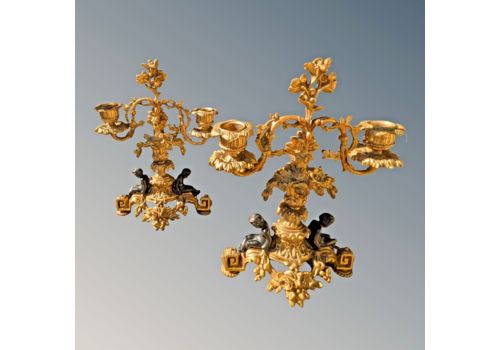


Antique Ormolu Candleholders
Antique ormolu candleholders bring warmth and gilt splendour to a room, combining cast metalwork with marble and porcelain in decorative lighting.
Antique Ormolu Candleholders
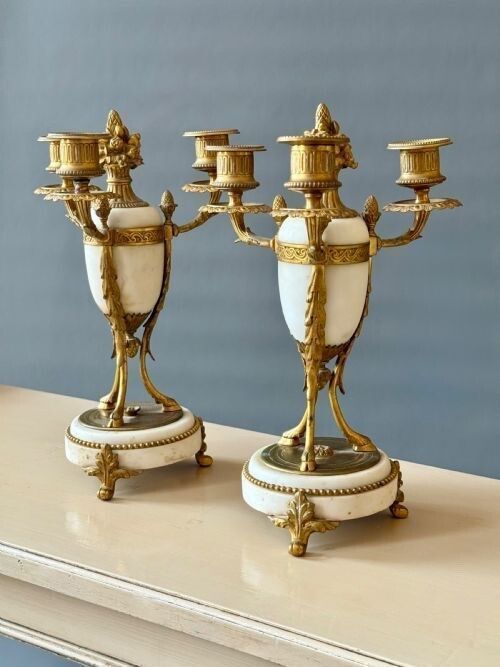
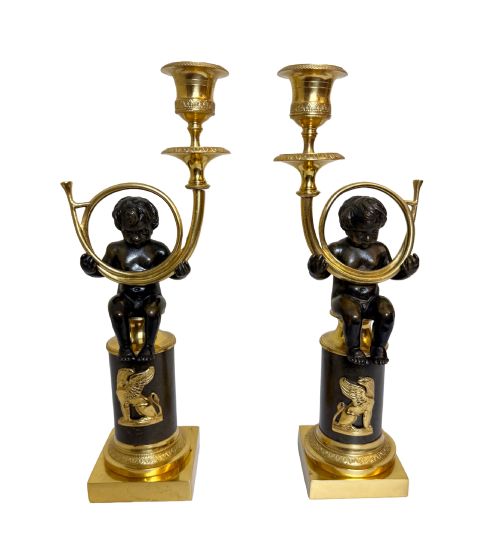
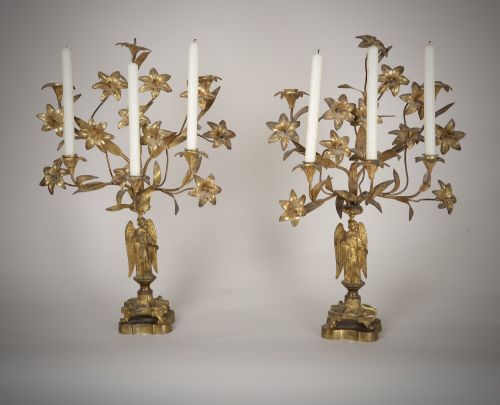
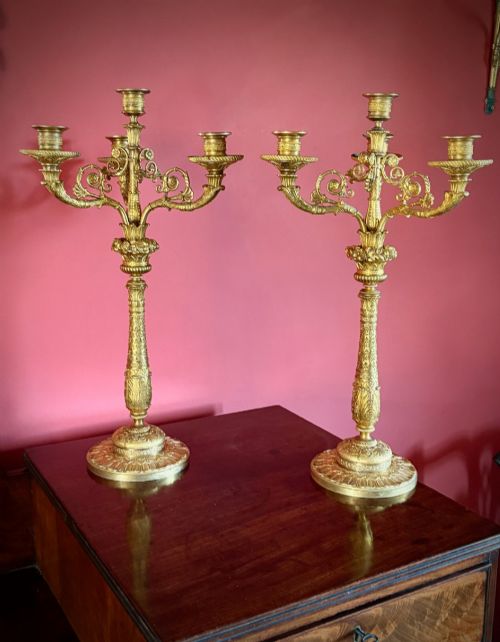
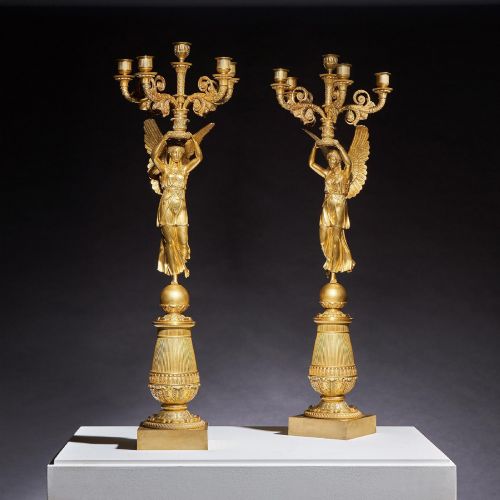
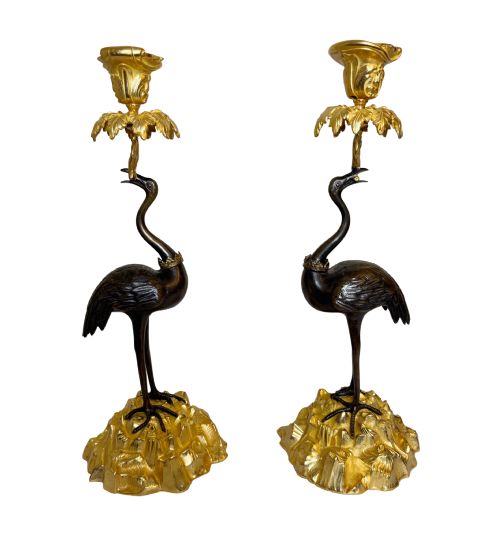
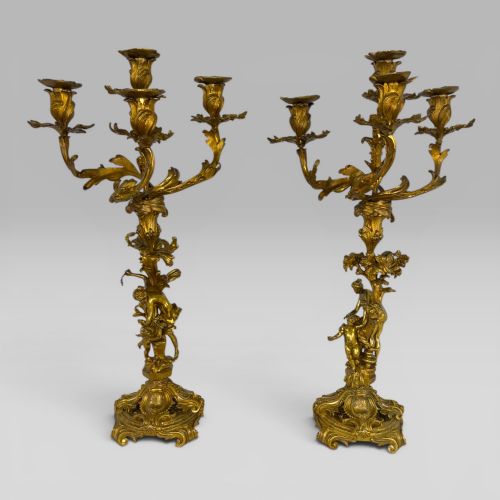
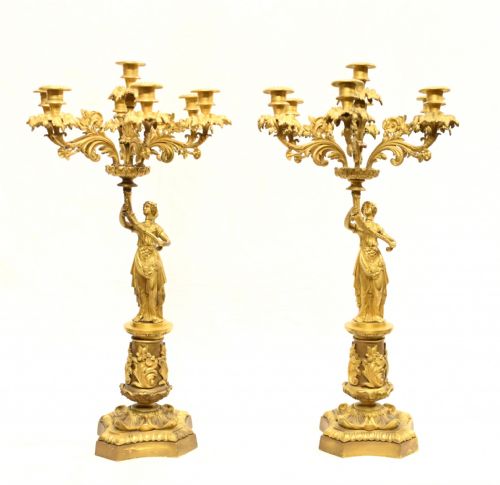
When you search for antique ormolu candleholders, you encounter a selection of candelabra, single candlesticks, and wall sconces dating primarily from the nineteenth century. These lighting pieces take many forms, from simple pairs of sticks to multi-branched candelabra carrying figural motifs like cherubs, birds, and dolphins.
French origins dominate the selection, especially works executed in Louis XVI, Empire, and Rococo Revival styles. You also find Victorian interpretations and Grand Tour pieces that adapt classical motifs for nineteenth-century interiors.
The materials span gilt bronze, patinated bronze, and ormolu combined with white marble, porcelain, and occasionally cloisonné. These decorative objects function equally as sculptural ornaments and as period lighting fixtures.
Materials and construction methods
Maker workshops created these pieces by casting bronze or brass into detailed components, which were then chased to sharpen the surface relief and enrich the texture. Gilt bronze and ormolu received a layer of gold amalgamation, producing a warm, enduring surface lustre that contrasted with patinated dark bronze or polished brass elements.
Many examples incorporate contrasting bases and columns made from white marble, porphyry, or ceramic bodies such as Delft and porcelain. Individual branches, drip pans, and nozzles were assembled with threaded pins and screws to form sturdy multi-branch candelabra and wall lights.
Antique Ormolu Candleholders Retail Price Guide 2026
Typical asking prices for ormolu candleholders among the pieces listed under this phrase on Sellingantiques today, from the lower quarter to the upper quarter. They describe what is for sale here now, not the wider market.
Distinguishing quality in cast lighting
The integration of secondary materials dictates overall refinement, where finely turned marble plinths or unblemished porcelain bodies elevate the stature of the metalwork. Balance, weight, and the harmonious proportion of branches to the central stem mark the output of skilled foundries.
Pierre Philippe Thomire·Rabiat·Claude Clodion·Galle·Villeroy and Boch·Samson
The Antique Ormolu Candleholders Glossary
- Ormolu
- Gilt bronze produced by applying a mercury and gold paste to a bronze object and heating it until the mercury vaporised, leaving a durable gold layer.
- Candelabra
- A branched candlestick designed to hold multiple candles simultaneously, often featuring removable arms or central finials.
- Patinated bronze
- Metal treated with chemical solutions to darken the surface and create a contrasting tone against bright gilt elements.
- Gilt brass
- Brass treated with a gold-coloured finish or plating, offering a lighter and less costly alternative to heavy bronze casting.
- Grand Tour
- Souvenirs and decorative objects acquired by affluent travellers in Europe during the eighteenth and nineteenth centuries, often referencing classical antiquity.
Antique Ormolu Candleholders: Frequently Asked Questions
How do I clean gilt bronze safely?
Gilt bronze and ormolu require gentle dusting with a soft, dry brush to prevent the accumulation of dirt in the recessed chasing.
Harsh chemical polishes, abrasive cloths, and water must be avoided, as they strip away the historic mercury gilding and expose the base metal beneath.
How can I tell a nineteenth-century piece from a later reproduction?
Nineteenth-century examples display hand-chased metalwork with subtle tool marks, heavy bronze or brass weight, and construction using threaded pegs and hand-cut screws.
Modern reproductions often show uniform machine casting, lighter overall weight, and chemical patination that lacks the depth of genuine age.
Were these pieces intended for everyday use?
In nineteenth-century interiors, these items served primarily as decorative mantelpiece ornaments and dining table centrepieces rather than primary lighting sources.
Their substantial weight and ornate figural mounts made them status symbols for wealthy drawing rooms rather than functional utility objects.