


Antique Openwork Brooch
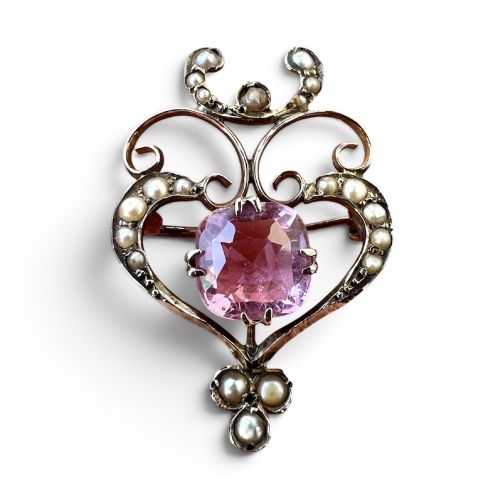
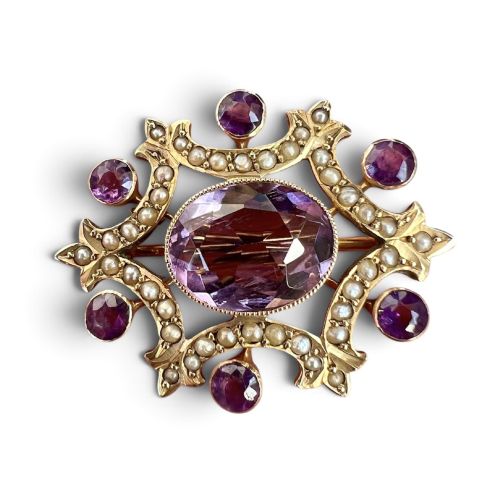
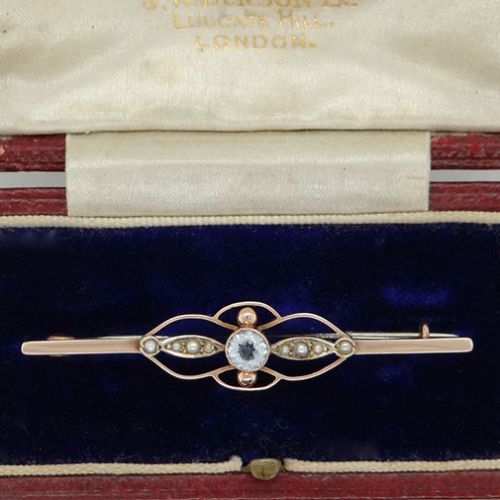
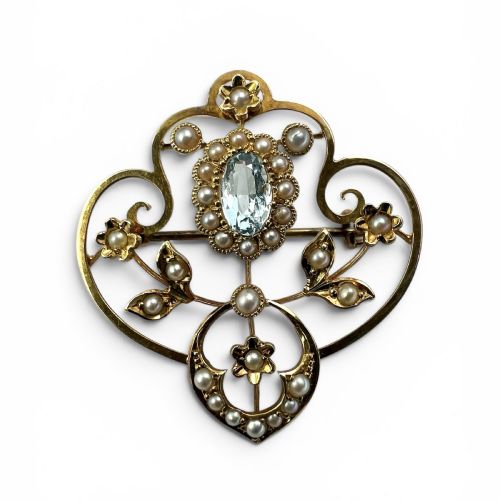
An antique openwork brooch brings delicate metal piercing and precious gemstones together, offering a versatile piece that pins to a lapel or suspends from a chain as a pendant.
Antique Openwork Brooch
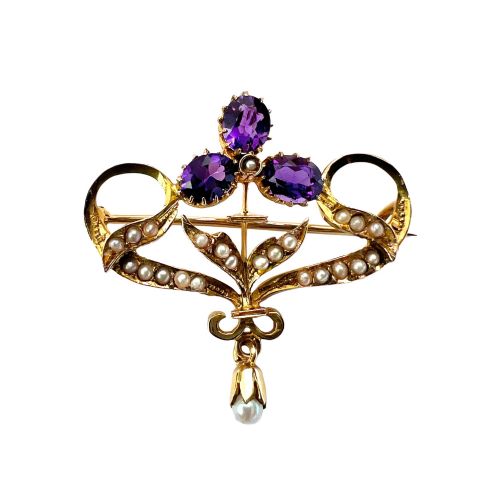
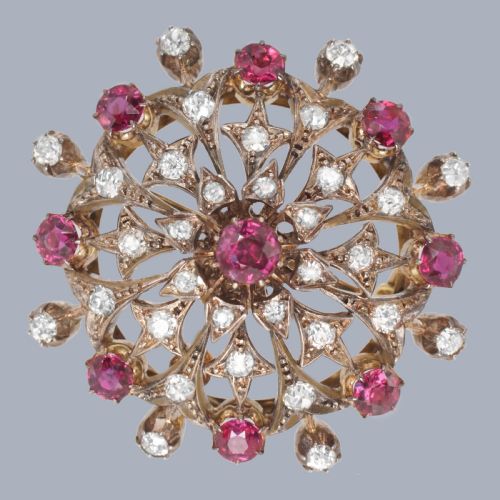
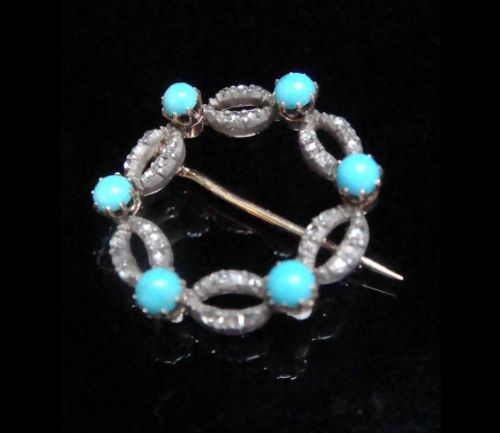
The pieces appearing on this page span the Victorian and Edwardian eras through to the Art Deco period, alongside Arts and Crafts examples. Buyers most frequently encounter Edwardian and Victorian forms, often set with pearls, amethysts, peridots, and diamonds in configurations that frequently double as pendants.
Materials and construction methods
Goldsmiths and jewellers utilised gold in various purities - including 9ct, 15ct, and 18ct variants - alongside silver, platinum, and occasionally rose or yellow gold to form the base structures. These metals were pierced by hand using fine saws or cast using detailed moulds before being chased and finished.
Gemstones such as seed pearls, diamonds, sapphires, amethysts, peridots, and turquoise were then flush-set, bezel-set, or claw-set directly into the open framework. Many designs incorporated articulated drops or convertible bails to allow the brooch to function as a pendant necklace.
Listings feature items from the Victorian, Edwardian, and Art Deco periods, incorporating gold, silver, platinum, seed pearls, peridots, amethysts, and diamonds.
Distinguishing quality in pierced metalwork
Quality rests in the precision of the piercing and the crispness of the negative space. Superior examples show clean, symmetrical pierced channels where the metal retains uniform thickness and structural strength without heavy filing marks.
The selection and matching of the gemstones further separate standard pieces from exceptional ones. Better jewellery integrates well-matched seed pearls, vibrant peridots or amethysts, and secure settings that hold each stone firmly within the delicate openwork frame.
Rhoda Wager
The Antique Openwork Brooch Glossary
- Openwork
- Metalwork pierced or cut through to create a pattern of solid areas and empty spaces. This technique lightens the visual weight of the jewellery.
- Seed pearl
- A very small, naturally formed pearl, often drilled and threaded or glued in rows and clusters. These tiny pearls form delicate floral and geometric borders on Victorian and Edwardian pieces.
- Convertible pendant
- A piece of jewellery designed to be worn both as a brooch pinned to clothing and as a pendant suspended from a chain. This functionality is achieved via a hidden or hinged bail on the reverse.
- Collet setting
- A metal collar or rim that surrounds the girdle of a gemstone to hold it in place. It is a traditional setting method seen across Victorian and Edwardian designs.
Antique Openwork Brooch: Frequently Asked Questions
How do I wear an antique brooch?
These pieces pin securely to jackets, scarves, and lapels using traditional pin stems and C-clasps or safety catches. Many examples also feature loops or bails that allow them to hang from a neck chain as a pendant.
Ensuring the pin mechanism remains secure protects the fabric of your garments while allowing the intricate metalwork to display properly.
Were these brooches used as pendants too?
Yes, many jewellers designed these items with dual functionality in mind from the outset. Foldable or fixed loops on the reverse enabled the wearer to transition the piece seamlessly from a breast ornament to a necklace centrepiece.
This versatility was particularly popular during the Edwardian period when layered chains and pendants came into regular fashion.
How do I date an openwork brooch?
Dating relies on observing the combination of materials, gemstone cuts, and piercing styles characteristic of specific eras. Victorian pieces often use heavy yellow gold and garnet or amethyst, while Edwardian examples favour platinum, silver-topped gold, and light peridots or seed pearls.
Art Deco items introduce geometric symmetry, stylised motifs, and sharper platinum settings typical of the nineteen-twenties.
What metals are most common here?
Gold in varying carats, such as 9ct, 15ct, and 18ct, forms the backbone of the Victorian and Edwardian selections. Silver and platinum appear frequently in late nineteenth-century and Art Deco pieces, often paired with gold to provide a bright contrasting face for diamonds.
These metal choices reflect the prevailing metallurgical standards and aesthetic preferences of each respective decade.