

Antique Opal and Diamond
Antique opal and diamond jewellery brings together iridescent stones and brilliant gems, mainly in rings, brooches and pendants from Victorian and Edwardian makers.
Antique Opal and Diamond
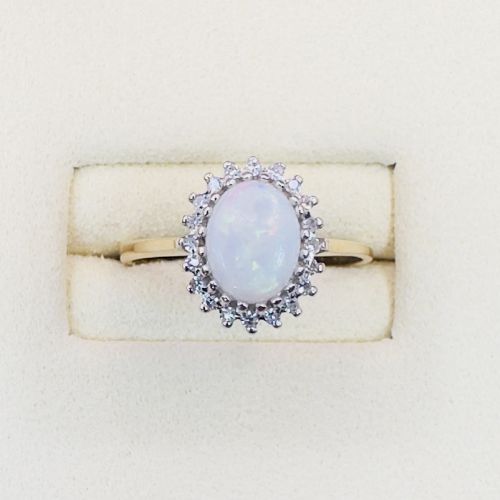
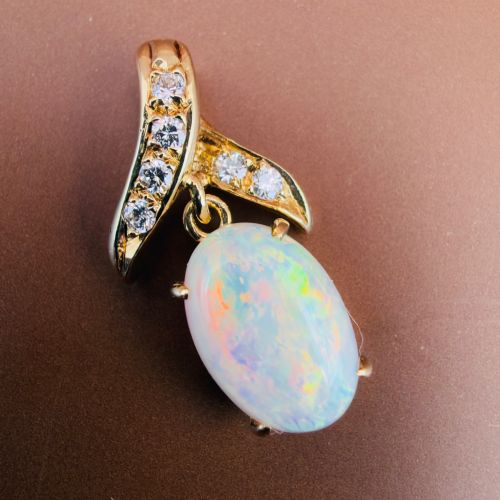
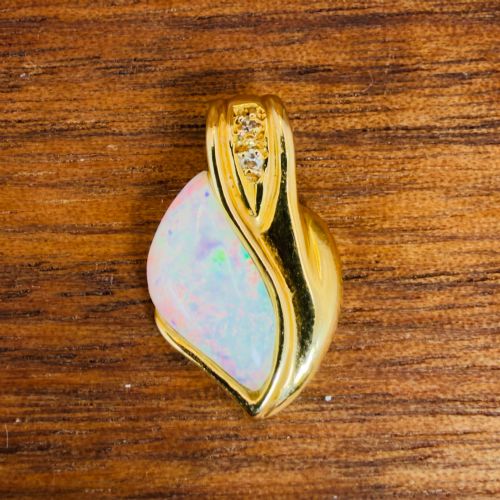
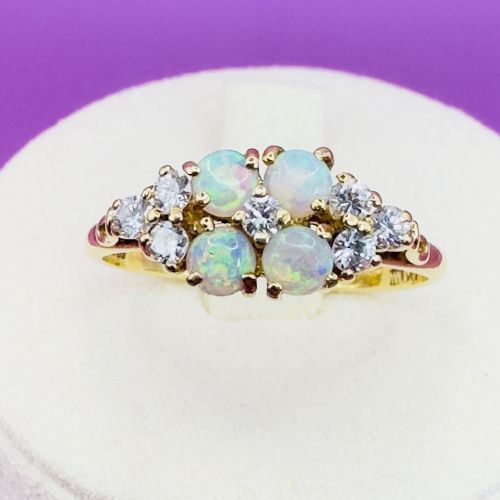
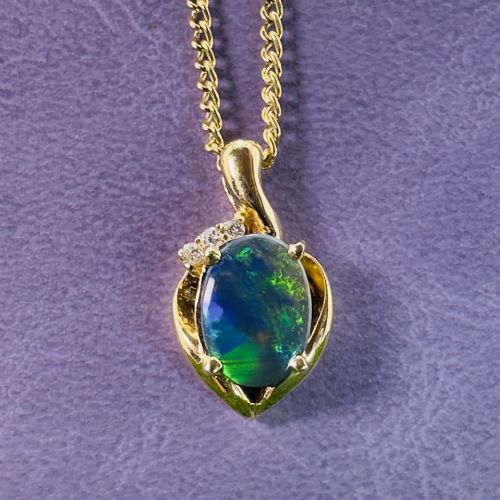
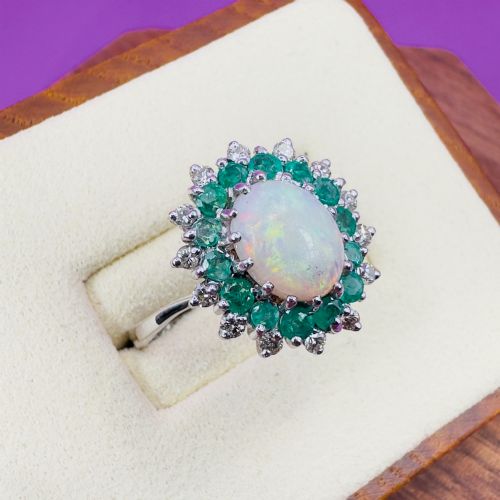
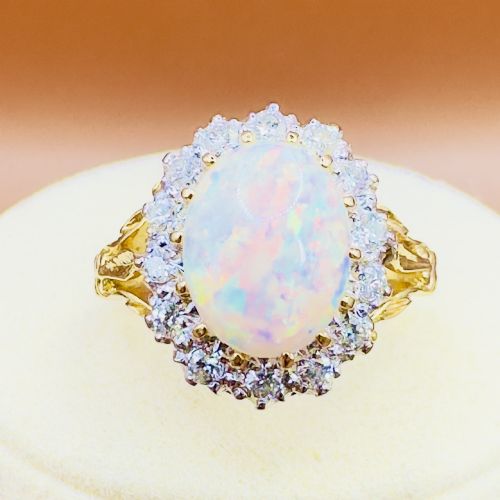
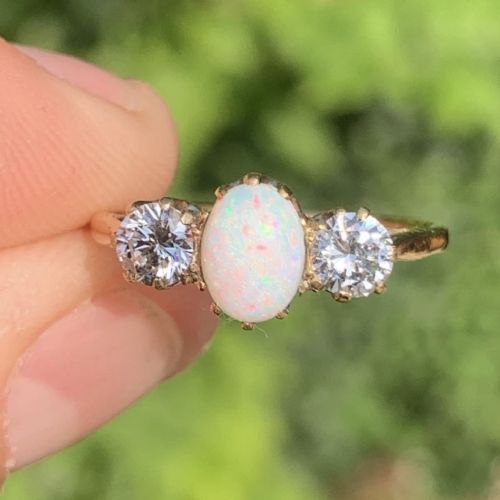
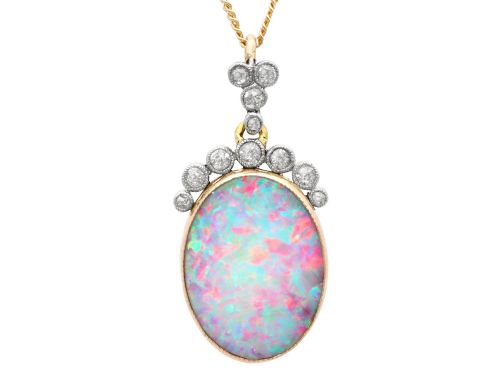
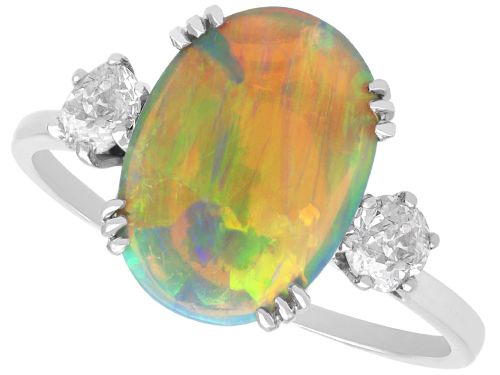
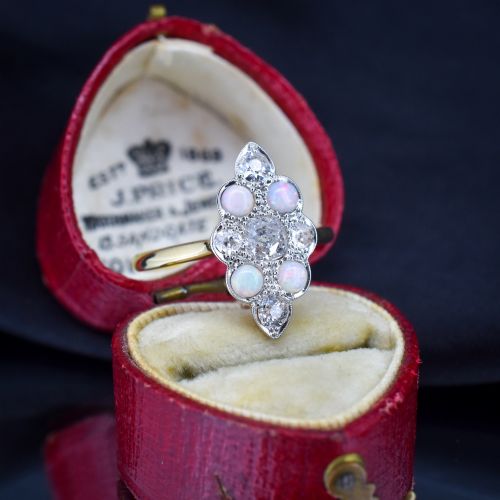
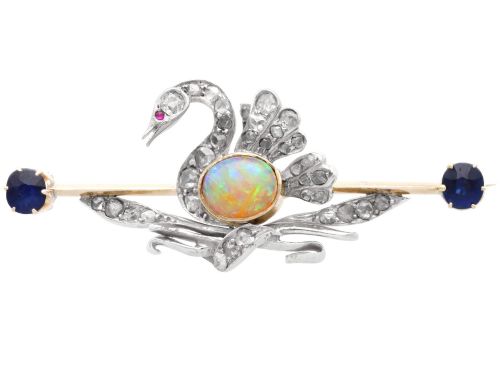
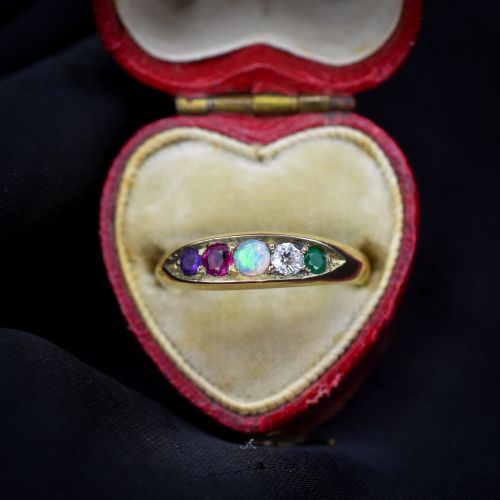
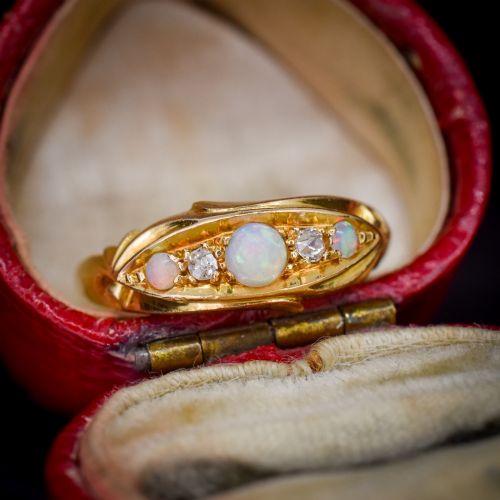
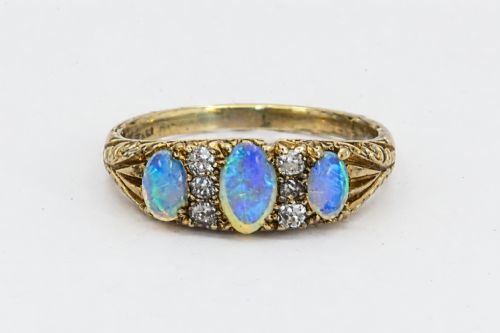
When searching for antique opal and diamond pieces, buyers encounter a rich assortment of rings, brooches, and pendants spanning the Victorian, Edwardian, and Art Deco periods. The selection on this page leans heavily toward classic ring formats like clusters, boat rings, and trilogies, alongside striking floral and animal brooches.
Most items date from the late nineteenth century through to the early decades of the twentieth century. Alongside rings, pendants and necklaces set in yellow gold, white gold, or platinum appear with regularity, often incorporating cabochon opals paired with rose cut or brilliant diamonds.
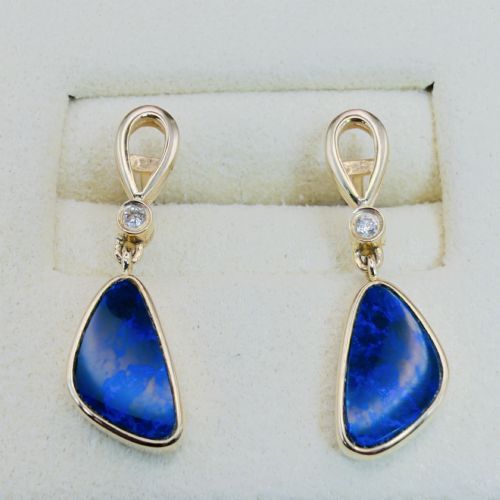
The materials reflect the prevailing tastes of their eras, moving from traditional yellow gold settings in Victorian pieces toward platinum and white gold as the twentieth century progressed. Buyers looking for specific forms will find everything from delicate clover brooches to substantial boulder opal pendants.
How they were made
Goldsmiths of the nineteenth and early twentieth centuries combined yellow gold, white gold, platinum, and silver to mount these fragile stones securely. Opals were typically cut en cabochon to display their play of colour, while diamonds were set using claw or bezel techniques to catch the light.
Many rings and brooches utilise mixed metal construction, pairing yellow gold bands with platinum or silver settings for the diamond elements. This method allowed craftsmen to maximise the brilliance of the stones while maintaining robust structural integrity.
Antique Opal and Diamond Retail Price Guide 2026
Typical asking prices for opal and diamond among the pieces listed under this phrase on Sellingantiques today, from the lower quarter to the upper quarter. They describe what is for sale here now, not the wider market.
Listings feature items spanning the Victorian era, the Edwardian period, and mid-century design, set in yellow gold, white gold, platinum, and silver.
What varies in quality
The play of colour within the opal and the overall harmony of the stone grouping set the standard across these pieces. Top examples display vibrant flashes across the entire surface of the opal, complemented by well-matched, lively diamonds rather than dull stones.
Mounting work also dictates value, with hand-forged platinum settings and detailed gold granulation representing superior craftsmanship. Pieces that retain crisp hallmarks and show little sign of excessive thinning to the band or claws command greater appreciation.
Knoll and Pregizer
The Antique Opal and Diamond Glossary
- Cabochon
- A gemstone shaped and polished with a smooth, rounded dome rather than faceted edges. This style is standard for opals to display their internal play of colour.
- Boat ring
- A ring setting shaped like an elongated boat, featuring a curved row of graduated stones across the finger. This form was especially popular during the Edwardian period.
- Trilogy ring
- A ring featuring three main stones set side by side, often symbolising the past, present, and future. In this selection, they typically pair a central opal with flanking diamonds.
- Boulder opal
- An opal found embedded in ironstone matrix, leaving part of the natural host rock attached to the back of the gem. This results in robust stones with deep, dramatic colour plays.
Antique Opal and Diamond: Frequently Asked Questions
How do I care for antique opals?
Opals contain water and require gentle treatment, so avoid harsh chemicals, ultrasonic cleaners, and extreme temperature changes.
Remove rings before washing hands or engaging in heavy manual work to protect both the stone and the antique gold setting.
Were these pieces worn every day?
Victorian and Edwardian rings and brooches were often created for daily wear, though softer stones like opals demand more care than diamonds alone.
Many surviving pieces show evidence of gentle, long-term use while retaining their structural integrity and vibrant colour.
How can I tell a Victorian piece from an Edwardian one?
Victorian items frequently utilise rich yellow gold and detailed chased or engraved motifs, reflecting mid-to-late nineteenth-century tastes.
Edwardian designs often shift toward lighter platinum and white gold settings, favouring delicate openwork lace patterns and airier geometric arrangements.