




Antique Oil Cruet
An antique oil cruet brings period dining habits to the table, combining cut glass and sterling silver in functional forms.
Antique Oil Cruet
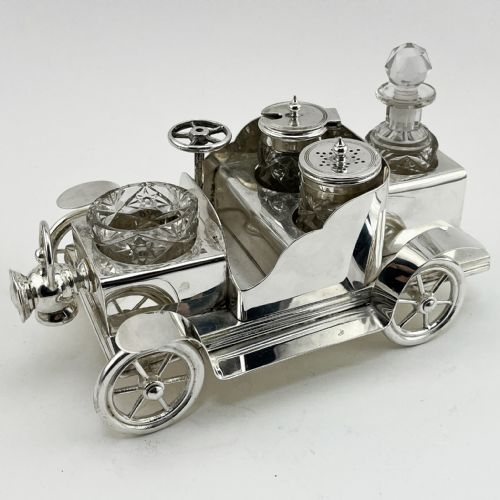
An antique oil cruet is a table vessel or stand designed to hold oil and vinegar for seasoning meals, appearing across periods from the eighteenth century through to the art deco era. These pieces range from single oil and vinegar bottles and jugs to elaborate multi-bottle cruet sets on stands.
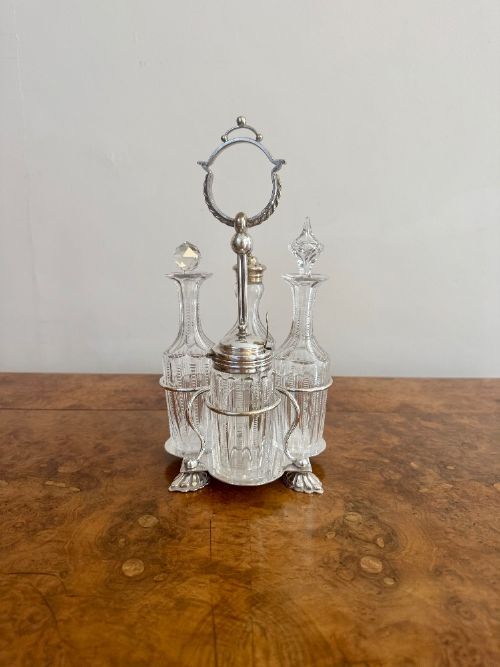
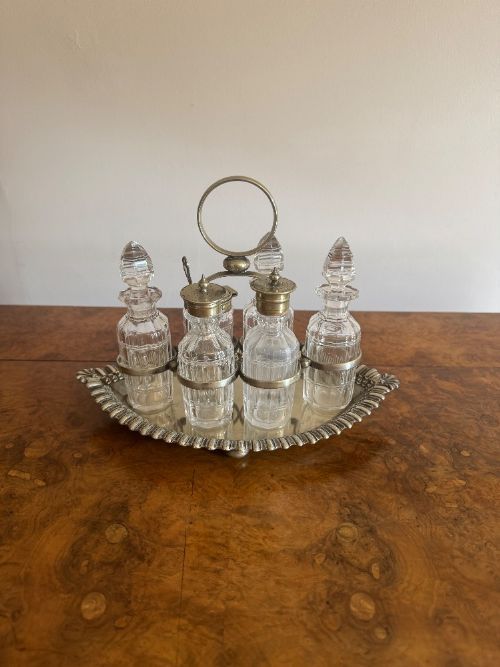
The version most commonly met on this page is the Edwardian silver-plated multiple-bottle cruet set, alongside Victorian sterling silver sets and Georgian examples. Forms include cruet stands, condiment sets, and individual glass bottles mounted in silver.
Makers and manufacturers produced these items in materials spanning cut glass, earthenware, faience, and silver plate, reflecting the shifting dining customs of the eighteenth, nineteenth, and early twentieth centuries.
How they were made
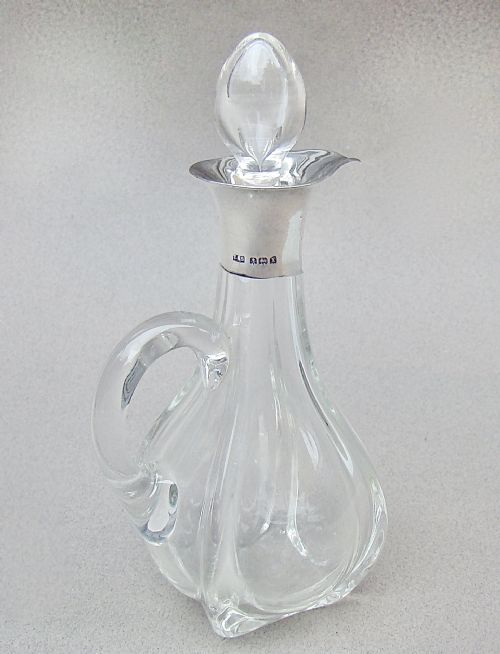
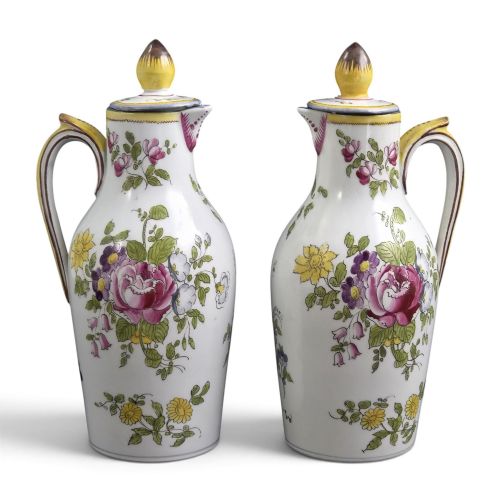
Makers shaped these objects using cut glass, heavy lead crystal, and earthenware, often mounting the glass bottles in sterling silver or silver plate. Metal components required casting, spinning, and silver-plating techniques, while ceramic examples such as faience utilised tin glazing and polychrome painting.
Silver mounts and stands frequently incorporated hallmarks or registration marks, indicating the year of production and the silversmith responsible for the metalwork. Glass bottles were hand cut or moulded, then fitted with silver collars and stoppers to contain the oil and vinegar.
Antique Oil Cruet Retail Price Guide 2026
Typical asking prices for oil cruet among the pieces listed under this phrase on Sellingantiques today, from the lower quarter to the upper quarter. They describe what is for sale here now, not the wider market.
Listings span periods from the 18th Century through the Victorian, Edwardian, and Art Deco eras, utilising cut glass, sterling silver, silver plate, and faience.
What varies in quality
Quality in these pieces depends upon the weight and clarity of the cut glass or crystal, the thickness and integrity of the silver plating or sterling silver mounts, and the crispness of any casting detail. Simpler silver-plated Edwardian sets contrast with heavier Georgian and Victorian sterling silver examples that demonstrate superior metalwork and substantial stands.
The completeness of a matched set of bottles within a cruet stand alters the overall character of the piece. Finer examples retain their original matching cut glass bottles and stoppers, whilst others incorporate replacement bottles or lack certain condiment containers.
Veuve Perrin Marseille·Mappin Brothers·Walker & Hall·Charles Thomas Fox·Elkington & Co·Hester Bateman·William Hutton & Sons·Wade Wingfield Wilkins
The Antique Oil Cruet Glossary
- Cruet stand
- A metal or ebonised wooden frame designed to hold multiple glass bottles for oil, vinegar, and condiments at the dining table. These stands often incorporate a central carrying handle.
- Faience
- Tin-glazed earthenware produced in European workshops, notable for its opaque white glaze and polychrome painted decoration. Pieces from makers such as Veuve Perrin exemplify this tradition.
- Silver plate
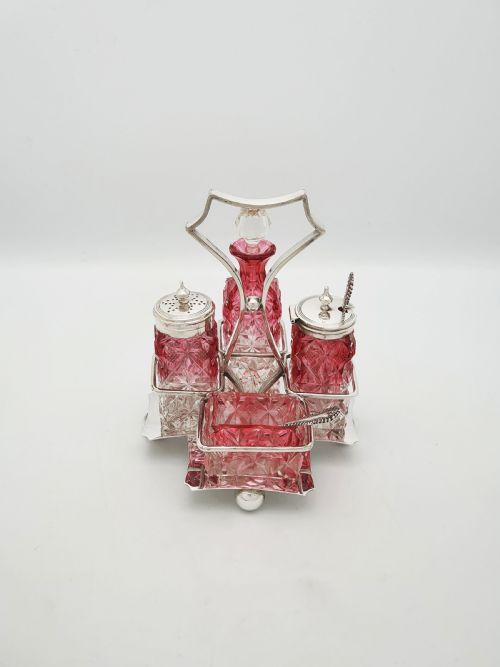
- A layer of silver bonded to a base metal core, widely utilised for Victorian and Edwardian cruet frames and condiment sets. This technique provided the appearance of solid silver at a lower cost.
- Cranberry glass
- A type of transparent red glass produced by adding gold chloride to the molten metal, frequently seen flashed onto cut glass cruet bottles during the Victorian and Edwardian periods.
Antique Oil Cruet: Frequently Asked Questions
What is an antique oil cruet used for?
An antique oil cruet holds and dispenses table oils and vinegars during meals. Sets often included bottles for mustard, pepper, and other condiments alongside the oil and vinegar.
These vessels sat upon dining tables or sideboards in Georgian, Victorian, and Edwardian households for convenient seasoning.
How do I date an antique cruet set?
Dating relies upon silver hallmarks, maker marks, registration numbers, and stylistic clues. Georgian and Victorian pieces frequently feature stamped city marks and date letters on the silver mounts.
Design styles such as Art Deco, Edwardian silver plate, or eighteenth-century faience provide broader chronological boundaries for the piece.
Are all bottles in a cruet set original?
Many multi-bottle cruet sets experienced breakage over time, leading to replacement bottles being added later. Examining the glass cuts, tint, and fit within the stand helps determine if the bottles belong together.
Matched sets with original stoppers retain greater consistency in their materials and period manufacture.
How should I clean silver-plated cruet stands?
Silver-plated stands require gentle cleaning with a specialised silver cloth or mild polish to preserve the plating over the base metal. Abrasive cleaners can wear away the thin silver layer on Victorian and Edwardian items.
Glass bottles and stoppers can be washed separately in warm soapy water to remove internal residue.