





Antique Office Stationery
These antique office stationery items are working desks, filing cabinets and desk accessories designed to organise correspondence and papers.
Antique Office Stationery
Antique office stationery spans a range of working furniture and desktop accessories designed for correspondence and document storage. You will encounter pieces spanning the Victorian, Edwardian, and Regency periods up to the early twentieth century.
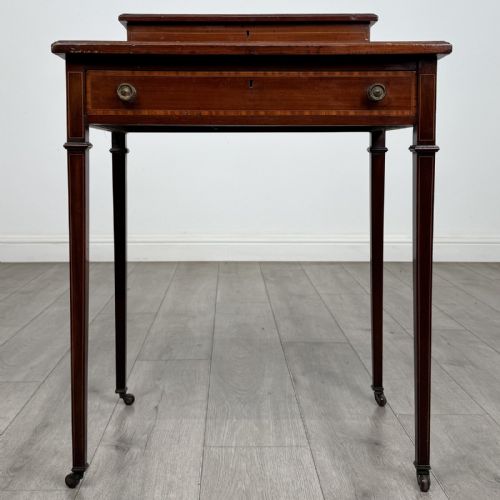
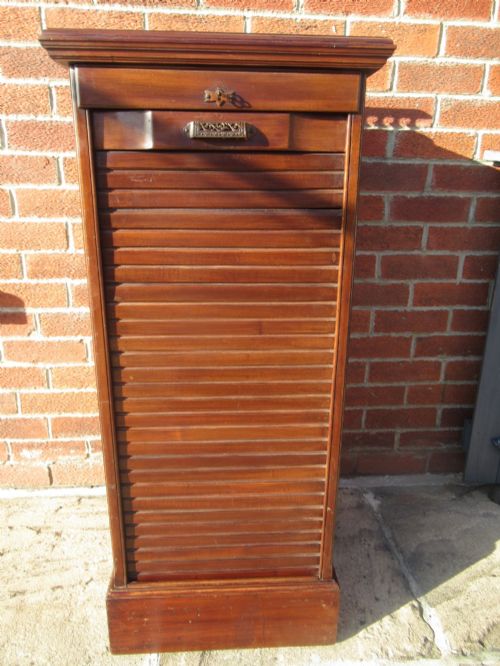
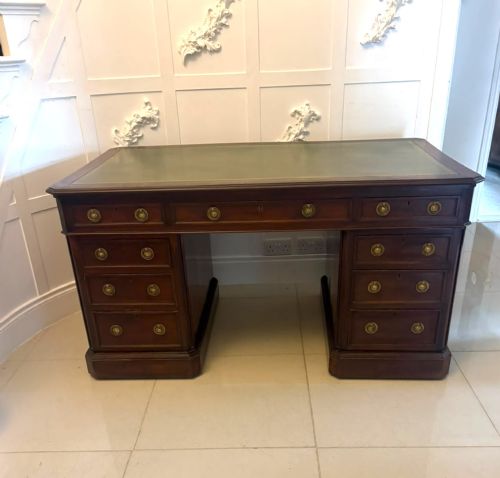
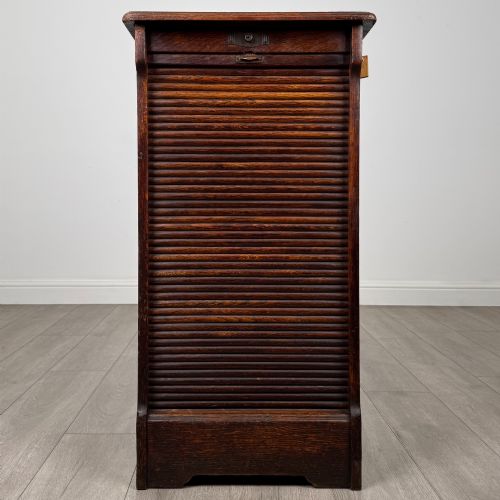
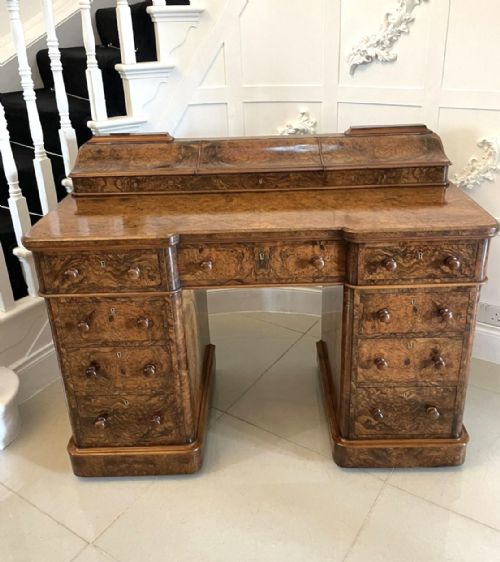
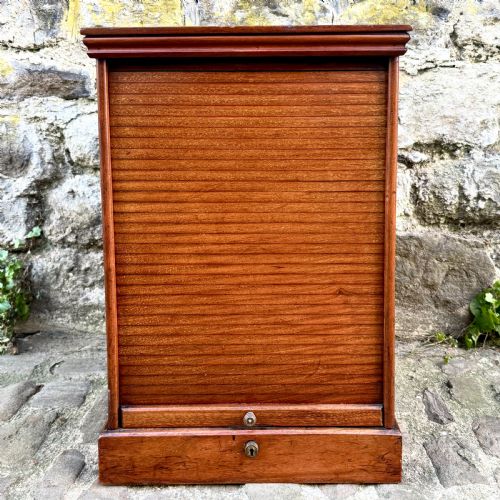
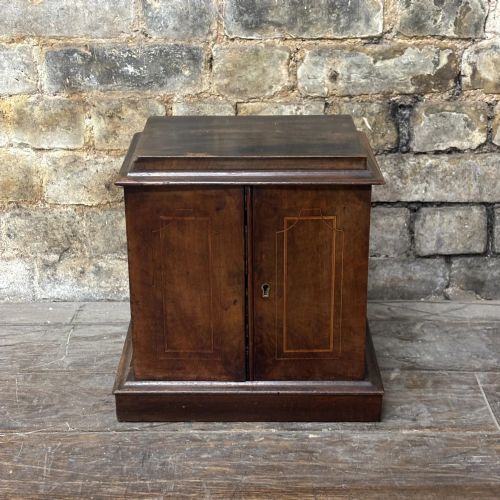
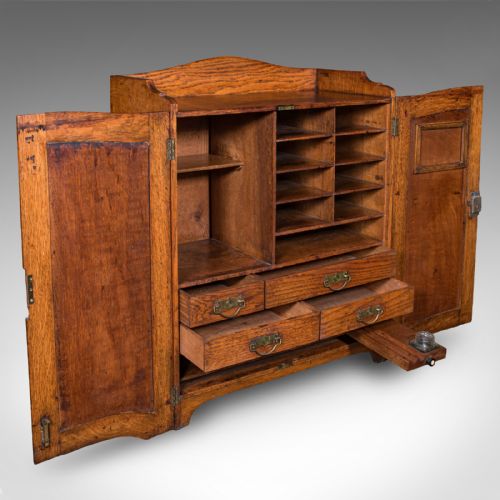
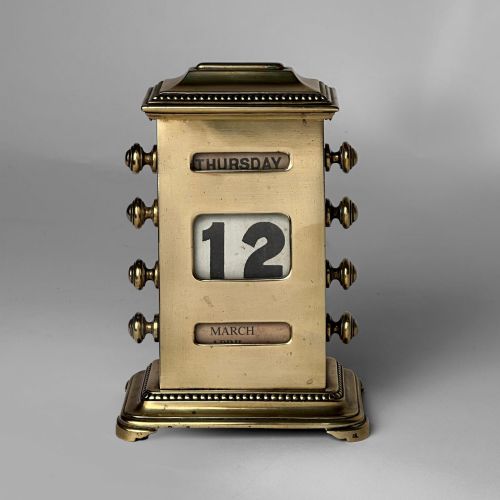
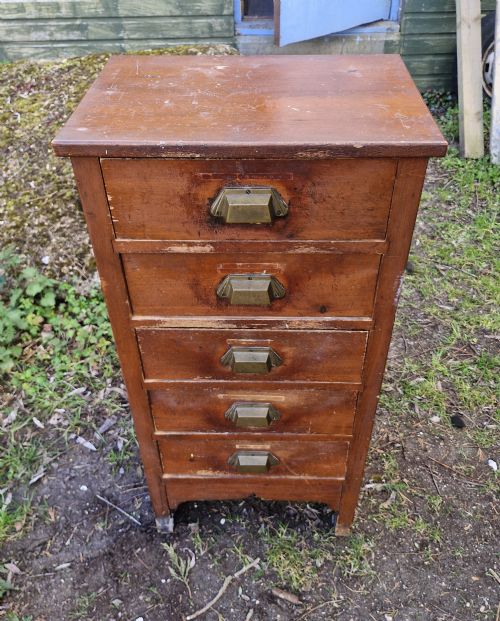
The selection on this page focuses on writing tables, pedestal desks, Davenport desks, filing cabinets, and tambour cabinets. Alongside large furniture, you find smaller desk accessories such as organisers, calendars, and pen holders.
Woods such as mahogany, oak, walnut, burr walnut, and rosewood dominate the larger pieces. Smaller items incorporate brass, boxwood, leather, and silver plating to serve daily administrative tasks.
Materials and construction methods
Cabinet makers utilised dense hardwoods like mahogany, oak, and walnut to build durable office furniture that withstood heavy daily use. Burr walnut and rosewood appeared on finer pieces, selected for their decorative grain patterns.
Tambour fronts utilised thin wooden slats glued to canvas backings to slide smoothly within grooved tracks on cabinets and desks. Drawers often featured hand-cut dovetail joints, while leather inserts provided durable writing surfaces.
Antique Office Stationery Retail Price Guide 2026
Typical asking prices for office stationery among the pieces listed under this phrase on Sellingantiques today, from the lower quarter to the upper quarter. They describe what is for sale here now, not the wider market.
An insurance agent's desk tidy sits alongside a gamekeeper's cabinet, proving that even paperwork required a touch of estate management flair.
What separates the finest pieces
Quality rests upon the selection of timber and the precision of the cabinet work. Fine examples display carefully matched veneer grains, substantial brass hardware, and well-executed interior fittings like secret compartments and adjustable shelves.
Maker attribution elevates a piece significantly, as demonstrated by workshops like Maple & Co. or Howard & Son. Condition of mechanical elements, such as working tambour doors and smooth drawer runners, dictates the standard of survival.
Maple & Co.·William Tonks of Birmingham·Tiffany & Co.·Howard & Son
The Antique Office Stationery Glossary
- Tambour
- A flexible sliding door constructed from narrow strips of wood attached to canvas. This mechanism allows access to cabinet interiors without requiring clearance for swinging doors.
- Davenport
- A compact writing desk featuring a sloping, leather-lined desktop and a set of drawers opening to the side. Victorian examples often incorporate internal stationery compartments.
- Cartonnier
- A piece of furniture fitted with multiple horizontal compartments or pigeonholes designed to hold papers and files. French examples frequently pair mahogany with leather details.
- Kneehole desk
- A freestanding desk with a central recess for the user's legs, flanked by pedestals of drawers. These pieces often include integrated writing slides and fitted stationery drawers.
- Secretaire chest
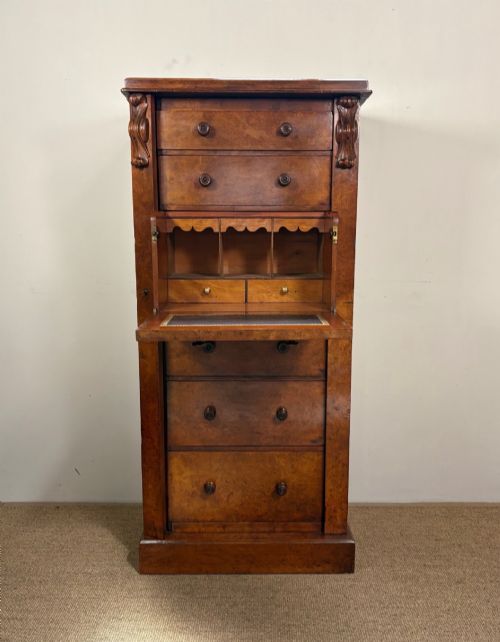
- A chest of drawers containing a fitted writing drawer with a drop-front panel. It conceals pigeonholes and small drawers for stationery storage.
Antique Office Stationery: Frequently Asked Questions
How do I use a Davenport desk?
A Davenport desk provides a compact writing station with a sloping top lined in leather for correspondence. You store paper and writing implements inside the stationery compartment hidden beneath the writing slope.
The drawers incorporated into the pedestal side hold further writing supplies and documents while keeping a small footprint in a room.
What materials were used for office furniture?
Cabinet makers built these pieces using solid hardwoods like mahogany, oak, walnut, and pine. Finer pieces featured decorative veneers such as burr walnut and rosewood to display striking grain patterns.
Desk accessories incorporated brass for calendars and clips, alongside leather writing surfaces and boxwood stringing details.
How can I date an office cabinet?
Dating relies on combining the stylistic period, the timber used, and the mechanical construction methods. Victorian pieces often show flame mahogany or burr walnut, while Edwardian and early twentieth-century pieces frequently utilise oak and tambour shutter mechanisms.
Hardware such as brass handles and maker marks provide additional clues to pinpoint the manufacturing era.