



Antique Oak Showcase
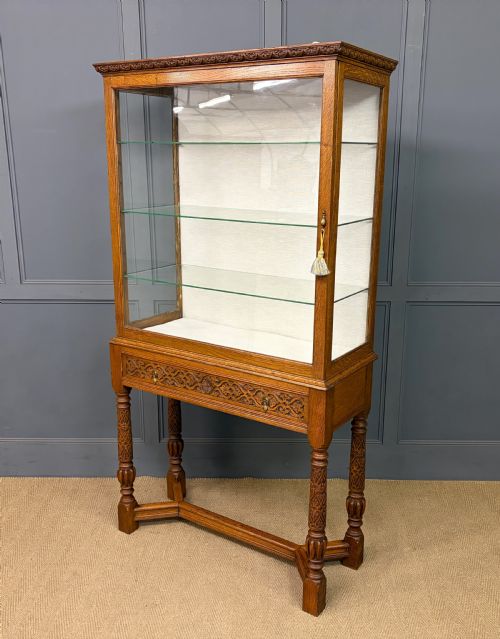
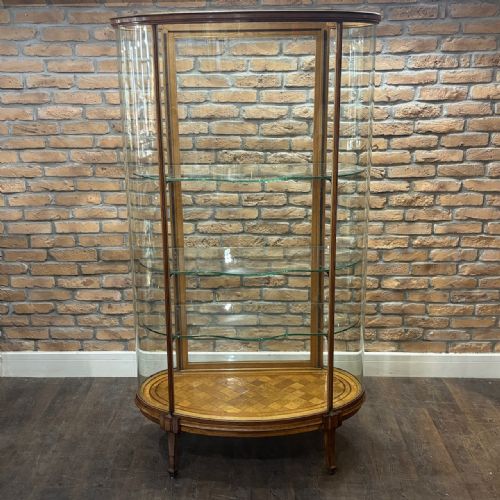
These antique oak showcases span Victorian, Edwardian, and Art Deco periods, offering functional display space crafted from solid timber and glass.
Antique Oak Showcase
An antique oak showcase serves as a practical enclosure for exhibiting prized objects, retail merchandise, or delicate specimens. Buyers seeking this phrase encounter a variety of forms ranging from compact countertop cabinets to large shop display counters and haberdashery fittings.
Originating largely from commercial and domestic contexts, these showcases utilise robust timbers to frame extensive glass panels. They reflect the practical display needs of late nineteenth and early twentieth century shops as well as domestic collectors.
How they were made
Makers built these cabinets using solid oak frames housing clear glass panes to maximise visibility from all angles. Brass hinges, handles, and iron fittings provided the necessary hardware for doors and drawers.
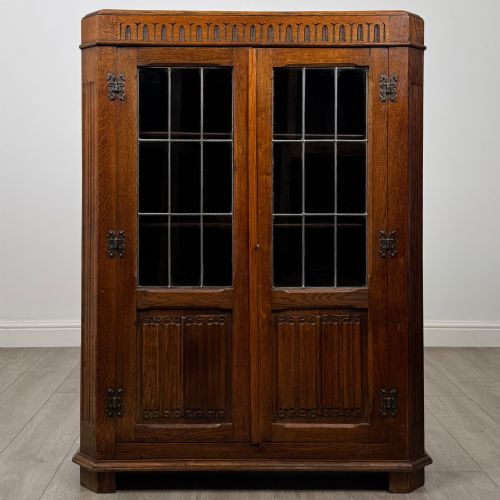
Construction techniques vary from traditional joinery seen in Jacobean Revival and Arts & Crafts pieces to the cleaner lines of early twentieth century commercial manufacturing. Certain examples incorporate leaded glass panels or internal fabric linings to enhance the presentation of goods.
Antique Oak Showcase Retail Price Guide 2026
Typical asking prices for oak showcase among the pieces listed under this phrase on Sellingantiques today, from the lower quarter to the upper quarter. They describe what is for sale here now, not the wider market.
Listings feature oak combined with glass, brass, iron, and chrome across Victorian, Edwardian, and Art Deco periods.
What varies in quality
Quality in an antique oak showcase rests on the robustness of the timber framing and the clarity of the original glass panels. Superior pieces exhibit fine joinery and thoughtful proportions that balance heavy wood sections with wide viewing areas.
The presence of original hardware, such as brass pulls and working locks, elevates a piece above standard utility items. Maker attribution, through stamps or notable firm associations like F. Sage & Co or Dudley & Co, further distinguishes the finest examples.
F. Sage & Co·Dudley & Co
The Antique Oak Showcase Glossary
- Haberdashery counter
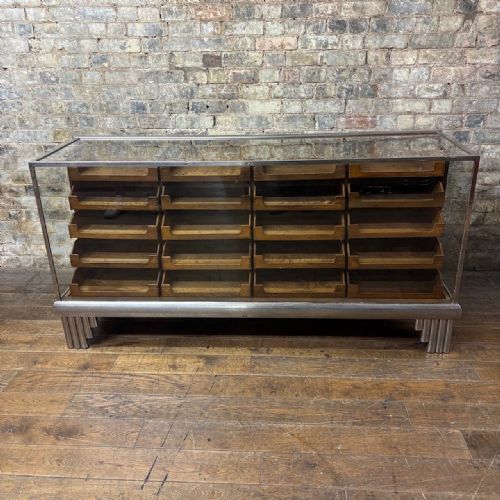
- A long commercial display unit featuring multiple drawers and glass sections designed for selling textiles and small wares. These counters offer substantial surface area and integrated storage.
- Display dome
- A blown glass cover mounted on a wooden base used for protecting delicate items or taxidermy specimens. They provide an airtight environment for fragile collectibles.
- Linenfold
- A style of wood carving that mimics folded fabric, frequently seen on panels of Edwardian cabinets. This decorative technique adds texture and historical revival detail to the woodwork.
- Countertop cabinet
- A smaller showcase designed to sit atop existing shop furniture or tables for eye-level customer browsing. They typically feature glazed doors and compact footprints.
- Shop fitting
- Custom furniture built specifically for commercial interiors during the nineteenth and early twentieth centuries. These pieces prioritise heavy-duty daily use alongside aesthetic presentation.
Antique Oak Showcase: Frequently Asked Questions
What is an antique oak showcase used for?
These cabinets were originally designed for commercial shops to present merchandise securely while allowing customers a clear view. Today, collectors utilise them in homes to exhibit small valuables, ceramics, or natural history specimens.
The enclosed glass design protects delicate objects from dust and handling while turning everyday items into curated displays.
How do I date an oak showcase?
Dating relies on examining construction methods, hardware materials, and stylistic details present in the woodwork. Victorian and Edwardian pieces often display heavier mouldings or linenfold carving, whereas 1920s and 1930s examples incorporate chrome and simpler commercial lines.
Maker marks or signs written on the glass can also provide reliable chronological markers for commercial fittings.
Where should I place a countertop cabinet?
Countertop cabinets suit placement on top of sideboards, tables, or desks where their height brings stored objects to eye level. Because they feature glass panels on multiple sides, positioning them near natural light enhances the visibility of the contents.
Ensure the supporting surface is level and capable of bearing the combined weight of solid oak and glass.
Are these showcases suitable for modern homes?
The warm tones of oak timber allow these cabinets to integrate smoothly into contemporary or traditional interiors. Their practical storage and display functions make them ideal for organising collections without cluttering living spaces.
Choosing between a large floor-standing counter and a small tabletop version depends entirely on available floor space and the scale of the collection.