




Antique Oak Plinth
These antique oak plinth pieces elevate sculpture and display, bringing solid timber craftsmanship and historical presence into a room.
Antique Oak Plinth
An antique oak plinth provides a sturdy architectural base or display surface, often taking the form of a column, pedestal stand, or carved support. When searching for an antique oak plinth, buyers encounter sturdy architectural columns and display stands shaped from solid timber.
The selections span distinct periods, ranging from eighteenth-century examples to later nineteenth-century Victorian and twentieth-century interpretations. Forms vary from simple rustic farmhouse stands to ornate carved spiral pillars and French display pedestals.
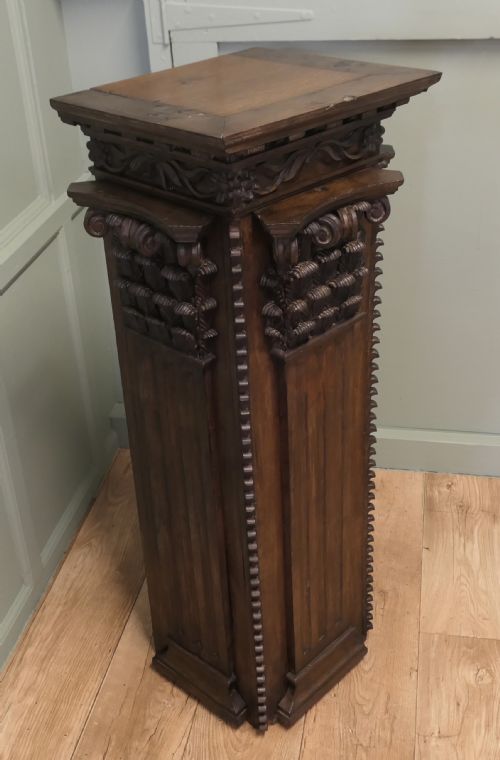
While many listings focus strictly on dedicated pedestals and columns, related forms such as altar sections, carved griffins, and wine press screws also incorporate heavy timber display elements. This variety reflects how functional wooden objects and architectural salvage are repurposed for interior display.
Materials and construction methods
Construction relies primarily on solid oak, frequently paired with secondary timbers like mahogany or accented with brass hardware and leather inserts. Craftsmen shaped these dense woods using traditional hand-carving techniques to produce deep relief ornamentation and structural columns.
Surface treatments range from natural dark oak patination to polished finishes that highlight the distinctive grain of the wood. Joinery methods reflect the period of origin, securing heavy upright columns and display platforms for long-term stability.
Antique Oak Plinth Retail Price Guide 2026
Typical asking prices for oak plinth among the pieces listed under this phrase on Sellingantiques today, from the lower quarter to the upper quarter. They describe what is for sale here now, not the wider market.
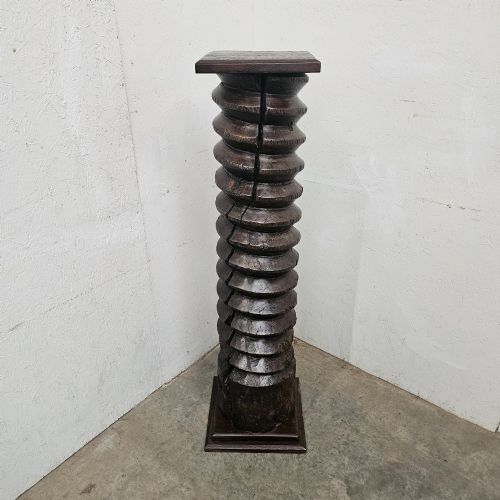
A French wine press screw thread from eighteen hundred finds new life alongside towering carved Medici lions.
Distinguishing quality in timber display pieces
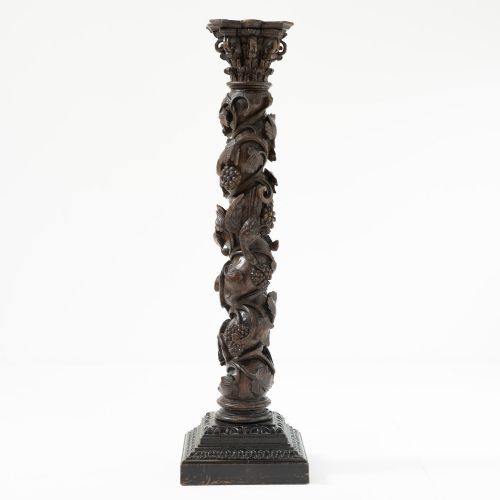
Quality rests upon the crispness of hand-carved details, such as spiral columns, Solomonic twists, and figural ornaments like griffins or lions. Sharp, deep chisel work indicates a higher level of craftsmanship than softer, machine-produced moulding.
The integrity of the timber itself dictates longevity, with dense grain and uniform colour marking superior selections. Heavier proportions and balanced structural design distinguish monumental display pedestals from lighter utility stands.
Deighton & Dunthorne Holborn London
The Antique Oak Plinth Glossary
- Solomonic pedestal column
- A spiral twisted column derived from classical architecture, frequently hand-carved from solid timber during the eighteenth and nineteenth centuries.
- Gothic Revival
- A nineteenth-century design style drawing on medieval architectural motifs, featuring pointed arches, heavy tracery, and serious structural forms.
- French Renaissance Revival
- An ornate nineteenth-century style incorporating classical motifs, cartouches, and elaborate relief carving inspired by sixteenth-century French furniture.
- Pedestal stand
- A raised vertical support designed to elevate sculpture, urns, or decorative objects above floor level.
- Baroque
- A flamboyant design style characterised by dramatic curves, rich ornamentation, and grand proportions dating from the seventeenth and eighteenth centuries.
Antique Oak Plinth: Frequently Asked Questions
What is an antique oak plinth used for?
These pieces serve primarily to elevate sculptures, bronzes, and decorative urns, giving them visual prominence in a room.
They also function as standalone architectural elements or display stands that anchor interior spaces with period character.
How do I date an antique oak plinth?
Dating relies on observing the carving style, construction joints, and wood patination relative to known historical periods.
Eighty-century pieces often display hand-turned Solomonic twists, while Victorian examples frequently show heavier Gothic or Renaissance revival ornamentation.
Are these plinths strong enough for heavy sculptures?
Solid oak construction provides substantial weight-bearing capacity suited for heavy bronze figures, marble busts, and large vases.
Their sturdy timber bases and broad footprints keep tall display columns stable under significant downward loads.
How should I care for antique oak furniture?
Regular dusting with a dry, soft cloth preserves the natural timber surface without stripping the accumulated historic patination.
Keep wooden pieces away from direct heat sources and extreme humidity fluctuations to prevent timber splitting.