





Antique Oak Planter
When you search for an antique oak planter, you encounter vessels built to hold greenery or fuel, shaped by centuries of cooperage and joinery.
Antique Oak Planter
An antique oak planter encompasses a range of vessels, from coopered buckets and barrels to turned plant stands and log boxes. These pieces serve domestic and garden settings, transitioning from functional farm or ship gear into decorative display items.
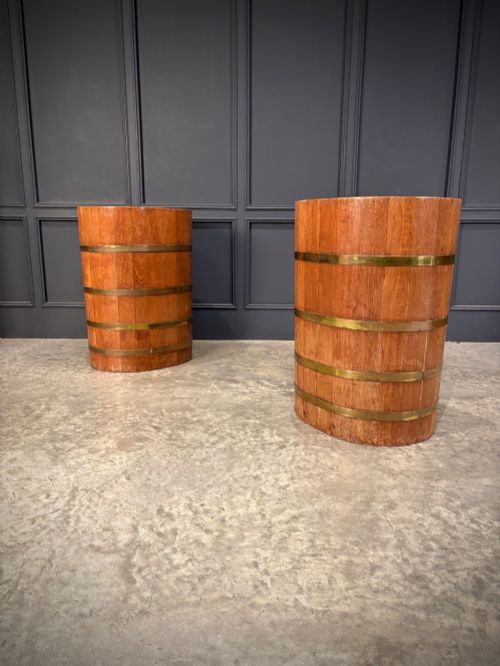
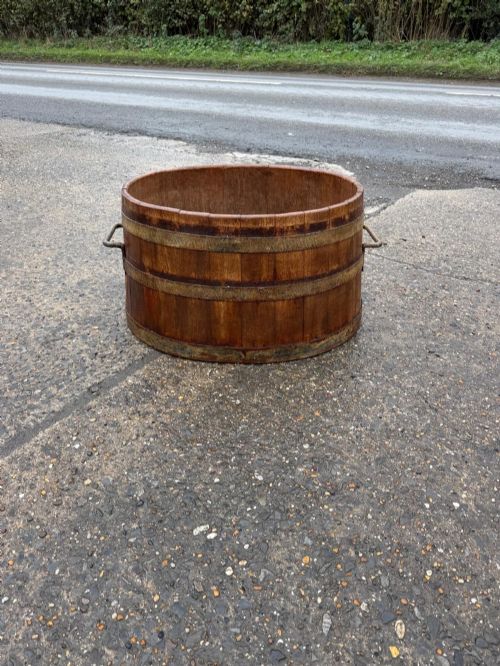
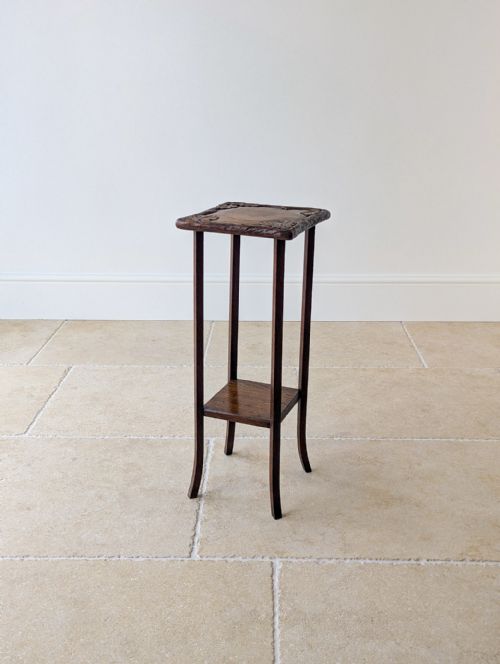
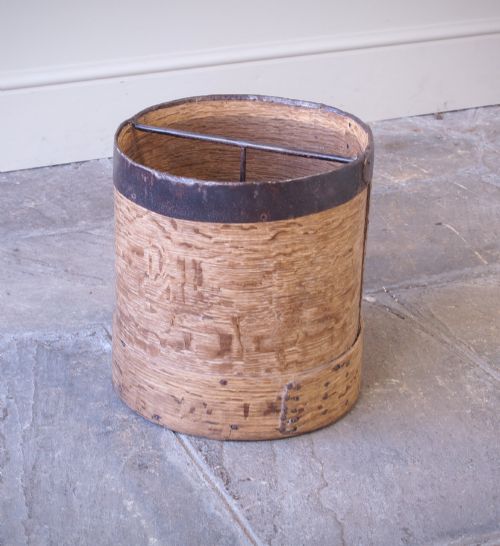
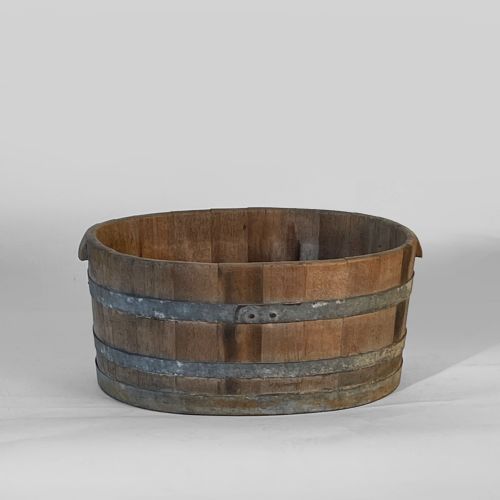
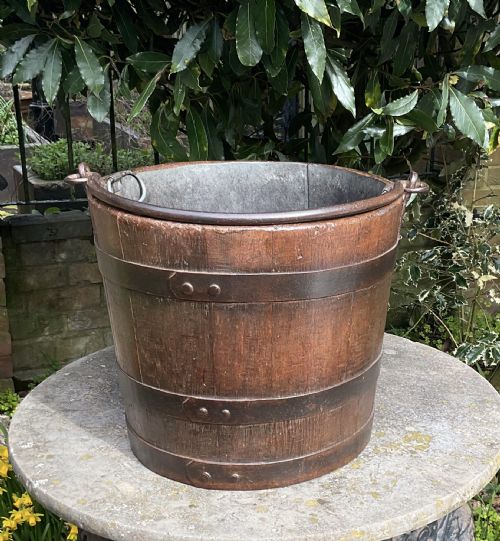
The version you most frequently meet on this page is the coopered oak bucket or barrel, often reinforced with brass, iron, or copper bands. Alongside these sit upright plant stands featuring barley twist columns and tiered platforms dating across the Victorian and Edwardian eras.
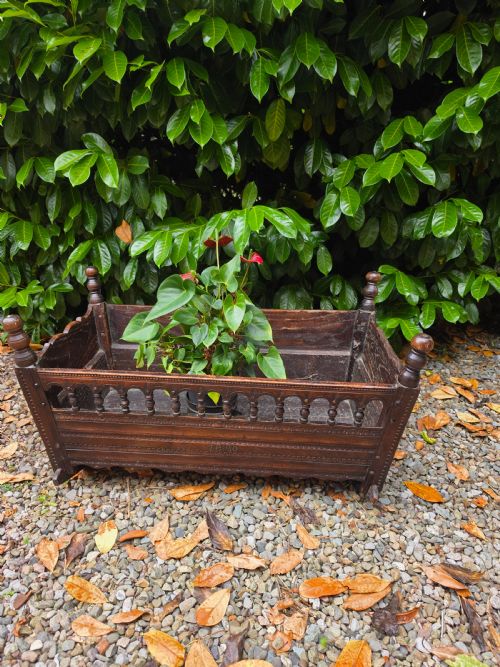
Origins stretch from English country workshops to French provincial makers and Scottish peat production. Older examples reach back to the seventeenth century through robust cradles and architectural fragments adapted for modern display.
How they were made
Makers utilised solid oak staves, shaped to curve tightly together and held under tension by metal hoops of brass, iron, or copper. This traditional cooperage technique ensures the vessel remains stable when exposed to damp soil or watering.
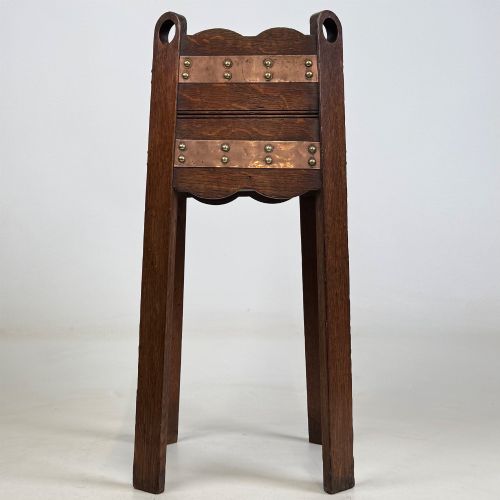
Joinery methods appear in the multi-tiered plant stands and log boxes, employing turned barley twist legs and pegged framing. Secondary timbers such as fruitwood occasionally supplement the primary oak structure, particularly in earlier regional pieces.
Antique Oak Planter Retail Price Guide 2026
Typical asking prices for oak planter among the pieces listed under this phrase on Sellingantiques today, from the lower quarter to the upper quarter. They describe what is for sale here now, not the wider market.
Several seventeenth-century oak cradles now lead a second life holding cascading ivies instead of infants.
What varies in quality
Quality rests in the harmony of the timber grain and the integrity of the metalwork bindings. Heavy brass or iron bands fitted flush against well-seasoned oak staves distinguish a substantial utilitarian object from a purely decorative reproduction.
Proportion and execution define the standing forms, where crisp turning on barley twist columns separates refined exhibition pieces from simpler vernacular items.
Lister and Co
The Antique Oak Planter Glossary
- Coopered
- Constructed from curved wooden staves bound together with metal hoops. This method originates from cask and bucket making.
- Jardinière
- An ornamental pot or stand designed to hold growing plants or flowers. These vessels often feature metal liners to protect the wood from moisture.
- Barley twist
- A decorative turning style resembling a spiralling rope. It appears frequently on the vertical supports of plant stands.
- Stave
- One of the narrow strips of oak that form the sides of a barrel, bucket, or tub. The edges are bevelled to ensure a tight seal.
- Log box
- A heavy container traditionally used to store firewood by the hearth. Many surviving examples share construction traits with agricultural tubs.
Antique Oak Planter: Frequently Asked Questions
What is an antique oak planter used for?
These pieces function primarily as indoor plant holders, garden vessels, or fireside fuel bins for logs and coal.
Historical examples often began life as grain measures, washing tubs, or well buckets before finding new purpose in domestic display.
How do I care for an oak planter?
Protect the interior wood by utilising a suitable plastic or metal liner to prevent direct contact with wet soil and standing water.
Feed the exterior oak periodically with a mild beeswax to maintain the lustre of the grain without sealing the historic finish.
How can I tell the period of a planter?
Dating relies on construction marks, hardware types, and prevailing styles such as Arts and Crafts or Georgian turning. Hand-hammered metal bands and pegged joinery point toward earlier manufacture, whereas later Edwardian pieces often exhibit machine finishing.
Examine the base and interior wear patterns to confirm the age of the timber relative to the metalwork.