


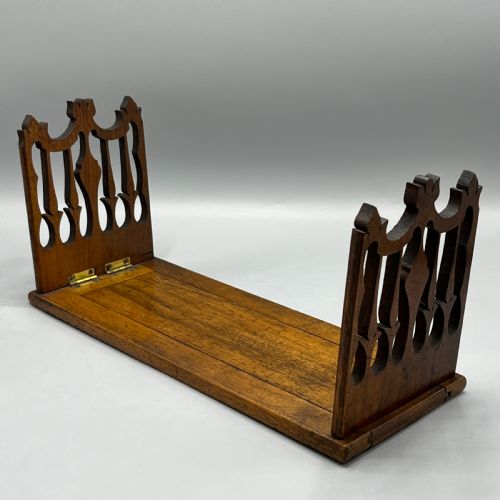
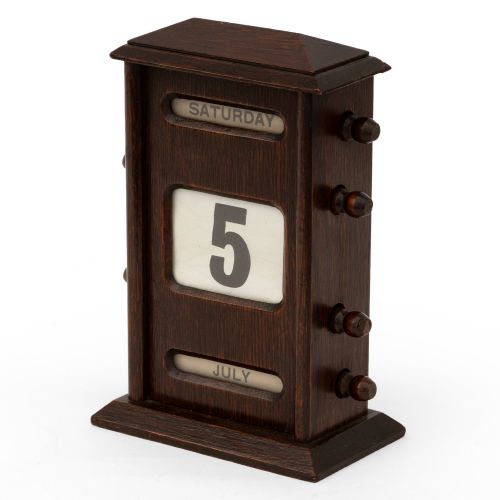
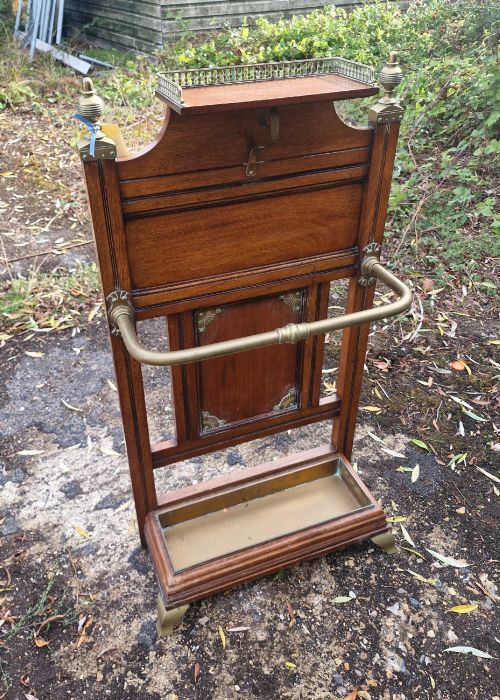
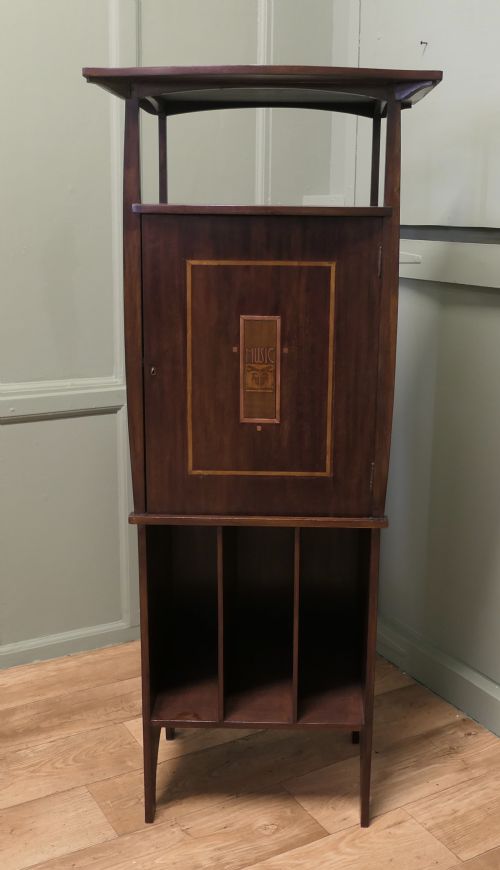
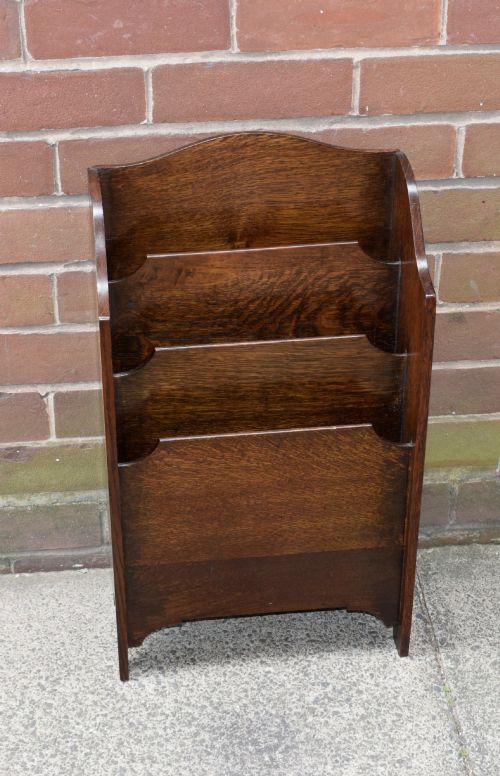
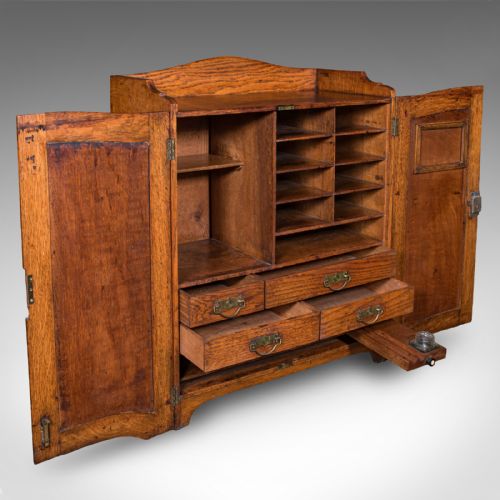
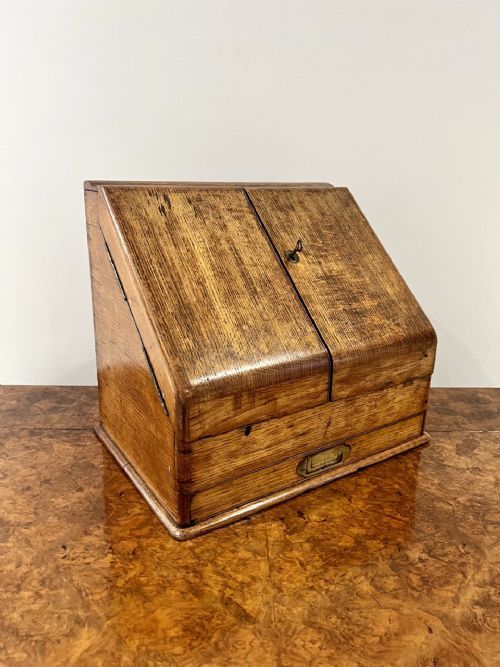

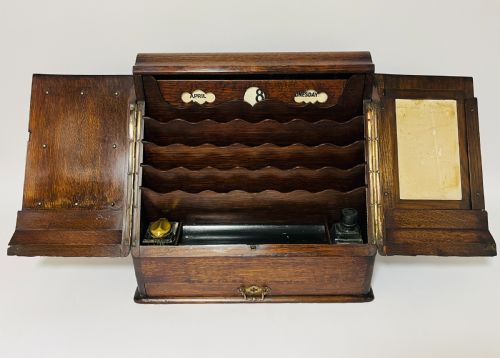


Antique Oak Organizer
An antique oak organizer keeps correspondence, writing instruments, and household papers sorted in sturdy timber built to last centuries.
Antique Oak Organizer
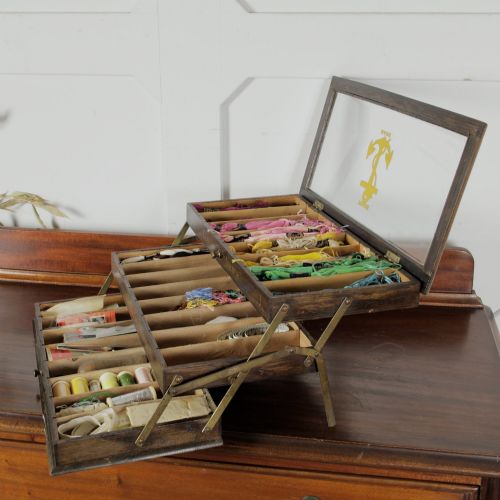
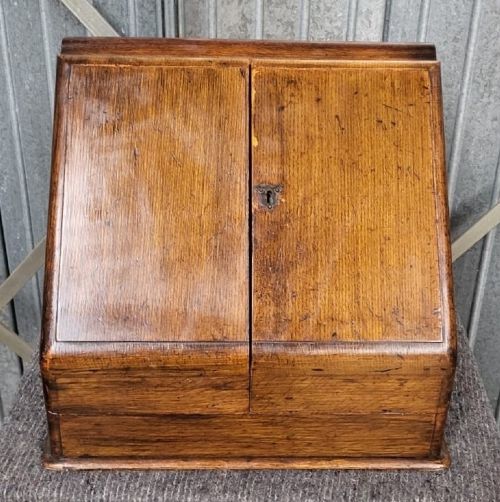
When you search for an antique oak organizer, you encounter desktop storage pieces designed to manage letters, stationery, and small personal belongings. The evidence shows these items span the Georgian, Victorian, and Edwardian eras, alongside pieces attributed to the Arts and Crafts movement.
Stationery boxes, correspondence cabinets, and desk tidies represent the most common forms on this page. Makers produced these functional items for studies, country house halls, and offices, utilising robust timber to withstand daily handling.
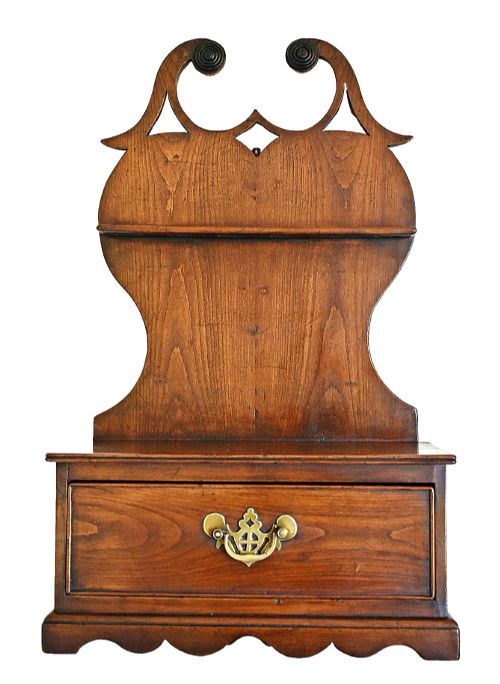
Domestic and institutional settings both generated demand for specialised storage, leading to varied formats from tabletop boxes to wall-mounted requisitions boxes. Each piece reflects the organisational needs of its period, relying on fitted compartments and drop-front panels to keep papers tidy.
Materials and Technique
Craftsmen built these organizers primarily from solid oak, sometimes selecting golden or dark varieties, and paired the timber with brass hinges, locks, and mounts. Glass, iron, and silver additions appear on specific pieces, providing structural reinforcement and decorative contrast.
Joinery techniques ranged from dovetail joints on small desk boxes to framed panels on larger cabinets and hall stands. Carving, hand-finishing, and fitted interior partitions required precise woodworking skills suited to daily desktop use.
Antique Oak Organizer Retail Price Guide 2026
Typical asking prices for oak organizer among the pieces listed under this phrase on Sellingantiques today, from the lower quarter to the upper quarter. They describe what is for sale here now, not the wider market.
A Scottish estate gamekeeper's cabinet shares shelf space with castle purser's boxes and Victorian riding boot stands.
Markers of Quality
Quality in these organizers rests on the crispness of the timber selection, the integration of brass hardware, and the complexity of the interior arrangement. Pieces featuring secret drawers, matched grain patterns, and working original locks demonstrate superior workshop execution.
The distinction between standard utility items and finer examples lies in the attention paid to hidden surfaces and internal dividers. Well-constructed joints and substantial brass mounts elevate a piece above simpler utilitarian boxes.
GM Elwood for JS Henry·Amberg
The Antique Oak Organizer Glossary
- Stationery box
- A desktop container designed to hold writing paper and envelopes upright in tiered slots. These boxes often feature sloping lids or fall-front panels.
- Correspondence box
- A lidded box intended for incoming and outgoing letters, frequently fitted with compartments labelled for sorting. They often include calendar attachments or inkwell wells.
- Desk tidy
- A low-profile tray or box combining pen rests, inkstands, and small compartments for daily desk accessories. They keep loose items contained in a compact footprint.
- Fall front
- A hinged panel that drops forward to reveal a fitted interior of pigeonholes and small drawers. This mechanism provides access to documents while concealing contents when closed.
Antique Oak Organizer: Frequently Asked Questions
What is an antique oak organizer used for?
These pieces served to sort letters, store stationery, and hold writing implements in domestic studies and offices.
Today, they function effectively on modern desks for containing mail, notebooks, and small desk accessories.
How do I date an antique oak organizer?
Dating relies on stylistic clues such as Victorian Gothic details, Edwardian proportions, or Arts and Crafts movement motifs.
Hardware styles, construction methods like hand-cut dovetails, and timber finishes also help establish the period of manufacture.
Are these organizers made of solid oak?
The listings show that the primary material across these organizers is oak, often specified as golden or dark oak.
Secondary woods may appear in internal drawer linings, while brass and glass provide structural and decorative details.
How should I care for an oak desk box?
Keep the timber away from direct heat sources and sudden humidity changes to prevent the wood from splitting.
Apply a microcrystalline wax periodically to nourish the surface and maintain the natural sheen of the antique finish.