


Antique Oak Log Box
An antique oak log box brings honest fireside utility and rich timber warmth to any hearth.
Antique Oak Log Box
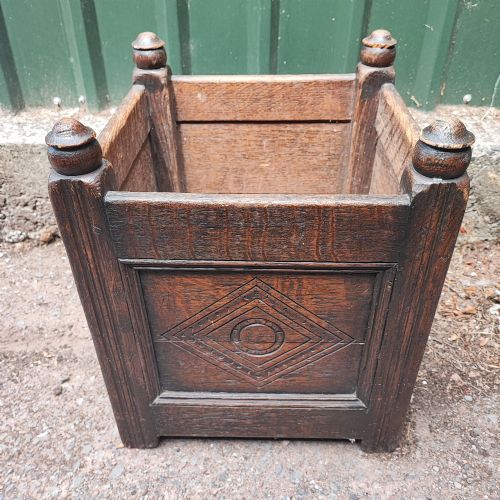
When you search for an antique oak log box, you encounter heavy fireside storage built to house fuel next to the hearth. These pieces range from robust 18th-century country chests to carved Victorian purdoniums and Edwardian boxes.
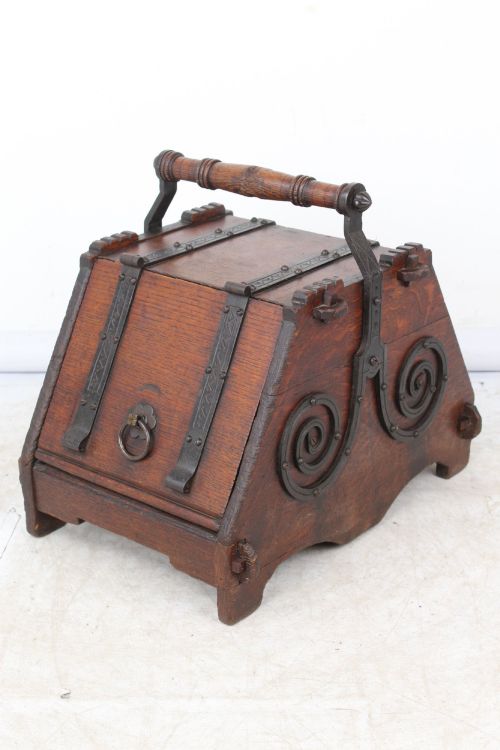
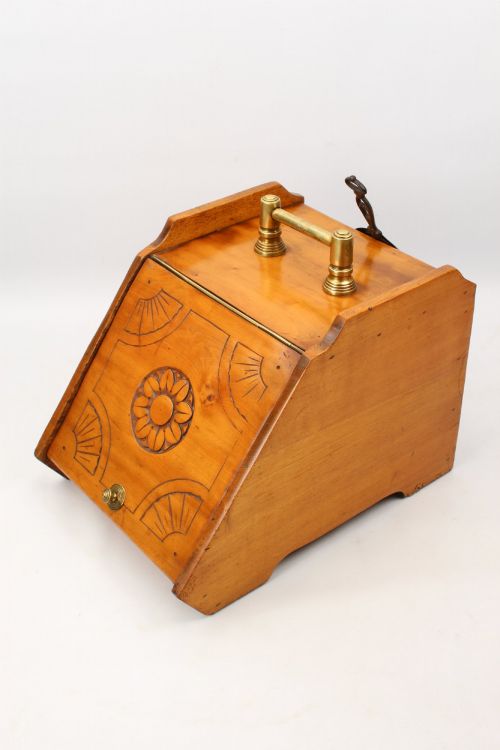
You are most likely to meet Victorian and Edwardian examples on this page, often featuring hinged lids and metal linings for coal or logs. Many incorporate brass handles, iron strapwork, or carved panels characteristic of the period.
Originating as practical household items in Georgian and Victorian homes, these oak boxes double as sturdy chests and fireside bins. Their forms vary from plain rustic utility boxes to elaborate Gothic Revival and Arts & Crafts designs.
Materials and construction
Makers built these pieces primarily from solid oak, chosen for its durability and strong grain pattern. Metal fittings in brass, copper, and wrought iron provided structural reinforcement and functional handles.
Joinery methods include traditional dovetailing and pegged joints on the earlier Georgian and 18th-century chests. Later Victorian and Edwardian models frequently utilise applied carved mouldings and fitted metal interiors.
Many a Victorian homeowner relied on a drop-front purdonium to slide coal directly onto the fire without lifting a finger.
Factors of quality
The standard of timber selection and the crispness of the hand-carving distinguish finer examples from standard utility boxes. Pieces retaining their original metal linings, decorative hinges, and matching shovels command greater appreciation.
Structural integrity, especially the condition of the oak boards and the attachment of the heavy lids, marks the difference between well-preserved survivals and heavily altered items.
Christopher Dresser·Liberty London
The Antique Oak Log Box Glossary
- Purdonium
- A specialised coal box or scuttle, typically featuring a sloping front drop-down door designed for domestic hearth use.
- Coal Scuttle
- A container used for holding coal near a fireplace, often made with a metal liner and carrying handle.
- Gothic Revival
- An architectural and decorative style popular in the 19th century, known for pointed arches, heavy carving, and medieval motifs.
- Arts & Crafts
- A design movement emphasising handcraftsmanship, simple structural forms, and integrated metalwork panels in copper or brass.
- Dovetail
- A joint formed by interlocking wedge-shaped fingers, commonly found at the corners of high-quality wooden boxes.
Antique Oak Log Box: Frequently Asked Questions
What is an antique oak log box?
An antique oak log box is a heavy wooden container designed to hold firewood or coal by the hearth. These sturdy receptacles combine practical fuel storage with period craftsmanship.
They appear in various forms, from simple 18th-century country chests to elaborately carved Victorian purdoniums and Edwardian copper-panelled bins.
How were they used originally?
These boxes sat beside open fires to keep dry logs or coal close at hand for stoking the hearth. Their robust construction protected the surrounding floor from dirt and debris.
Many included fitted metal interiors or separate liners to catch coal dust and prevent moisture from damaging the outer oak timber.
How do I date an oak log box?
Dating relies on observing construction methods, timber patination, and stylistic details such as hardware and carving. Earlier 18th-century examples often display hand-pegged joinery and plain board construction.
Victorian and Edwardian pieces frequently incorporate machine-sawn elements, applied decorative mouldings, drop-front doors, and stamped brass or copper ornamentation.
How do I care for antique oak?
Maintain antique oak by keeping it away from direct heat sources and sudden temperature shifts, which can cause the timber to split. Regular dusting and occasional applications of appropriate wax help preserve the finish.
Avoid placing damp logs directly onto unprotected wooden bases by utilising the original metal liners or internal trays where present.