



Antique Oak Gallery Table
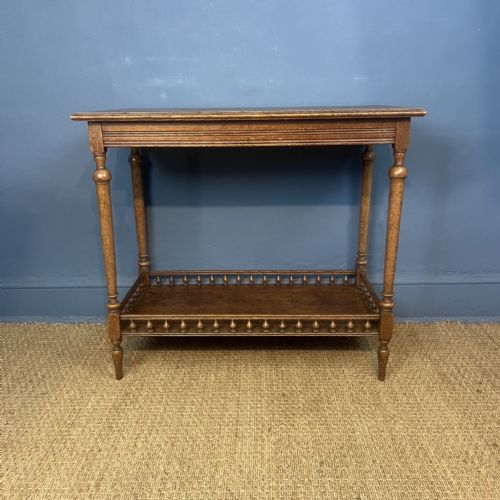
An antique oak gallery table brings robust timber and raised plate rails into a room, offering both a sturdy surface and secure display.
Antique Oak Gallery Table
An antique oak gallery table combines functional timber framing with a raised border, designed to keep items secure upon the surface. The pieces on this page span the Victorian and Edwardian eras, alongside pieces from the nineteenth and early twentieth centuries.
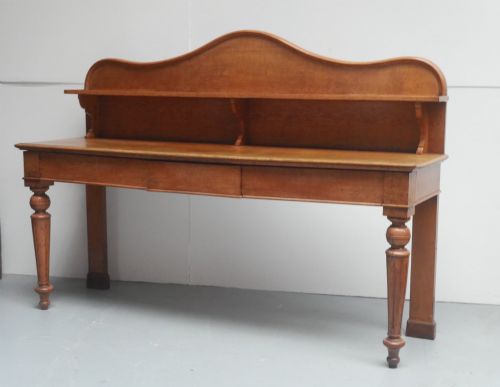
The forms vary from compact side tables and two tier rectangular tiers to butler trays on stands and serving tables. Oak remains the principal timber, often paired with brass hardware, leather inserts, and contrasting woods.
Makers and designers drew upon stylistic movements such as the Aesthetic Movement, Arts and Crafts, and Gothic Revival. Buyers encounter both utilitarian country house pieces and refined urban commissions.
Materials and construction
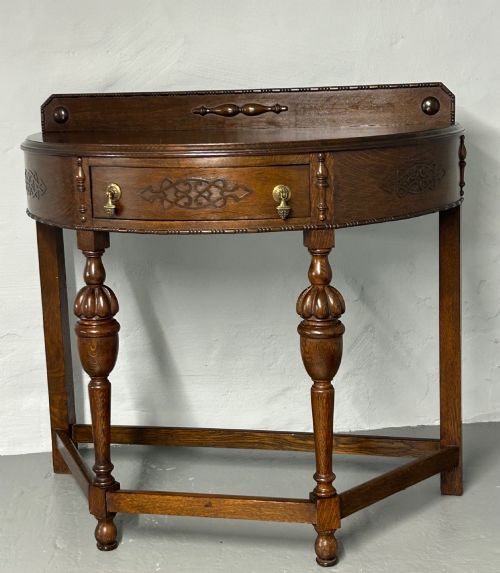
Carpenters utilised solid oak alongside figured oak, complemented by decorative details in satinwood, kingwood, and ebonised wood. Brass fittings and original handles appear frequently on drawers and structural mounts.
Joinery techniques supported heavy use in country houses, estate offices, and halls, resulting in sturdy underframes, bobbin legs, and Gothic supports.
Listings feature oak combined with brass, leather, satinwood, kingwood, and ebonised wood across Victorian and Edwardian periods.
Evaluating craftsmanship and condition
The distinction between standard utility items and finer examples lies in the selection of timber, such as figured golden oak, and the integration of decorative crossbanding or carved elements. Superior pieces exhibit refined joinery and well-preserved original hardware.
Proportion and stylistic cohesion separate basic workshop output from pieces associated with notable firms, where details like Gothic underframes or carefully fitted gallery rails demonstrate greater ambition.
Gillow & Co·Charles Bevan
The Antique Oak Gallery Table Glossary
- Gallery rail
- A raised border around the top of a table or desk, designed to prevent items from rolling off. It often consists of pierced woodwork or metal spindles.
- Crossbanding
- A strip of veneer applied perpendicularly to the grain of the main surface along the edges. This technique creates a neat framing effect.
- Bobbin leg
- A turned furniture leg shaped to resemble a string of bobbins or spools. This turning style is characteristic of seventeenth-century revival furniture popular in the Victorian period.
- Butler tray
- A portable wooden tray with raised sides, traditionally lifted off its folding stand for serving. In gallery formats, the tray often locks or sits securely within a fixed frame.
Antique Oak Gallery Table: Frequently Asked Questions
What is an antique oak gallery table used for?
These tables function as side pieces, hall furniture, or display surfaces in reception rooms. The raised gallery edge allows them to hold small items securely.
Historically, similar forms served estate managers or held serving dishes in larger houses.
How do I identify a Victorian oak table?
Victorian examples often display heavier carved decoration, bobbin legs, or Gothic revival motifs. The use of solid oak combined with brass hardware points directly to nineteenth-century production.
Drawer linings and construction methods also help confirm the period of manufacture.
Are these tables suitable for everyday use?
Oak construction provides exceptional durability and structural strength for daily placement in hallways or living areas. The robust timber handles standard household tasks easily.
Care should be taken to protect antique finishes from excessive moisture and direct heat.