
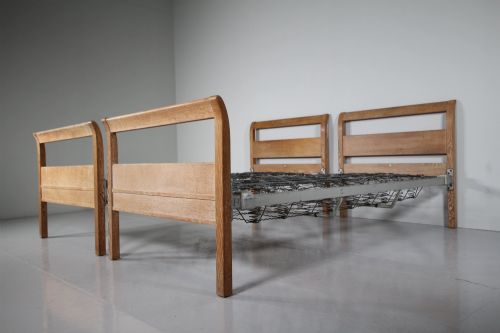
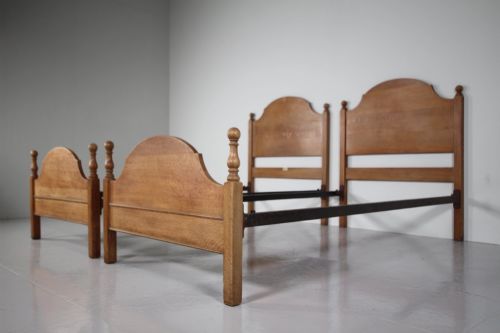
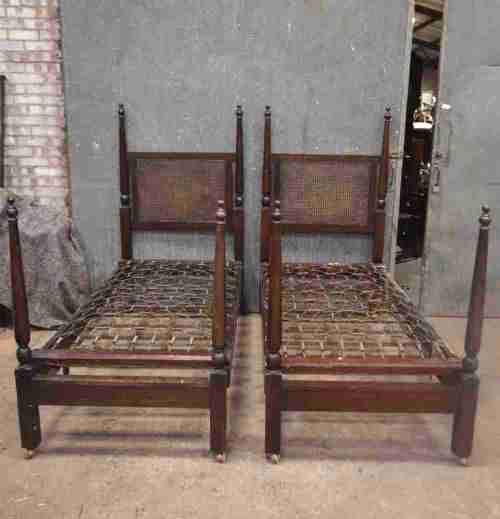


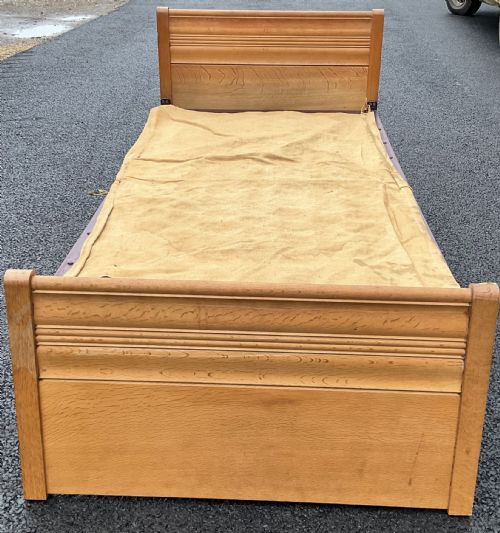
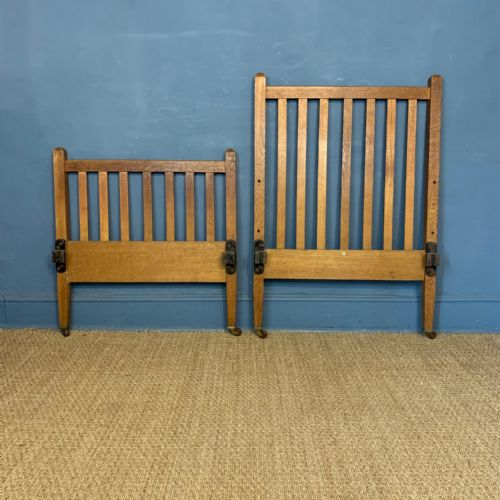


Antique Oak Bedstead Single
An antique oak bedstead single brings solid construction and warm grain into a bedroom, offering a timeless sleep frame.
Antique Oak Bedstead Single
When you search for an antique oak bedstead single, you encounter robust single beds and bed frames dating from the nineteenth century through the mid-twentieth century. The selection ranges from rustic nineteenth-century examples to refined Arts and Crafts and Edwardian iterations.
You frequently meet pairs of single beds alongside individual bedsteads, often bearing the labels of prominent London makers. Common stylistic influences include Gothic Revival, Colonial Revival, French Chateau, and Art Deco alongside straightforward vernacular pieces.
The forms encompass panelled headboards, four-poster configurations, and bergere variants incorporating woven cane panels. Many pieces integrate iron, steel, brass, or cast iron internal structures or fittings to support modern mattress requirements.
How they were made
Cabinetmakers constructed these bedframes primarily from solid oak, sometimes applying a limed finish to lighten the timber tone. Carved detailing adorns headboards and footboards on many Edwardian and Jacobean revival models.
Secondary materials such as cane form bergere panels within wooden frames, whilst brass and iron provide structural reinforcement and mechanical stability. Cast iron and steel components appear in the internal brackets and rails supporting the timber framework.
The listings on this site span the nineteenth century, the Edwardian era, and the 1920s, predominantly featuring oak alongside auxiliary iron, cane, and brass.
What varies in quality
The distinction between standard commercial production and superior cabinetmaking lies in the depth of carved detail, the integrity of pegged or tenoned joints, and the presence of maker labels. Master workshops utilised superior quarter-sawn oak which displays prominent medullary rays.
Hardware execution and secondary materials such as fine-weave cane panels or heavy brass fittings elevate certain examples above plain vernacular furniture. The fidelity of revival styles to original period joinery methods dictates the enduring strength of the frame.
Heal and Son·Heals
The Antique Oak Bedstead Single Glossary
- Bergere
- A wooden framed chair or bedhead inset with woven cane panels. This technique adds textural lightness to solid timber furniture.
- Quarter-sawn
- Timber cut radially through the growth rings to produce stability and prominent decorative grain patterns often called silver grain.
- Jacobean
- A seventeenth-century design style revived during the Victorian and Edwardian periods, characterised by dark oak, geometric mouldings, and heavy turning.
- Tenon
- The projecting end of a piece of wood shaped to fit into a mortise hole to form a rigid woodworking joint without modern fixings.
Antique Oak Bedstead Single: Frequently Asked Questions
Will a standard modern mattress fit an antique single bedstead?
Many antique single bedsteads vary slightly from contemporary standard mattress dimensions. You often need to check exact internal rail measurements before purchasing.
Custom mattress makers can supply bespoke dimensions to fit older wooden frames precisely without altering the antique side rails.
How do I assemble an antique wooden bed frame?
Most antique oak bedsteads utilise iron side rails that slot into cast-iron sockets on the headboard and footboard. Tightening the bolts secures the structure square.
Wooden wedge systems also appear on period frames, requiring careful tapping to lock the tenons into place.
Can I dismantle these beds for transport and moving?
Edwardian and later single bedsteads were designed to dismantle completely into headboard, footboard, and two side rails. This modular construction aids relocation.
Earlier vernacular pieces may have fixed joints that require professional disassembly to prevent damage to the timber.
How do I care for oak and cane bed components?
Solid oak benefits from occasional applications of natural beeswax to nourish the grain and maintain a soft lustre. Avoid silicone polishes that build up over time.
Cane panels require gentle dusting and occasional light moisture to prevent the natural rattan from becoming brittle and snapping.