


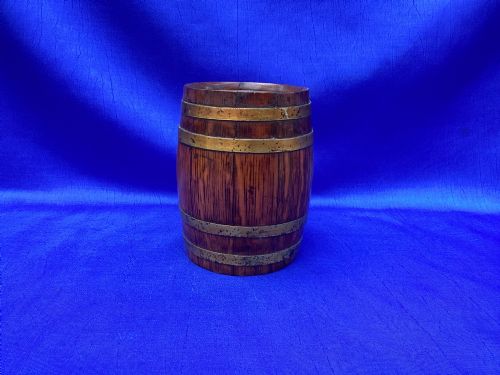


Antique Oak Barrel
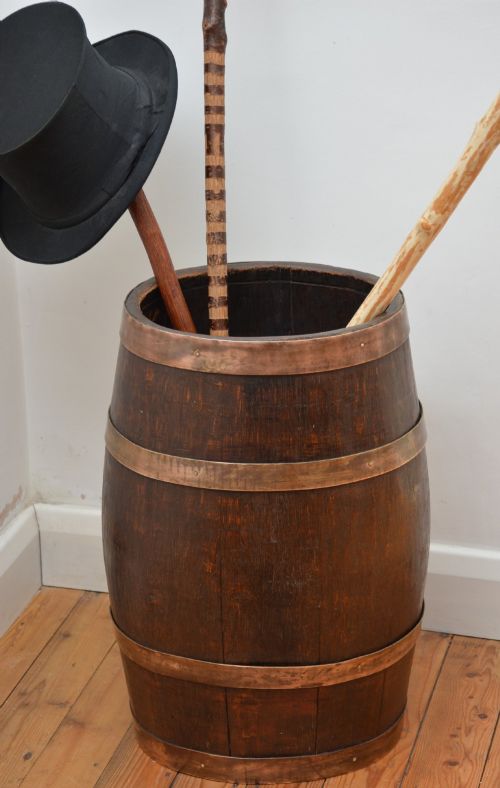
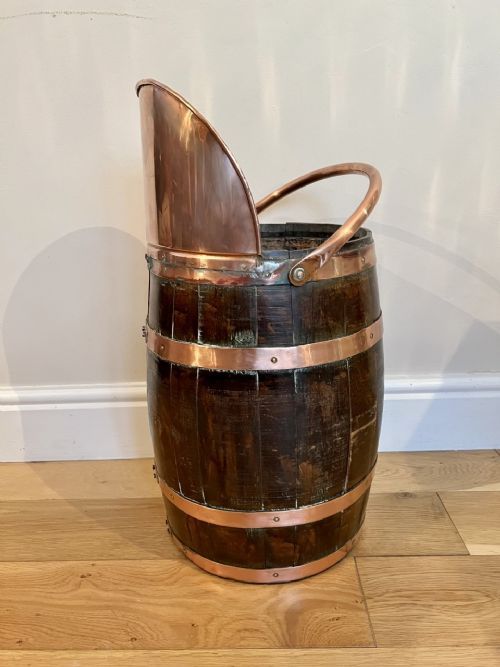
An antique oak barrel brings sturdy country house character to a hallway, often repurposed over generations into a stick stand or coal bucket.
Antique Oak Barrel
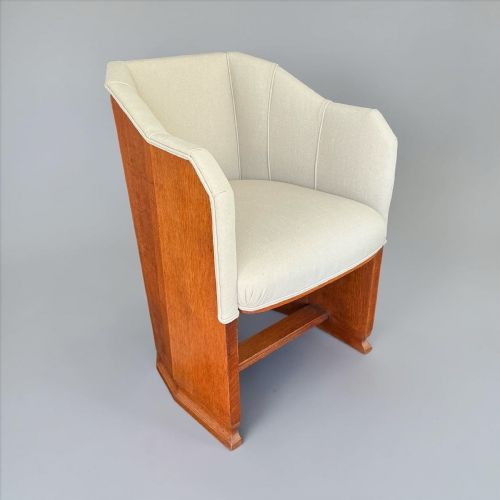
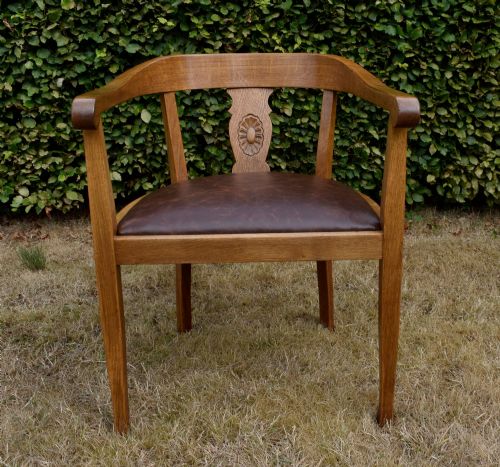
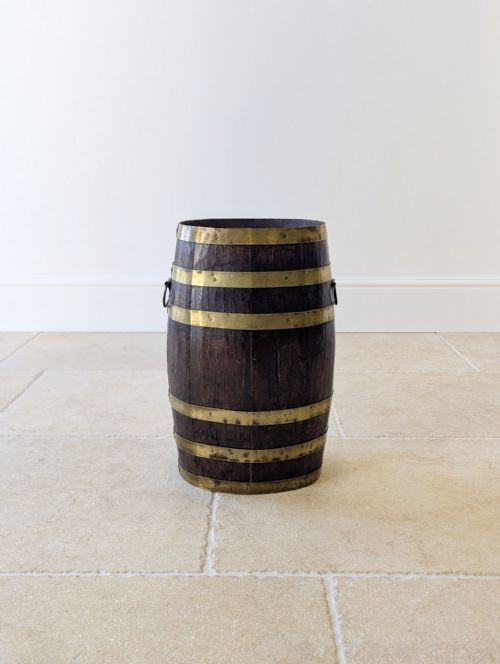
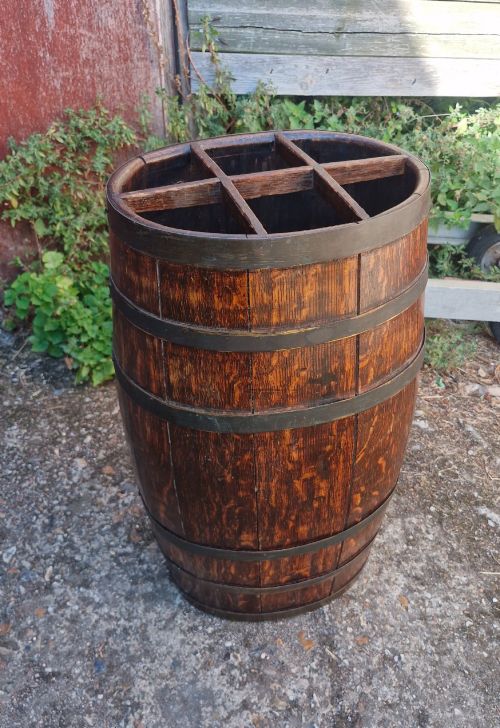
When you search for an antique oak barrel, you encounter vessels originally made for storage that survived through clever domestic adaptation. The most common survivals on this page are coopered umbrella stands and stick stands fitted with brass or iron bands, alongside occasional desk chairs and armchairs bearing barrel backs.
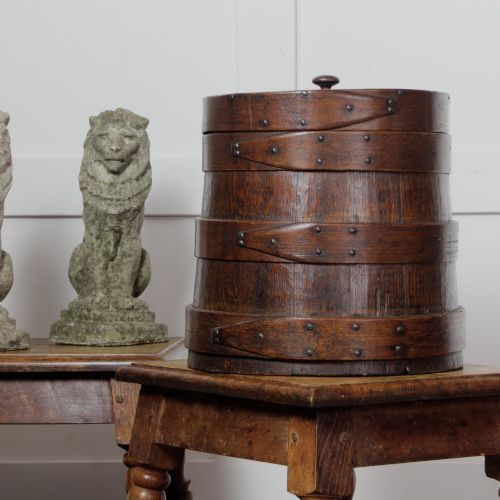
The materials and styles span from rustic country utilitarianism to Victorian novelty and Jacobean revival. Pieces range from large cone-shaped wooden barrels to smaller butter barrels and jardiniere stands designed for interior display.
Materials and Technique
The construction relies on traditional coopering, where tapered wooden staves of oak fit tightly together to form a self-supporting cylinder. Coopers shape each piece of timber by hand so that the edges meet precisely before securing the structure with metal hoops.
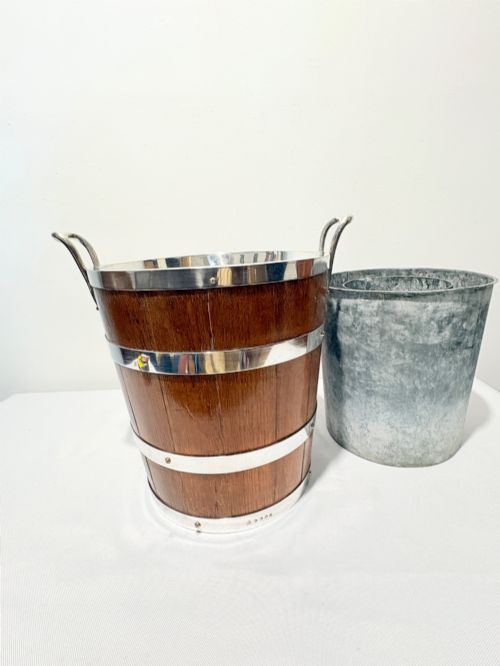
Makers reinforced these oak bodies using brass, copper, or iron bands, often secured with rivets to handle the outward pressure of contents or the daily weight of walking sticks and umbrellas. Metal elements frequently receive decorative treatment, such as embossed coats of arms or polished finishes.
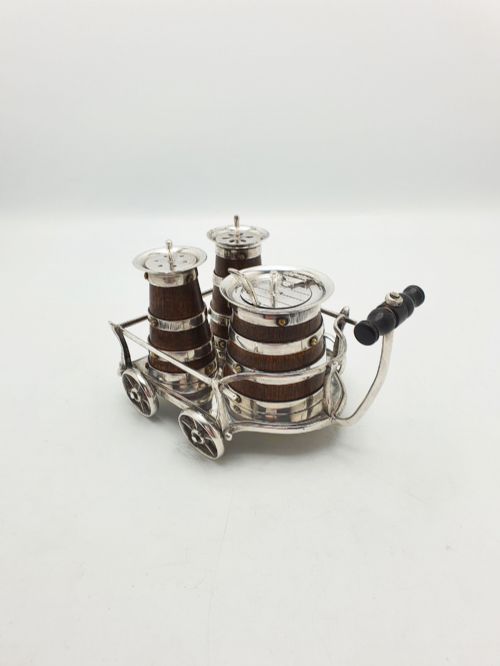
Interior fittings and surface details often incorporate silver plate, leather, or paint to elevate utilitarian items into decorative furnishings. Oak surfaces are generally polished or left with a natural grain that shows the decades of handling.
Antique Oak Barrel Retail Price Guide 2026
Typical asking prices for oak barrel among the pieces listed under this phrase on Sellingantiques today, from the lower quarter to the upper quarter. They describe what is for sale here now, not the wider market.
Listings feature oak combined with brass, iron, copper, and silver plate across Victorian, Edwardian, and earlier nineteenth-century periods.
Assessing Quality
Quality rests primarily on the integrity of the original cooperage and the tightness of the stave joints. Superior examples maintain their structural geometry without excessive shrinkage gaps between the oak staves, while inferior ones show severe warping or poorly fitted replacement metal bands.
The retention of original hardware, such as cast brass handles, liners, and crests, elevates a piece significantly above examples stripped of their original mountings. Metal components that display crisp detail and patination indicate a higher standard of manufacture.
Proportion and form dictate desirability, moving from plain utilitarian casks to purpose-built hallway stands with umbrella loops and drip pans. The skill required to cooper an oval or cone shape rather than a standard cylinder marks the upper tier of maker competency.
The Antique Oak Barrel Glossary
- Cooper
- A craftsman who builds wooden staved vessels such as barrels, casks, and tubs. This trade requires precise woodworking skills to ensure liquids or dry goods remain contained.
- Stave
- One of the narrow shaped strips of oak that form the sides of a barrel. These pieces are bevelled at the edges to create a tight seal when bound together.
- Coopered
- Describing an object constructed from curved wooden staves held in place by metal or wooden hoops. This technique applies to umbrella stands, buckets, and traditional casks alike.
- Jardiniere
- An ornamental stand or pot designed to hold plants or flowers indoors. In oak barrel form, these sit on the floor or on low legs to display foliage.
- Settle
- A wooden bench with high panelled backs and arms, sometimes curved in a barrel shape to block draughts in older rooms. These provide substantial seating with enclosed storage beneath.
Antique Oak Barrel: Frequently Asked Questions
What were antique oak barrels used for?
Originally, these vessels held dry goods, liquids, or provisions in domestic and commercial settings. Over time, many were adapted into hallway umbrella stands, coal buckets, or novelty biscuit boxes for Victorian drawing rooms.
Today, buyers repurpose them primarily for practical storage of walking sticks or as decorative sculptural items in traditional interiors.
How do I care for an oak barrel?
Keep the wood away from direct heat sources and sudden temperature shifts to prevent the oak staves from shrinking and loosening the metal bands. Regular dusting and occasional application of appropriate wood wax help maintain the finish.
If the piece includes a metal liner for holding wet umbrellas, empty and dry it frequently to protect the surrounding oak from moisture damage.
How can I tell the period of a barrel?
Dating relies on examining the construction marks, the type of metal used for the bands, and the overall style of any added hardware. Victorian and Edwardian examples often feature stamped brass crests, silver-plated mounts, or turned umbrella loops.
Earlier pieces from the Georgian era or before generally display simpler, heavier hand-coopered construction with iron bindings rather than decorative brass work.