



Antique Nursing Rocker
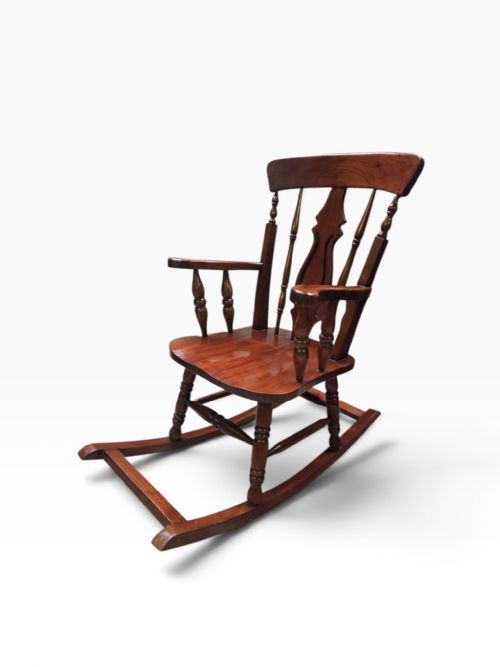
These antique nursing rocker chairs combine low seats with gentle motion, offering comfortable seating designed for quiet domestic use.
Antique Nursing Rocker
An antique nursing rocker is typically a low seat designed for quiet domestic tasks, often identified in forms ranging from Edwardian upholstered low chairs to Victorian ladder back fireside versions. These chairs provide a compact footprint and a gentle rocking motion that suits domestic interiors.
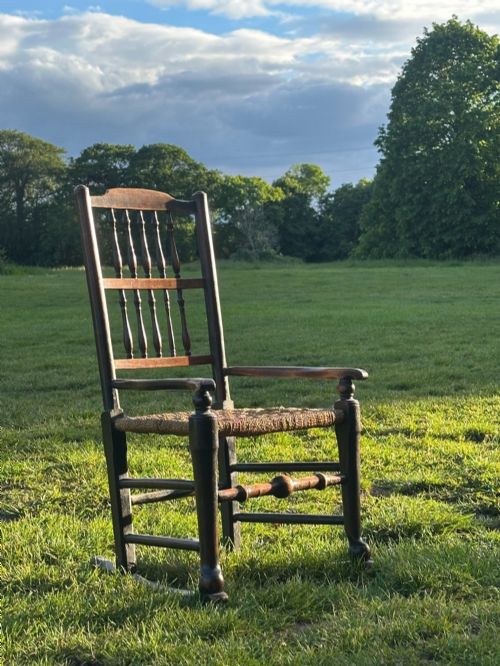
The pieces seen on this page span several distinct eras, including Victorian, Edwardian, and the eighteenth century. Buyers most commonly meet Victorian examples featuring mahogany, walnut, or beech construction, alongside earlier country styles in elm and ash.
How they were made
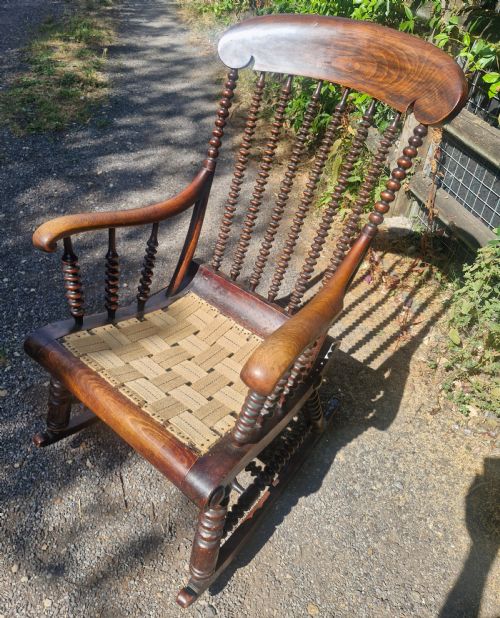
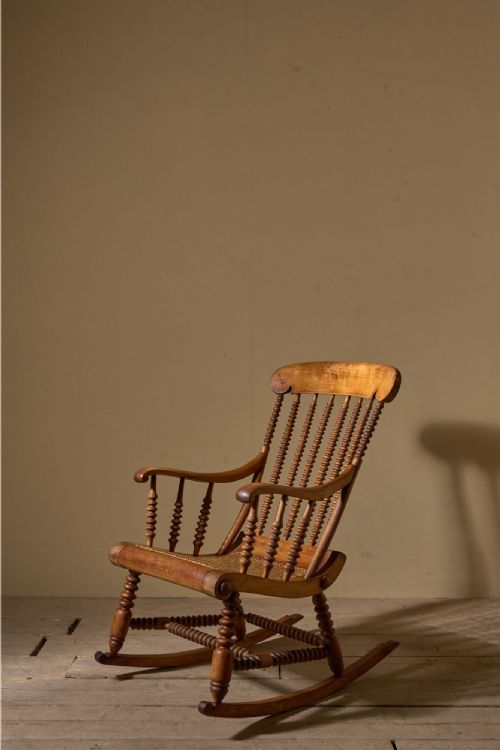
Joinery methods rely heavily on traditional turning and framing techniques, utilising hard timbers such as mahogany, oak, walnut, and beech. Bobbin framing and turned spindles appear frequently alongside more robust country construction in elm and ash.
Seating materials vary according to the style and period of the chair, incorporating cane inserts, leather pads, and button-backed upholstery. Inlaid mahogany and carved wooden frames demonstrate the decorative finish applied to later Victorian and Edwardian iterations.
Antique Nursing Rocker Retail Price Guide 2026
Typical asking prices for nursing rocker among the pieces listed under this phrase on Sellingantiques today, from the lower quarter to the upper quarter. They describe what is for sale here now, not the wider market.
What varies in quality
The refinement of the timber turning and the integrity of the frame construction set the higher standard apart from simpler provincial work. Finer examples show careful selection of hardwoods like mahogany and walnut, paired with precise joinery in the spindles and arm supports.
Upholstered versions differ significantly based on the survival of original button-backed padding and the quality of the covering material, whether leather or floral fabric. The proportion of the low seat and the smoothness of the rocking arc also dictate the overall success of the piece.
The Antique Nursing Rocker Glossary
- Bobbin framed
- A method of turning woodwork into a series of rounded spheres resembling bobbins or spools, popular in nineteenth-century chair frames.
- Windsor
- A traditional wooden chair construction where legs and back spindles are inserted directly into a solid sculpted seat.
- Ladder back
- A chair back featuring horizontal wooden slats between the upright posts, offering sturdy support in country furniture.
- Cane seated
- Woven plant material forming a light, flexible seat panel within a wooden frame.
- Button back
- An upholstered finish where deep buttons are pulled tight into the padding to create a textured, geometric pattern.
Antique Nursing Rocker: Frequently Asked Questions
What is a nursing rocker?
A nursing rocker is a low-seated chair equipped with rocking rails, traditionally used for domestic comfort near a fire or nursery. The reduced height allows the sitter to remain close to the floor while tending to tasks.
These chairs appear in various nineteenth-century and earlier regional styles, ranging from turned bobbin frames to upholstered Edwardian designs.
How do I date a rocking chair?
Dating relies on identifying the prevailing timber, turning style, and upholstery methods characteristic of periods like the Victorian or Edwardian eras. Finer mahogany and walnut often signal later nineteenth-century formal work, while elm and ash point to eighteenth-century country traditions.
Construction details, such as spindle turning and frame assembly, help distinguish between earlier handcrafted pieces and later mass-produced variations.
Are these chairs comfortable for daily use?
Most antique nursing rockers provide a supportive sit due to their ergonomic low posture and padded or cane seats. Their gentle rocking motion makes them well-suited for relaxation in living spaces.
Buyers should consider the seat height and depth to ensure the chair matches their physical comfort and intended placement.
What woods were used for these rockers?
Maker choices included native and imported timbers such as mahogany, oak, walnut, beech, elm, and ash. Hardwoods provided the necessary strength for the slender turned spindles and active rocking joints.
Regional country pieces often utilised local woods like elm and ash, whereas formal Victorian and Edwardian examples favoured polished mahogany or walnut.