

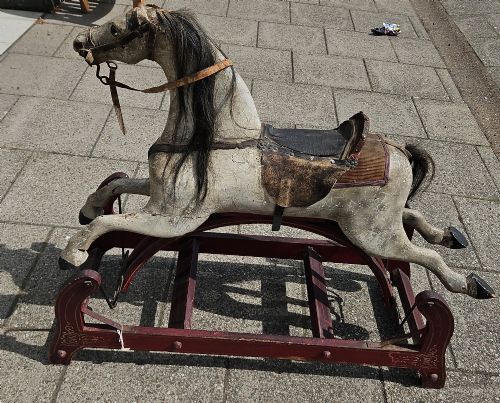


Antique Nursery Toy
An antique nursery toy brings tactile history into a room, offering tactile connection to childhoods past through hand-carved wood and worn metal.
Antique Nursery Toy
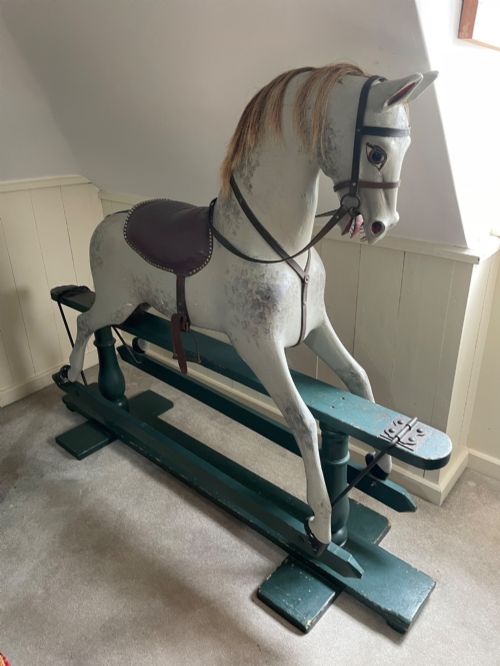
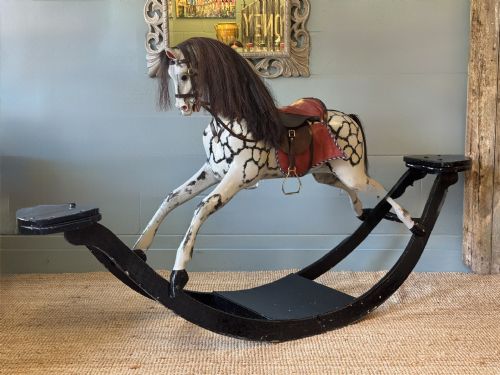
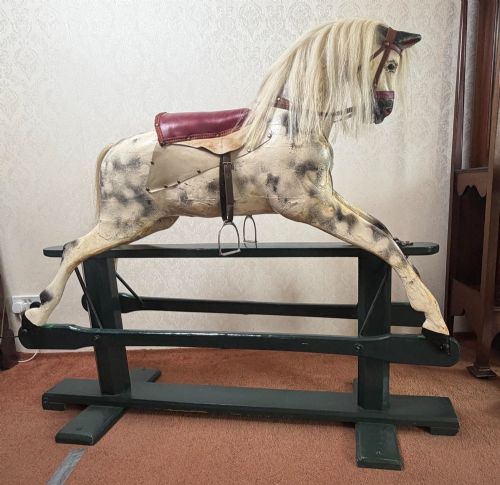
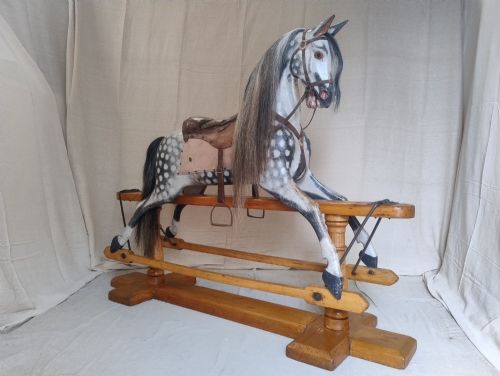
When searching for an antique nursery toy, you encounter physical relics designed for past childhoods, dominated heavily by carved wooden rocking horses alongside smaller items such as baby rattles. These pieces survive from periods spanning the Georgian era through the Victorian period, Edwardian years, and into the 1930s.
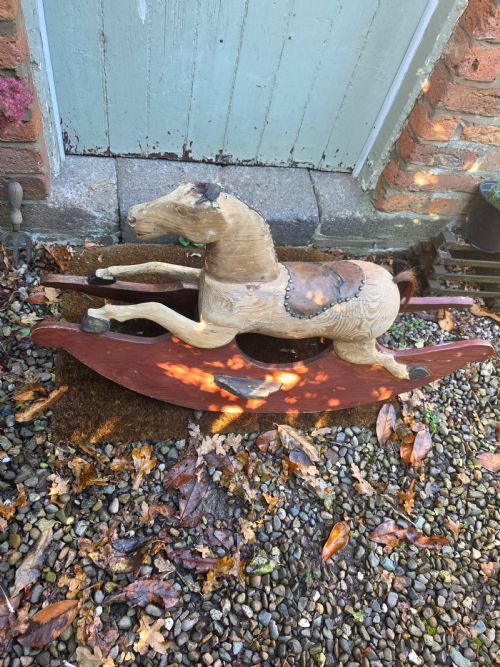
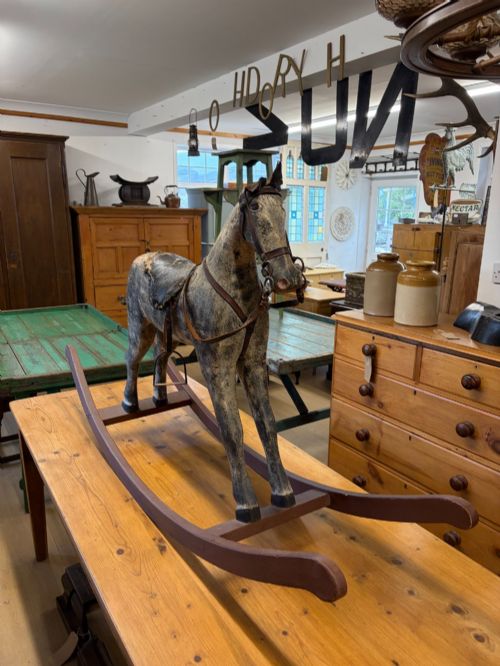
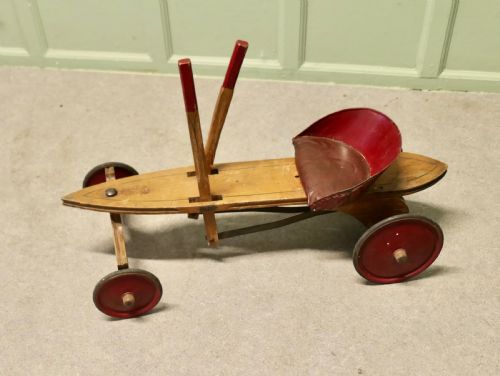
The version most commonly met on this page is the full-sized or large rocking horse, often mounted on original curved wooden rockers or safety stands. Alongside these equines, listings feature smaller pull-along horses, carved wooden toy lionesses, tricycles, and hand-operated children's cars.
Origins range across British workshops, American makers, and Spanish naive folk art traditions. Each object reflects the domestic interior and playroom aesthetics of its specific decade, from utilitarian pine to elaborately painted surfaces.
Materials and construction methods
Makers utilised solid timber such as pine and hardwoods, carving the bodies of horses and animals by hand before applying layers of paint or leaving the grain exposed. Internal iron or steel components provided structural support for rocking mechanisms and axles on wheeled toys.
Surface finishes relied on traditional paint layers, sometimes augmented with horsehair for mannes and tails, and leather straps or tack for harness details. Smaller items like rattles combined carved wood with silver components or metals to create sound and durability.
Antique Nursery Toy Retail Price Guide 2026
Typical asking prices for nursery toy among the pieces listed under this phrase on Sellingantiques today, from the lower quarter to the upper quarter. They describe what is for sale here now, not the wider market.
Several toy lionesses stand ready alongside the traditional horses, proving that nursery imaginations once ventured far beyond the stable.
Assessing quality in early playthings
Quality rests in the sculptural ambition of the carving and the survival of original surface treatments like early paint or dappled finishes. Finer examples display anatomical articulation in the limbs and heads of animals, whereas primitive pieces show simpler, more rustic execution.
The integrity of the original rocker base, structural hardware, and associated tack differentiates a preserved piece from one heavily restored. Maker attribution, through stamped signatures or distinct workshop construction traits, elevates specific examples above anonymous workshop production.
G & J Lines of London·F.H. Ayres·Periclès·Collinson·Lines Bros Sportiboy·George Unite
The Antique Nursery Toy Glossary
- Treen
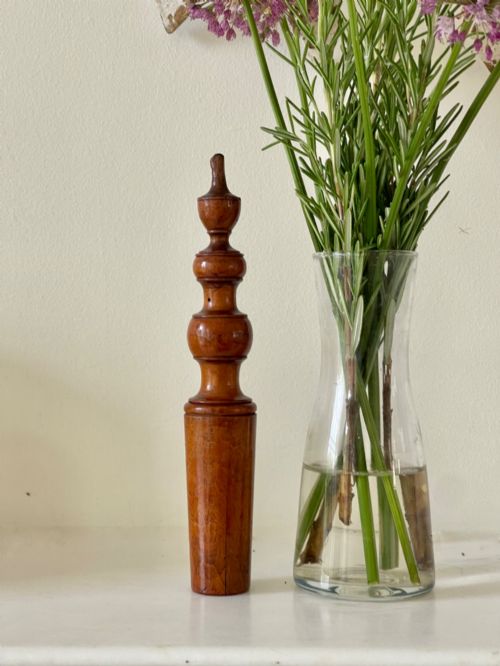
- Small handmade wooden objects for domestic or playful use. These items display the turnery and carving skills of earlier centuries.
- Rocking horse
- A toy equine mounted on curved wooden rockers or a standing frame. Children mount the back for motion play.
- Folk art
- Utilitarian or decorative objects created by self-taught or traditional artisans. These pieces prioritise naive charm over academic precision.
- Baby rattle
- A small handheld noisemaker designed for infants. Examples often incorporate precious metals alongside organic materials.
Antique Nursery Toy: Frequently Asked Questions
How do I date an old rocking horse?
Dating relies on construction methods, nail types, and the profile of the carved body. Earlier 19th-century examples tend toward primitive, unjointed bodies, while later Victorian and Edwardian horses show more anatomical definition.
The shape of the wooden rockers and the presence of maker marks or stamps further narrow down the decade of production. Paint layers also provide clues, though many pieces were repainted during their working lives in the nursery.
Are these toys safe for modern children?
Most antique nursery pieces function best as decorative objects or static displays rather than active playthings. Historic paints may contain lead, and structural joints can weaken over decades of use.
Collectors generally place these items in living spaces or hallways for visual appreciation. Handling should remain gentle to preserve fragile surfaces and original horsehair manes.
How should I care for painted wooden toys?
Keep painted wooden pieces away from direct sunlight and damp environments to prevent flaking and wood movement. Dust gently with a dry, soft cloth rather than using liquid cleaners.
Maintaining a stable room temperature protects both the underlying pine or hardwood and the historic surface coatings. Avoid aggressive polishing on naive painted finishes.