





Antique Novelty Jar
An antique novelty jar brings playful form to domestic storage, turning everyday containers into melons, apples, weights, and hats.
Antique Novelty Jar
When you search for an antique novelty jar, you are looking at whimsical containers designed to mimic natural objects, household items, or unexpected shapes. These pieces cross several domestic categories, functioning as biscuit barrels, tobacco jars, preserve pots, tea caddies, and powder bowls.
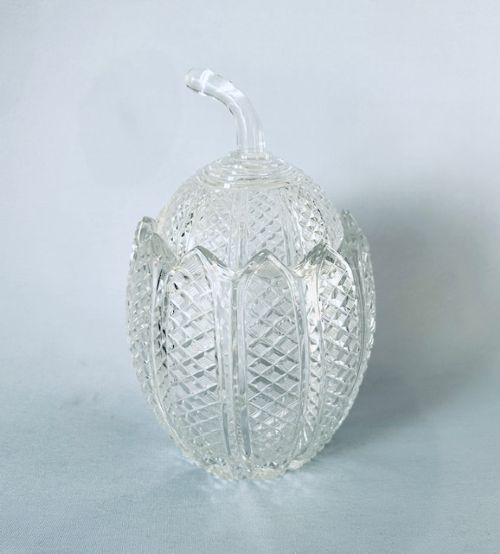
The versions you are most likely to meet on this page include biscuit boxes fashioned like weights or drum forms, alongside figural ceramics and glass containers shaped as fruits like melons and pumpkins. Origins span the Georgian period, the Victorian and Edwardian eras, and the Art Deco years of the early twentieth century.
Makers and manufacturers utilised varied materials to achieve these surprising shapes, from cut glass and porcelain to oak, fruitwood, and silver plate. Each piece bridges practical utility with theatrical display, reflecting the Victorian and Edwardian appetite for amusing conversation pieces in the parlour or smoking room.
Materials and manufacture
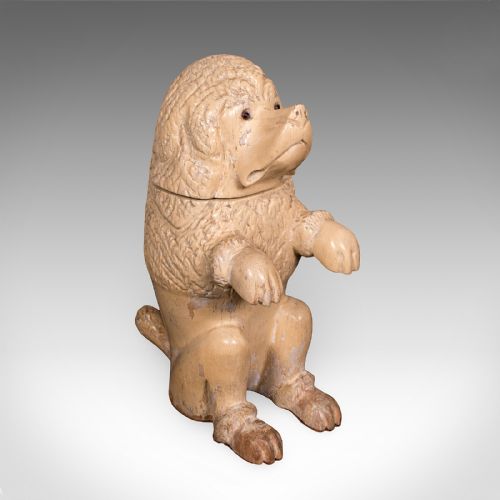
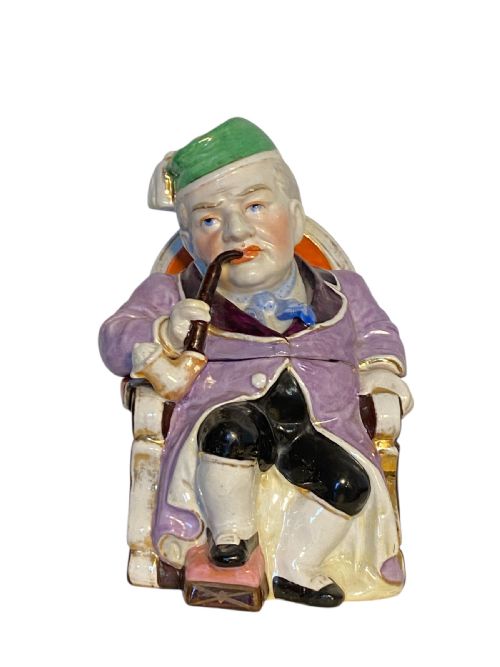
Potters and ceramists shaped porcelain and Victorian Staffordshire clay into figural models such as Pierrot characters or poodles, applying hand-painted enamels for surface detail. Glassmakers blew and cut lead crystal into deep patterns to capture the segmented ribs of melons and pumpkins.
Metalworkers combined sterling silver or silver plate with oak and fruitwood to build sturdy biscuit boxes and smokers' cabinets configured as coal wagons or drums. Cabinetmakers turned timber into convincing representations of hats and barrels, fitting them with hinged metal mounts and secure lids.
Listings feature items spanning the Georgian period, Victorian era, Edwardian years, and Art Deco 1930s.
What separates the best pieces
The division between ordinary and exceptional work lies in the fidelity of the illusion and the harmony of the materials. A superior piece convinces the eye instantly through accurate proportions, whether it mimics a heavy iron scale weight or a delicate fruit.
Quality also rests in the execution of the metal mounts and hinges. Well-made silver plate and sterling silver fittings operate smoothly and retain crisp hallmarks, whereas lesser items rely on heavy, crude castings that obscure the clean lines of the design.
Hukin and Heath·Asprey and Co
The Antique Novelty Jar Glossary
- Biscuit barrel
- A lidded container designed for holding dry biscuits on the dining table or sideboard. These vessels often incorporate silver-plated mounts and ceramic or glass bodies.
- Tobacco jar
- A specialised vessel intended to keep smoking leaf moist, typically fitted with an inner lid. Examples frequently take figural or architectural forms.
- Silver plate
- A layer of silver fused to a base metal core such as copper or nickel brass. This technique allowed manufacturers to produce elaborate mounts at a lower cost than solid sterling silver.
- Treen
- Small handmade wooden objects produced by turning on a lathe or carving. Fruitwood and oak are common timbers found in these utilitarian items.
- Tea caddy
- A box or canister originally locked to safeguard expensive tea leaves. Novelty versions often mimicked industrial packaging like paint tins.
Antique Novelty Jar: Frequently Asked Questions
What were novelty jars used for?
These vessels served everyday storage functions in Victorian and Edwardian homes, holding biscuits, tobacco, tea leaves, or powder.
Despite their practical uses, their humorous and unusual shapes were chosen specifically to amuse guests and spark conversation in reception rooms.
How do I date an antique novelty jar?
Dating relies on identifying the stylistic markers of periods such as the Georgian era, Victorian times, or Art Deco designs. Material choices and manufacturing techniques also point to specific decades.
Metal components often feature hallmarks or registry marks that provide exact years of production, while ceramic bodies reflect the prevailing aesthetics of their decade.
Are these jars safe to use daily?
While many retain their original structural integrity, most owners treat them as decorative display items rather than functional kitchenware. The fragile nature of old glass, enamel, and silver plate makes gentle handling prudent.
Using them for dry storage is generally safe if the interior is clean, but abrasive cleaning agents should be avoided to protect antique surfaces.
Why did Victorians love novelty containers?
Victorian domestic culture favored wit, theatrical display, and items that played with scale and perception. Transforming mundane storage items into unexpected shapes suited this taste.
Advances in manufacturing technology also made complex ceramic moulding and metal plating commercially viable, fueling a market for clever domestic novelties.