

Antique Needlework Wall Art
These antique needlework wall art pieces bring centuries of hand-stitched silk, wool and linen into modern rooms.
Antique Needlework Wall Art
When you search for antique needlework wall art, you encounter framed samplers, embroidered panels, and woven tapestries spanning several centuries. The selection ranges from early stitched alphabets to intricate Victorian woolwork pictures and Central Asian hangings.
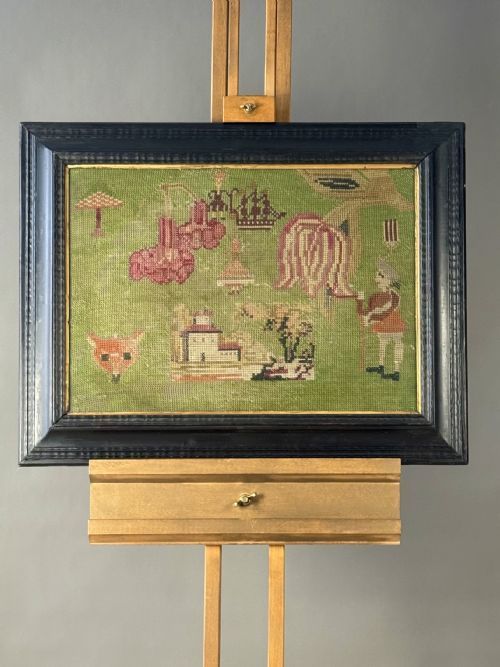
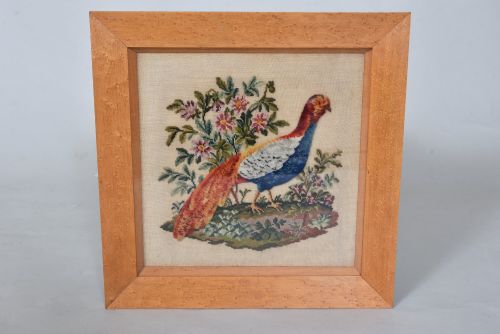
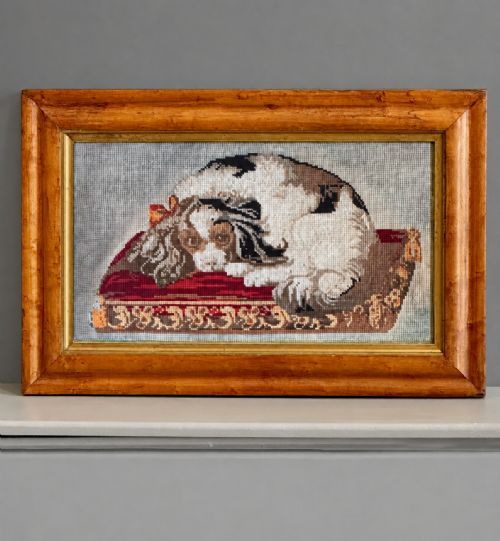
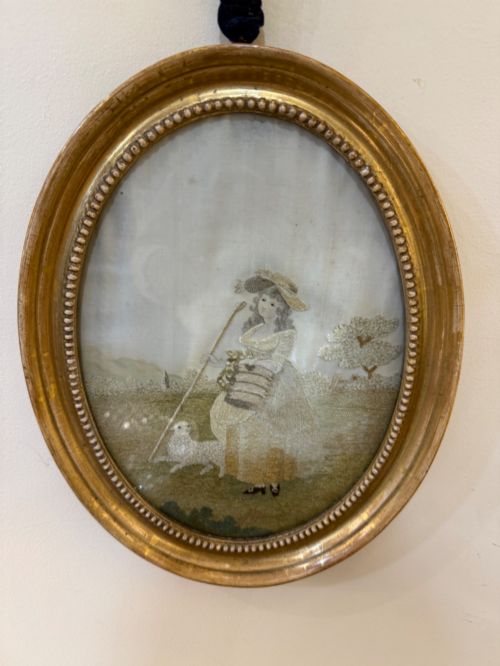
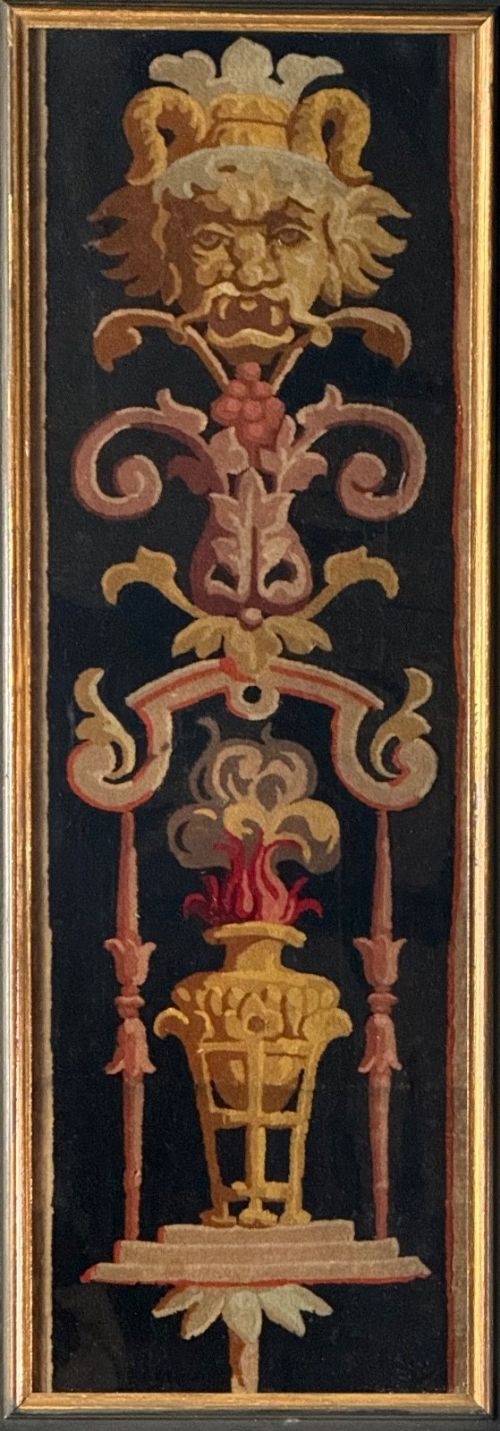
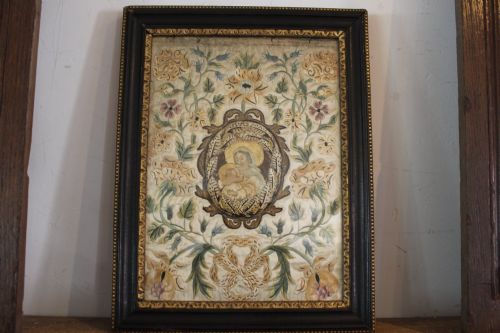
You are most likely to meet 19th-century Berlin work, silk-threaded pastoral scenes, and framed wool pictures depicting animals or figures. These textiles usually arrive in period frames, from burr maple to gilded wood, ready for hanging.
The materials vary from humble cotton and linen grounds to glossy silk floss and heavy wool yarns. Pieces cross European workshops, English households, and tribal traditions from Central Asia.
Materials and construction methods
Maker's hands worked silk, wool, and cotton threads onto linen, canvas, or felt foundations using specialised stitches. Crewelwork, Berlin woolwork, and stumpwork introduced raised relief and varied textures to the surface.
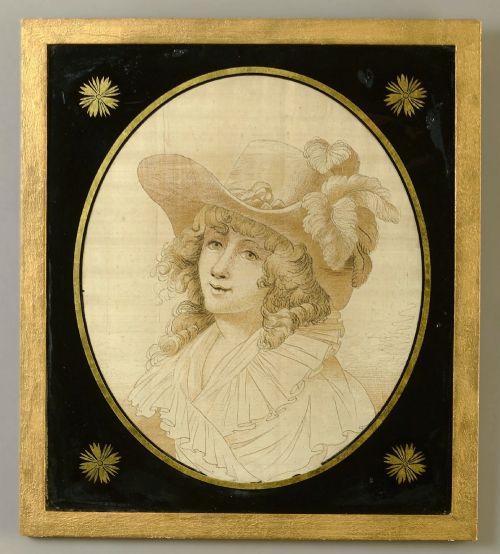
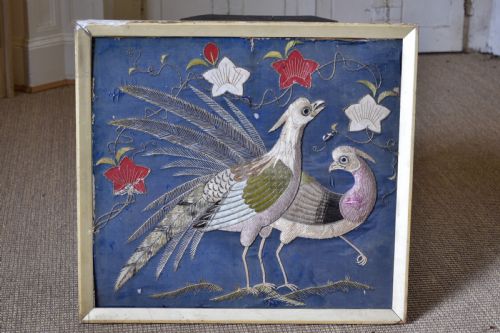
Many panels incorporate hand-painted silk details alongside embroidery, combining brushwork with needlecraft. Frames often utilise glass protection, including verre églomisé and burr maple surrounds that complement the textile within.
Listings span from the 17th century to the 19th century, featuring silk, wool, linen, and giltwood frames.
Distinctions in quality
The distinction between ordinary and exceptional antique needlework wall art lies in the tightness of the stitchery and the complexity of the design. Masterly shading in silk floss and well-executed facial expressions elevate pictorial panels above basic schoolroom samplers.
Original framing preserves the integrity of the piece, particularly when period glass and timber surrounds remain intact. The clarity of the composition and the preservation of vibrant natural dyes determine the standing of each textile.
The Antique Needlework Wall Art Glossary
- Berlin work
- A style of needlepoint popular in the 19th century, worked in wool on canvas from printed gridded patterns. It allowed makers to create vivid pictorial scenes with rich colour gradients.
- Sampler
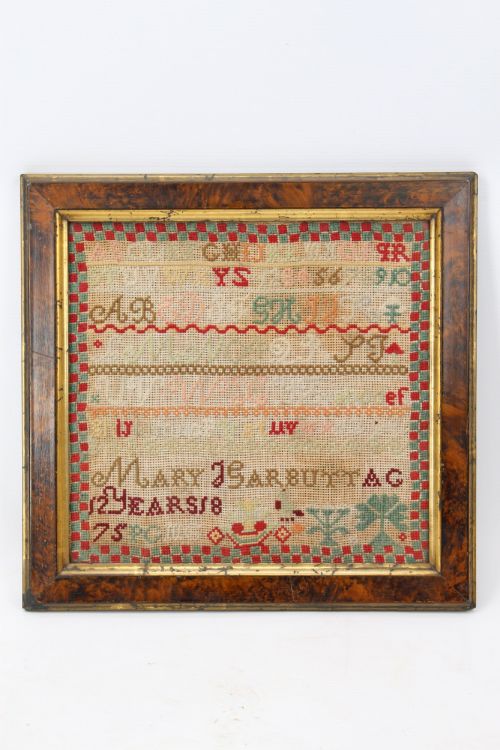
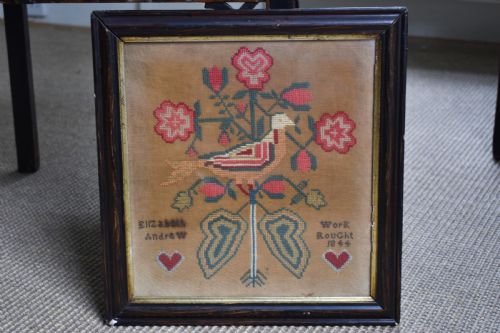
- A piece of embroidery produced as a demonstration or test of skill, often displaying alphabets, numerals, and botanical motifs. They frequently record the maker's name and age.
- Stumpwork
- A raised embroidery style from the 17th century that uses padded foundations, wire, and detached elements to create three-dimensional figures. It depicts biblical, historical, or pastoral subjects.
- Woolie
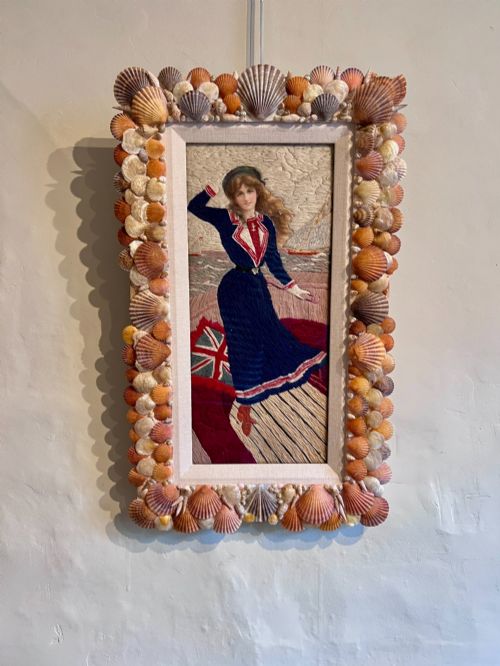
- A colloquial term for sailorwork pictures embroidered in wool yarn by mariners at sea. They typically portray sailing ships or naval portraits.
- Verre églomisé
- A process of applying gold or silver leaf to glass combined with engraving and painting, frequently used for decorative mirror panels and picture frames. It adds a dark, reflective border around the textile.
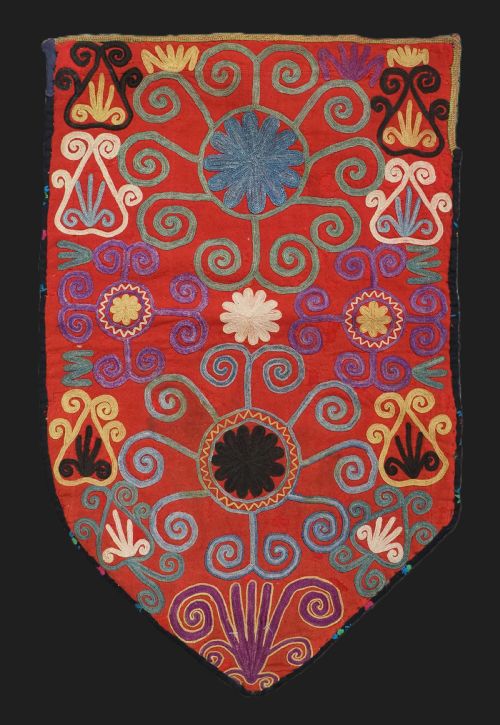
- Suzani
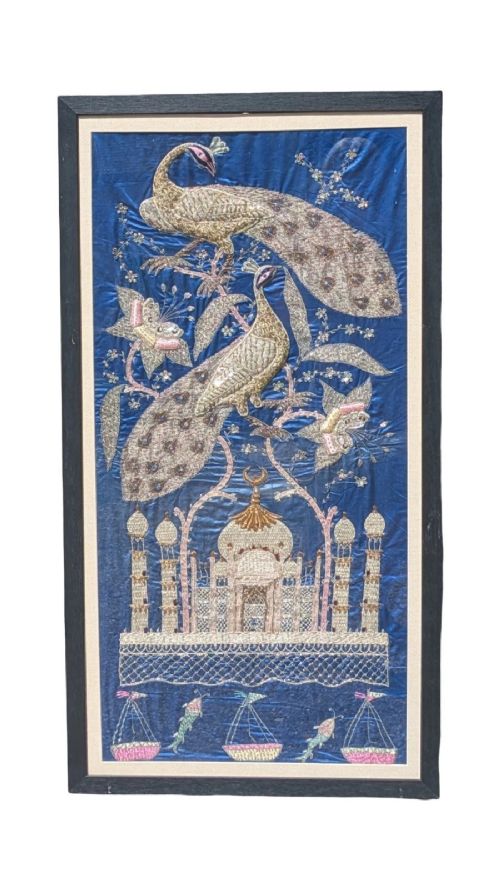
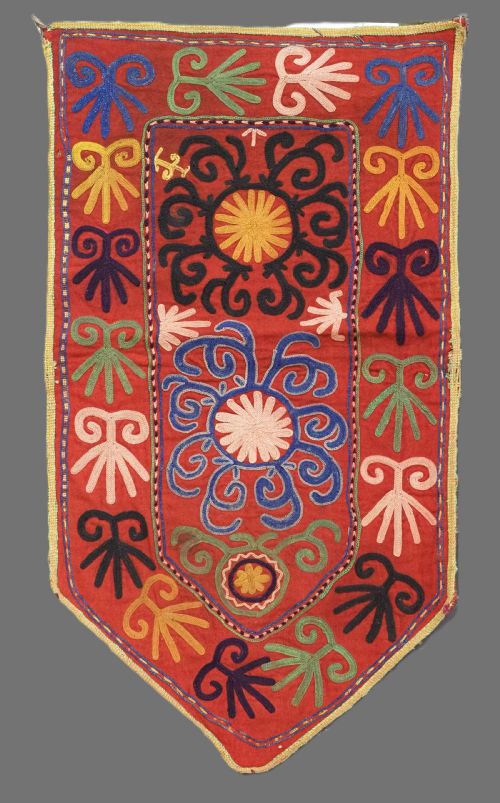
- Large embroidered tribal wall hangings from Central Asia, worked in silk on a cotton ground. They feature bold floral and geometric motifs.
Antique Needlework Wall Art: Frequently Asked Questions
How do I hang antique needlework safely?
Keep framed textiles away from direct sunlight to prevent the silk and wool threads from fading. Position them on interior walls where humidity and temperature remain stable.
Ensure the hanging wire and wall fixings match the weight of the timber and glass frame. Professional framing with UV-filtering glass offers extra protection for delicate antique pieces.
How do I date an old sampler?
Many samplers include embroidered dates and the maker's age, providing a clear reference point. Lettering styles, motifs, and the type of linen ground also help narrow down the decade of production.
Earlier pieces from the 17th and 18th centuries tend to feature simpler band designs and heraldic motifs. Victorian examples often display more crowded pictorial layouts and Berlin woolwork influences.
What is the difference between crewelwork and regular embroidery?
Crewelwork specifically employs two-ply wool yarn on a sturdy linen or twill fabric ground. It originates from early traditions and allows for heavy, textured surface designs.
Standard embroidery encompasses a broader range of threads, including fine silk floss and cotton on varied fabrics. Crewelwork panels are generally heavier and more tactile than delicate silk pictures.