

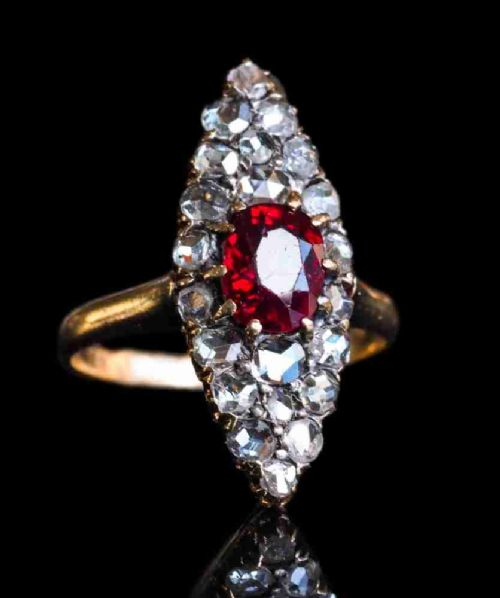


Antique Navette Cluster Ring
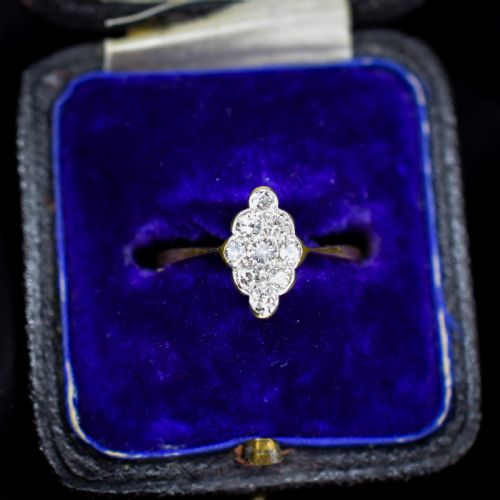
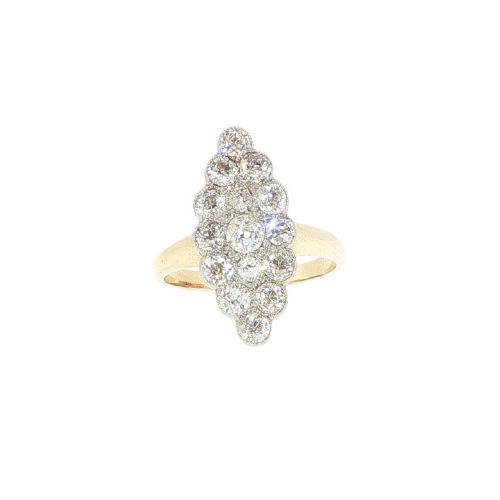
An antique navette cluster ring provides an elongated boat-shaped silhouette on the finger, prized for its dramatic geometric presence and intricate cluster setting.
Antique Navette Cluster Ring
The search phrase antique navette cluster ring brings up distinctive pointed, boat-shaped jewels designed to stretch gracefully along the length of the finger. These pieces appear most frequently in Victorian, Edwardian and Art Deco iterations, spanning the late nineteenth century through to the interwar decades.
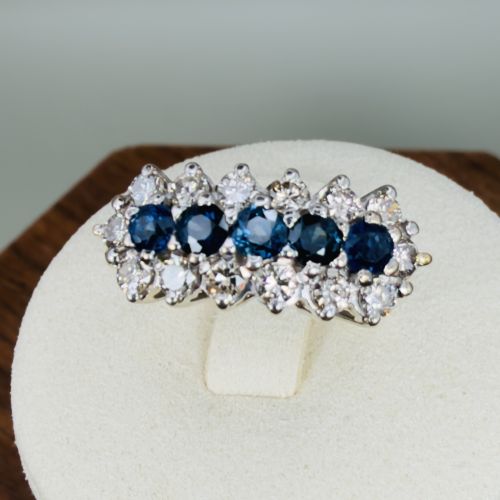
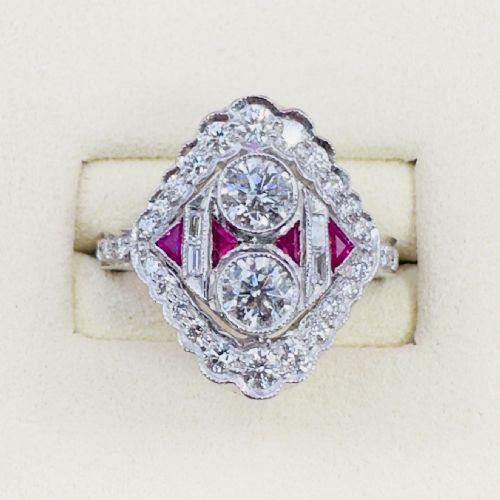
Most examples combine a central arrangement of old cut diamonds with rich accents of sapphire, ruby or emerald, mounted on slender bands. The elongated outline sets these rings apart from round clusters, creating a noticeable footprint of stones.
Makers shaped these clusters across various eras, moving from the detailed floral and scroll motifs of the late Victorian period to the sharp, streamlined platinum geometry of the Art Deco years. Surviving pieces demonstrate how jewellers balanced substantial stone weight with delicate pierced metalwork.
How they were made
Goldsmiths constructed these elongated clusters using combinations of 18ct yellow gold, white gold, silver-topped gold and platinum. Platinum gained favour in the Edwardian and Art Deco periods for its strength, allowing jewellers to create ultra-fine millegrain edges and secure settings without heavy metal bulk.
Stones were typically hand-set with old mine cut, old transitional or rose cut diamonds alongside natural sapphires, rubies and emeralds. Bench jewellers pierced and engraved the underlying galleries by hand to let light pass through the cluster from beneath.
Several Victorian iterations incorporate tiny turquoise beads alongside diamonds, creating bright miniature mosaics meant to ward off the evil eye.
What varies in quality
Quality in these elongated clusters rests on the crispness of the hand-pierced metalwork and the uniformity of the stone matching. Superior examples maintain a balanced proportion between the central cluster and the shoulders of the band, avoiding any clumsiness in the pointed ends.
The integrity of the original settings dictates the overall standard, where crisp millegrain beadwork and minimal metal fatigue separate fine artisan work from heavily worn or later repaired specimens.
The Antique Navette Cluster Ring Glossary
- Navette
- French for little ship, describing the pointed, boat-shaped silhouette characteristic of these rings. This outline stretches lengthwise along the finger.
- Marquise
- A term frequently used interchangeably with navette, denoting a gemstone or cluster cut with pointed ends and curved sides. It originates from the court of Louis XV.
- Millegrain
- A technique involving tiny raised metal beads along the edge of a setting. This decorative border defines Edwardian and Art Deco platinum work.
- Old cut
- A diamond cut by hand before modern machine precision, typically featuring a small table, high crown and deep pavilion. These stones catch candlelight with distinctive soft flashes.
Antique Navette Cluster Ring: Frequently Asked Questions
How do I wear a navette ring safely?
Because of their elongated shape, these rings extend beyond the main knuckle area, making them prone to catching on heavy knitwear or lace.
Take the ring off during manual tasks or heavy lifting to protect the pointed ends and delicate platinum claws from bending.
Are navette rings comfortable on the finger?
The boat shape sits flat along the finger bone, though very long designs can span across the knuckle joint for some wearers.
Trying the ring on or checking its exact millimeter length helps ensure the elongated form fits your hand comfortably.
How do I date an antique navette ring?
Victorian examples tend to feature yellow gold settings with rich scrollwork, whereas Edwardian and Art Deco pieces use platinum and white gold with geometric symmetry.
Checking the hallmark details and the style of the stone cuts helps narrow down the decade of production.
Can antique cluster rings be resized?
Most gold and platinum bands can be altered by a skilled bench jeweller who works with antique jewellery.
Resizing requires care to avoid disturbing the structural shoulders or the tension of the main boat cluster.