



Antique Naval Ceramics
Antique naval ceramics bring home the salt-stained heritage of Britain's maritime past through earthenware bowls, jugs, and portrait figures.
Antique Naval Ceramics
When you search for antique naval ceramics, you encounter a specialised selection of pottery that honours maritime heroes, ships, and sailors. The inventory spans the eighteenth and nineteenth centuries, taking shape as bowls, platters, water jugs, and character figures.
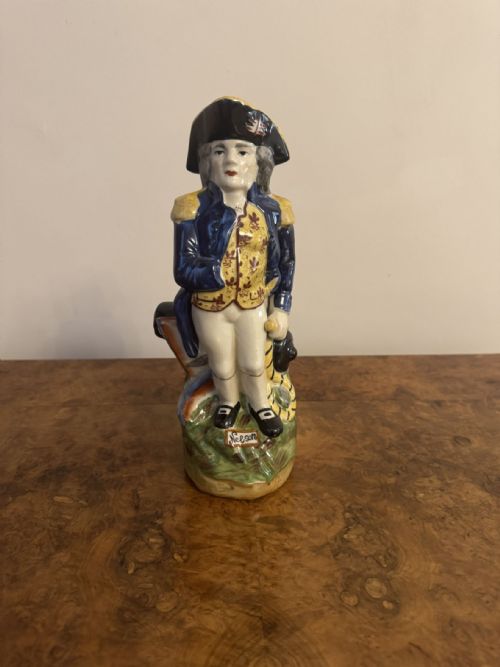
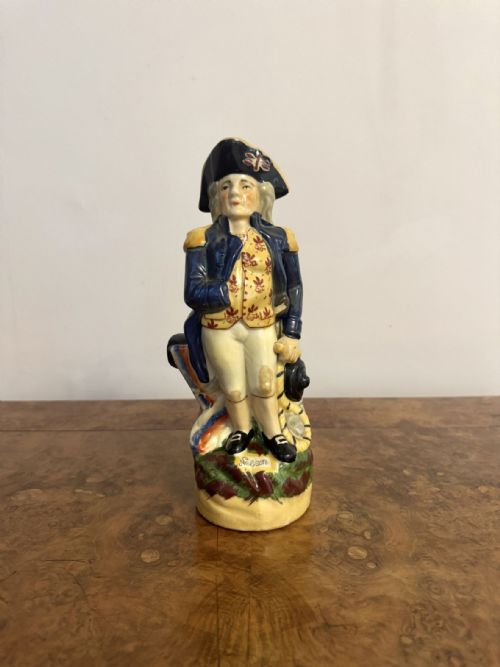
You are most likely to meet Staffordshire pottery on this page, particularly figures depicting notable commanders such as Lord Nelson and Admiral Sir Charles Napier. Alongside these portrait pieces appear commemorative bowls and shipping series dishes that record the daily reality of naval life.
The forms range from utilitarian mess bowls to decorative folk art figures intended for display in homes and taverns. Each piece connects the modern collector directly to the maritime victories and maritime culture of the Georgian and Victorian eras.
How they were made
Potters utilised earthenware and creamware as the foundational bodies for these plates, bowls, and jugs, shaping them by hand or moulding them in local manufactories. These porous bodies provided an ideal surface for subsequent decoration.
Artisans applied ceramic glaze over painted details and enamel colours to seal the surface and impart a glossy finish. This glazing technique protected the underlying pigments from daily wear while highlighting the rich blues and greens of the maritime scenes.
Antique Naval Ceramics Retail Price Guide 2026
Typical asking prices for naval ceramics among the pieces listed under this phrase on Sellingantiques today, from the lower quarter to the upper quarter. They describe what is for sale here now, not the wider market.
Object types on this page include Toby jugs, character jugs, decorative plates, platters, bowls, and Staffordshire portrait figures.
What varies in quality
The sophistication of the modelling determines the standing of a figural piece, separating lively character portrayals from stiff or generic reproductions. Master modellers captured realistic facial expressions and detailed uniform insignia on figures like Lord Nelson and the Greenwich Hospital sailor.
Hand-painted precision distinguishes superior wares from simpler production items, particularly within shipping series dishes and transfer-printed or hand-decorated sailors' arms bowls. Vibrant enamel retention and crisp brushwork across the maritime scenes indicate higher workshop standards.
The Antique Naval Ceramics Glossary
- Creamware
- A refined earthenware developed in England during the eighteenth century, characterised by its pale yellowish cream-coloured glaze. This body formed the base for many early naval bowls and plates.
- Staffordshire Pottery
- The collective term for ceramic wares produced in the pottery towns of Staffordshire, England. These factories created the vast majority of nineteenth-century naval figures and commemorative jugs.
- Toby Jug
- A pottery jug modelled in the shape of a seated, stout person, often wearing eighteenth-century attire and a tricorn hat. Naval examples typically depict famous admirals or common sailors holding a jug and mug.
- Earthenware
- Porous pottery fired at relatively low temperatures and rendered impermeable to liquids through the application of a ceramic glaze. It serves as the primary material for the jugs, bowls, and figures listed here.
- Enamel
- A glass-like substance fused to the surface of ceramics through firing, used to add bright, durable colours to painted designs. Enamel decoration allowed potters to render naval uniforms and ship flags in vivid detail.
Antique Naval Ceramics: Frequently Asked Questions
What are antique naval ceramics?
Antique naval ceramics comprise earthenware bowls, jugs, plates, and portrait figures that commemorate British ships, sailors, and naval commanders from the eighteenth and nineteenth centuries.
These pieces reflect the deep cultural footprint of the Royal Navy during the Georgian and Victorian eras, functioning as both functional vessels and commemorative folk art.
How were naval bowls used?
Naval bowls served practical functions in officers' messes and sailors' quarters, holding rations, punch, or water during service.
Larger vessels, such as the Sunderland sailors' arms bowls, often functioned as presentation pieces or tavern focal points that celebrated maritime loyalty and safe voyages.
How do I date Staffordshire figures?
Dating Staffordshire portrait figures involves examining the ceramic body, glaze characteristics, and the specific historical subject depicted.
Figures representing known commanders like Lord Nelson or Admiral Sir James Dundas generally align with the mid to late nineteenth century, supported by the stylistic conventions of Victorian folk art.
How should I display them?
Displaying antique naval ceramics requires stable shelving away from direct sunlight to protect the painted enamel details and fragile earthenware bodies.
Positioning bowls and jugs at eye level allows viewers to appreciate the hand-painted maritime scenes and the intricate modelling of the figural pieces.