

Antique Narrow Drawers
These antique narrow drawers bring compact storage and period character to tight corners, offering clever solutions for smaller rooms.
Antique Narrow Drawers
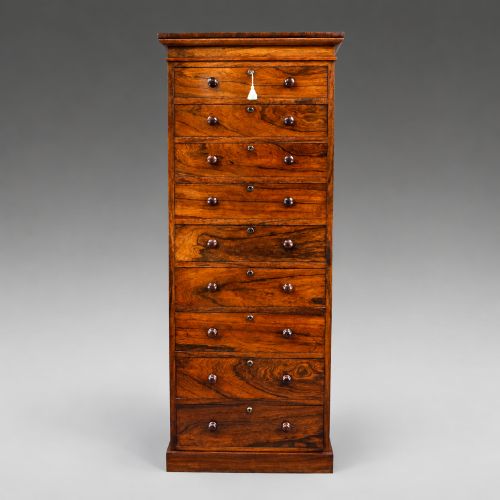
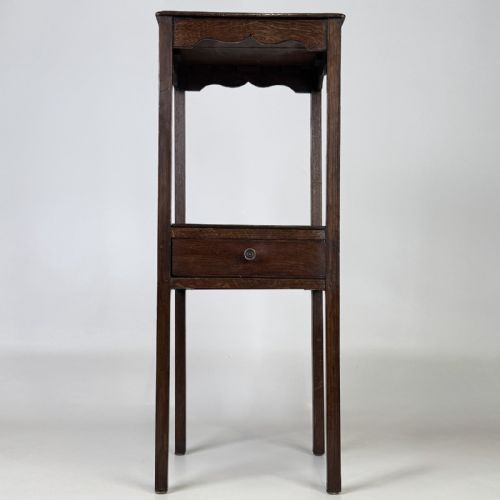
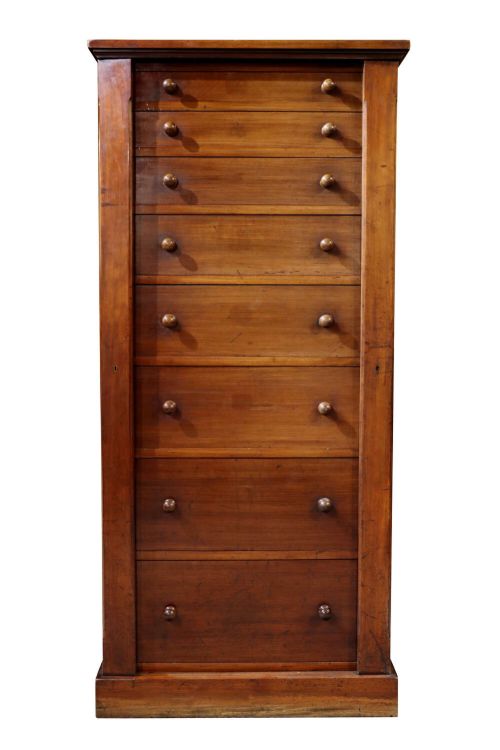
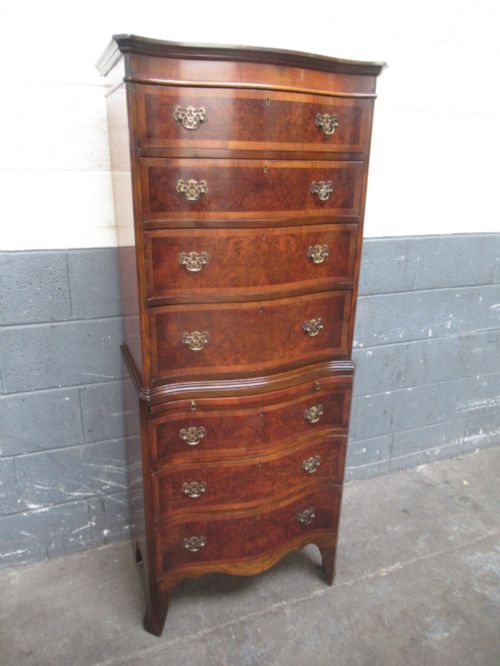
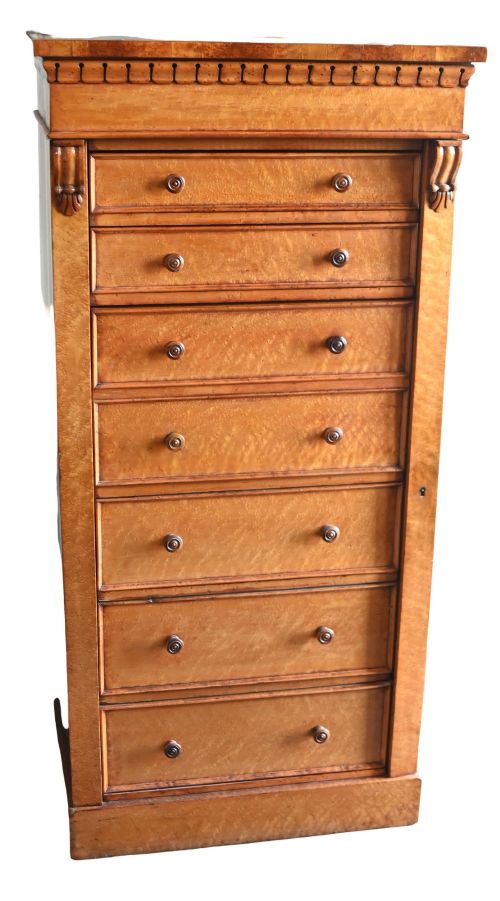
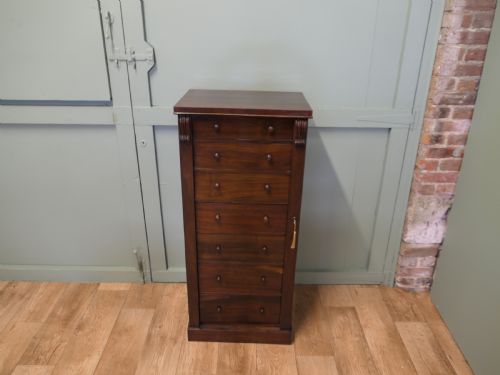
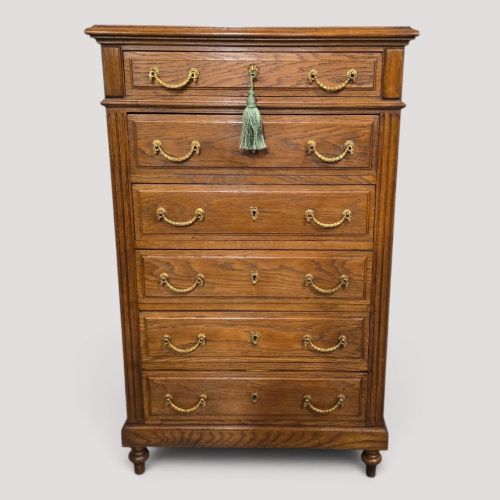
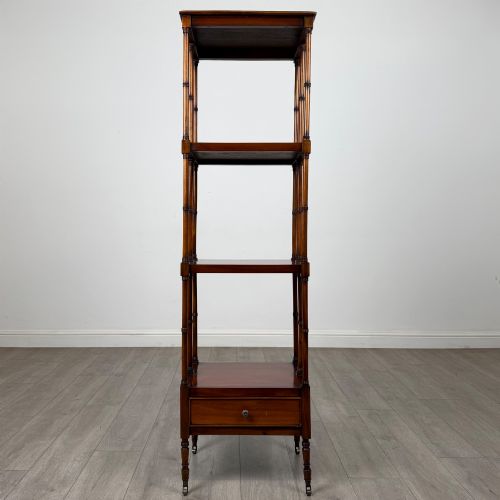
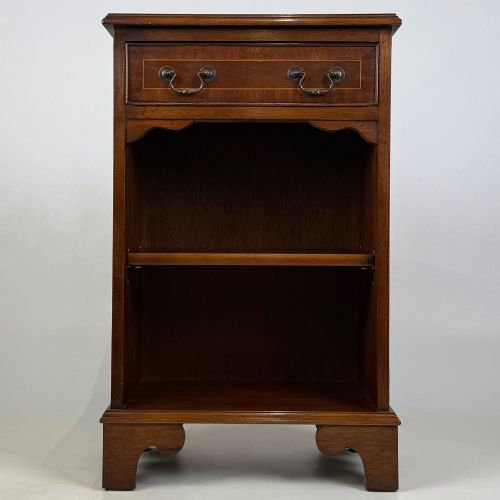
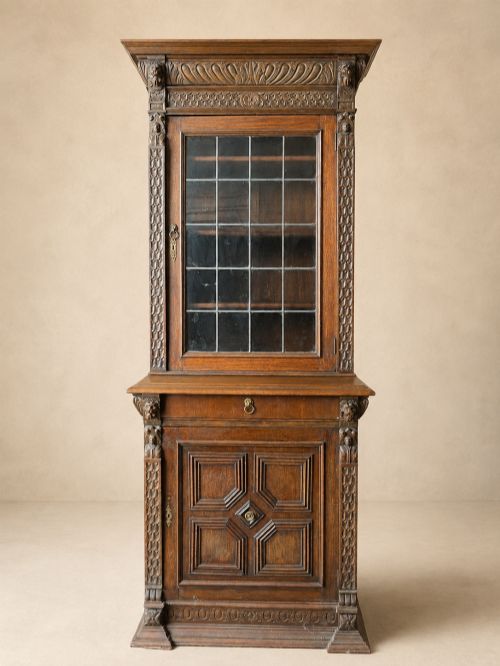
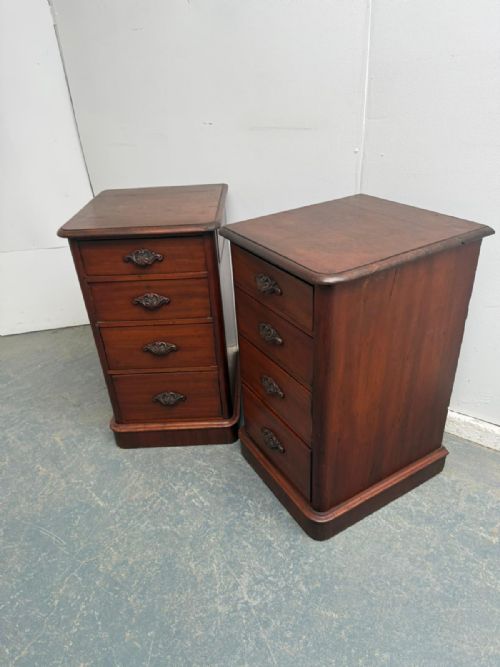
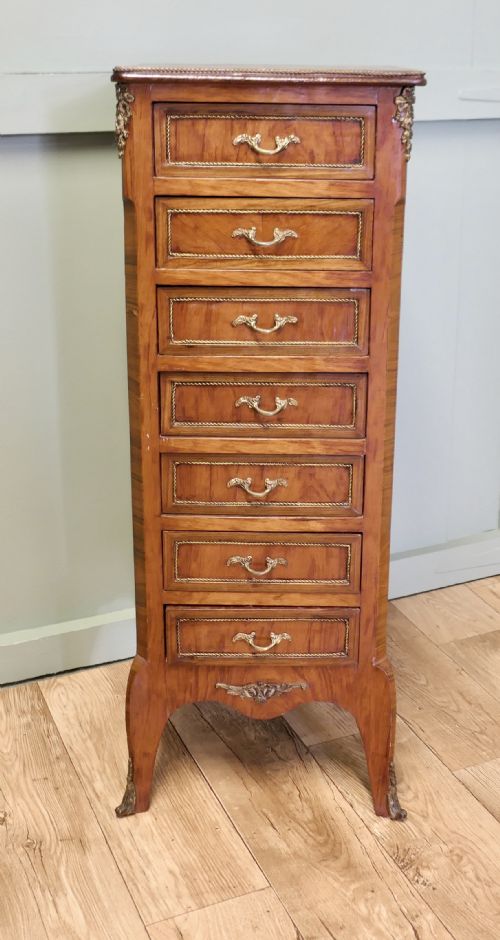
Antique narrow drawers encompass tallboys, slim chests, and bedside cabinets designed to maximise vertical storage in restricted footprints. Buyers searching for antique narrow drawers frequently encounter Victorian Wellington chests and Edwardian side tables built from dense hardwoods.
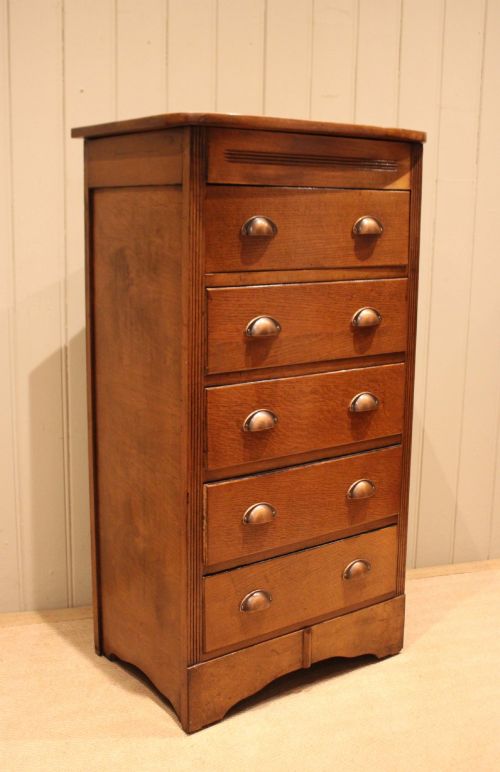
The selection ranges from 19th-century mahogany filing pieces to compact walnut chests produced into the early twentieth century. Tall proportions dominate the offerings, providing deep storage capacity without encroaching on floor space.
Materials and construction
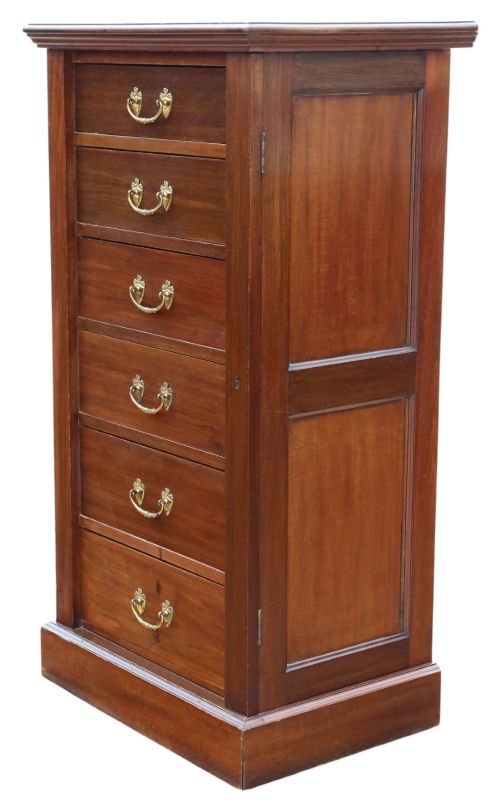
Cabinetmakers utilised durable hardwoods such as mahogany, oak, rosewood, and walnut to build these slender carcases, often incorporating burr walnut or satinwood veneers for decorative contrast. Brass hardware, including drop handles and locking mechanisms, appears frequently across Victorian and Edwardian examples.
Joinery methods relied on solid timber frames housing multiple stacked drawers, sometimes secured by a hinged locking stile in the manner of traditional Wellington chests. Surfaces received wax or polished finishes that highlighted the natural grain of figured mahogany and oak.
Listings feature mahogany, oak, rosewood, walnut, and satinwood across Victorian, Edwardian, and mid-nineteenth century periods.
Distinctions in quality
Superior examples display finely figured timber grains, such as bird's eye maple or burr walnut, matched carefully across the drawer fronts and carcase sides. Quality also shows in the crispness of carved details, intact locking mechanisms with original keys, and solid secondary woods inside the drawer boxes.
Gillows·Warings Liverpool·Reprodux
The Antique Narrow Drawers Glossary
- Wellington chest
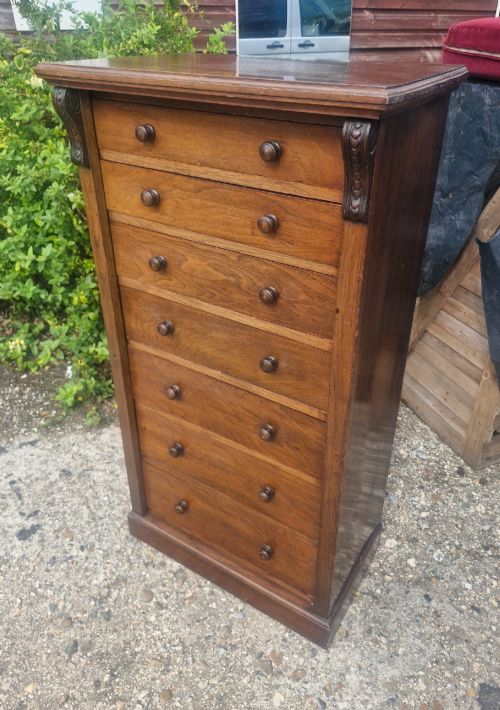
- A tall, narrow chest of drawers characterised by a hinged locking flap on one side that secures all the drawers simultaneously. This form originated in the nineteenth century for efficient document and linen storage.
- Tallboy
- A tall chest of drawers made in one or two sections, providing substantial vertical storage within a compact floor area. These pieces often combine a chest on chest or a slim upper cabinet configuration.
- Campaign furniture
- Portable pieces built in sections with recessed brass fittings, designed for easy transport by military officers. These items feature robust construction to withstand frequent movement.
- Bracket feet
- Support feet shaped like small brackets, commonly found on Georgian and Edwardian case furniture. They lift the base of the cabinet clearly off the floor.
Antique Narrow Drawers: Frequently Asked Questions
What is a Wellington chest?
A Wellington chest is a tall, narrow set of drawers featuring a locking side pilaster that secures every drawer at once. This clever locking bar prevents unauthorised access to papers or valuables.
Cabinetmakers built these pieces during the nineteenth century to provide maximum storage in minimal floor space. They remain popular for bedrooms and studies today.
How do I style narrow drawers?
Narrow chests fit easily into awkward alcoves, narrow hallways, or beside beds where standard furniture proves too wide. Their vertical proportions draw the eye upward.
Pair a tallboy with a slim table lamp or place a small bedside cabinet next to a low bed frame. The rich wood tones complement both traditional and modern interiors.
Are these drawers suitable for clothes?
Many narrow chests provide deep storage for smaller garments, accessories, or folded linens. Tall configurations offer multiple stacked tiers.
Check the internal depth of the drawers to ensure your items fit comfortably. Wellington chests and slim bedside units handle daily use well.
How do I identify Victorian pieces?
Victorian items frequently utilise solid mahogany, walnut, or rosewood with hand-cut dovetails and turned wooden knobs. Look for rich patination developed over decades of use.
Makers from this era often incorporated locking mechanisms and sturdy structural framing. Inspect the drawer linings and backboards for age characteristics.