



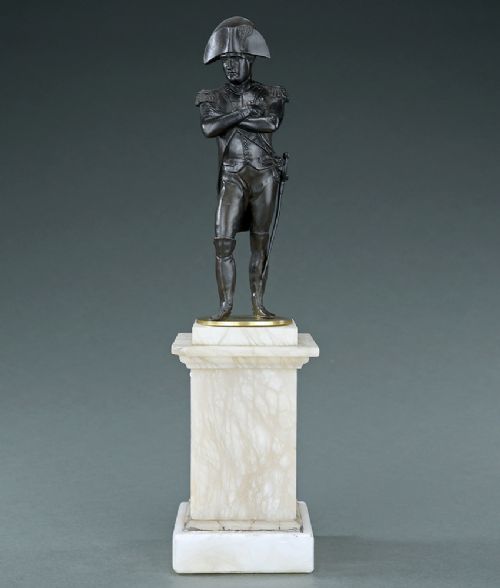


Antique Napoleon Figurine
An antique napoleon figurine captures the likeness of the French emperor in bronze, porcelain, or earthenware, offering a tangible piece of nineteenth-century history for your collection.
Antique Napoleon Figurine
When you search for an antique napoleon figurine, you encounter a range of nineteenth-century representations spanning Staffordshire pottery figures, French bronzes, and porcelain sculptures. The most common examples on this page are Victorian Staffordshire earthenware portrait figures depicting Louis Napoleon, the Empress Eugenie, and imperial family groups.
These sculptural objects encompass both modest British pottery pieces made for the domestic market and substantial French bronzes or ormolu clocks produced during the Second Empire. Styles stretch from French Empire and Rococo Revival to the distinctive folk art interpretation of English Staffordshire potters.
The figures vary from single standing portraits to elaborate equestrian bronzes and multi-character royal portrait groups. Each piece reflects the nineteenth-century fascination with Napoleonic iconography, whether rendered in glazed ceramic or cast metal.
Materials and construction
Staffordshire pottery figures relied on earthenware clays shaped in moulds, finished with lead glazes, and hand-painted with enamel colours. The ceramic process produced robust domestic figures that captured political personalities for the British public during the Victorian period.
Antique Napoleon Figurine Retail Price Guide 2026
Typical asking prices for napoleon figurine among the pieces listed under this phrase on Sellingantiques today, from the lower quarter to the upper quarter. They describe what is for sale here now, not the wider market.
Materials recorded on this page range from lead glaze and enamel to ormolu, marble, and gilt bronze.
Judging quality and execution
Quality in these figures rests on the crispness of the modelling and the precision of the finishing work. In bronzes, the depth of the chasing and the richness of the patina determine the sculptural success of the piece.
In ceramics, the clarity of the enamel painting and the crispness of the mould impression separate superior Staffordshire pieces from softer, later impressions. The presence of identifiable makers or sophisticated ormolu mounts elevates the standing of the work.
Emile Guillemin·Achille Brocot
The Antique Napoleon Figurine Glossary
- Ormolu
- Gilded bronze used extensively in French decorative arts and clockmaking during the nineteenth century. The technique involves applying a mercury and gold amalgam to a bronze casting before firing.
- Staffordshire pottery
- Earthenware produced in the Staffordshire potteries of England, known for portrait figures and animal groups made for the domestic mantelpiece during the Victorian era.
- Patina
- The surface sheen and coloration developed on bronze or metal sculptures through age and handling. A good natural surface adds visual depth to the cast metal.
- Earthenware
- Porous pottery fired at lower temperatures, typically finished with a lead glaze. It forms the body of the Staffordshire figures found in this category.
- Second Empire
- The French architectural and decorative style associated with the reign of Napoleon III, spanning the mid to late nineteenth century. It heavily influenced bronze casting and clock design.
Antique Napoleon Figurine: Frequently Asked Questions
What materials are used for an antique napoleon figurine?
The listings show pieces cast in bronze, gilt bronze, ormolu, and lead-glazed earthenware. French examples often incorporate marble bases and porcelain elements, whilst British pieces are typically ceramic.
Staffordshire potters relied on moulded clay finished with hand-painted enamel colours, whereas French foundries utilised metal casting techniques for detailed sculptures and clock mounts.
How do I distinguish between French and English pieces?
French pieces on this page are typically executed in bronze, gilt bronze, or fine porcelain, often associated with clockmaking or academic sculpture. They reflect academic styles such as French Empire and Second Empire.
English pieces are almost exclusively Staffordshire pottery figures and portrait groups featuring bright lead glazes and enamel decoration. Their naive charm contrasts with the academic precision of French bronzes.
What periods do these figures come from?
The pieces originate from the nineteenth century, with specific dates clustering around the 1850s, 1860s, and the broader Victorian era. This period encompasses both the Second Empire in France and the height of Staffordshire pottery production.
Datings often align with the reign of Napoleon III and the mid-nineteenth-century revival of interest in Napoleonic history across Europe.
How were Staffordshire portrait figures used?
Staffordshire figures were displayed on mantelpieces and shelves in nineteenth-century homes as decorative ornaments and expressions of political interest. They brought contemporary news and royal portraiture into domestic spaces.
These ceramic pieces served as affordable decorative art for the British middle class, commemorating political alliances and European leaders of the day.