





Antique Musket
An antique musket carries the weight of past conflicts, offering collectors a tangible connection to military history through flintlock and percussion mechanisms.
Antique Musket
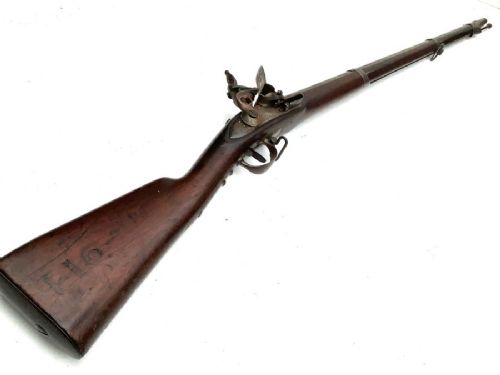
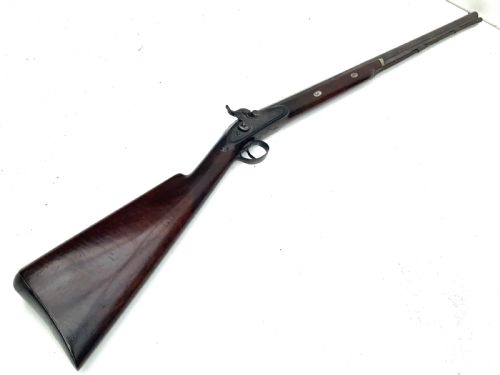
An antique musket encompasses smoothbore and rifled shoulder arms spanning the eighteenth and nineteenth centuries. These arms include British Brown Bess models, French Charleville pieces, and Eastern matchlock toradors.
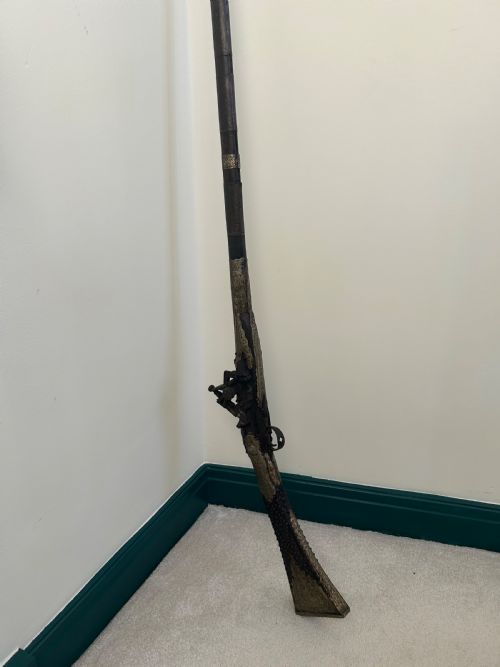
The version most commonly met on this page is the military flintlock or percussion shoulder arm originating from European arsenals or regional tribal workshops. Examples range from standard infantry pieces to heavily decorated Indo-Persian matchlocks.
Collector interest centres on functional mechanisms, regimental markings, and regional decorative traditions such as bone or mother-of-pearl inlay. Each piece reflects the tactical requirements and aesthetic standards of its period of origin.
Materials and construction
Gunsmiths forged long steel barrels and fitted them to hardwoods such as walnut or regional timber stocks. These components required precise metalwork to align ignition systems with the powder charge.
Mounts and decorative elements utilise brass, iron, bone, and mother-of-pearl inlay. Craftsmen secured barrels to stocks using pins or metal bands, integrating intricate lock mechanisms powered by steel springs.
Antique Musket Retail Price Guide 2026
Typical asking prices for musket among the pieces listed under this phrase on Sellingantiques today, from the lower quarter to the upper quarter. They describe what is for sale here now, not the wider market.
Several muskets wear coats of mother-of-pearl so thorough they must have blinded advancing cavalry in the sun.
Assessing the standard
The grade of an antique musket depends on the integrity of its lock mechanism and the preservation of original metal and wood surfaces. Retaining matching maker marks across barrel and lockplate elevates a piece.
Artisanal execution separates standard military issue arms from custom pieces. Regional variations display complex inlay work in bone, silver, and mother-of-pearl that reflect the workshop's skill.
The Antique Musket Glossary
- Flintlock
- An ignition mechanism that uses a piece of flint struck against a steel frizzen to create sparks for gunpowder ignition. This system dominated military and civilian arms for centuries.
- Percussion cap
- A small metal cup containing priming compound placed on a nipple, detonated by the fall of the hammer. This mid-nineteenth century innovation replaced the flintlock.
- Matchlock
- An early ignition system where a slow-burning match is lowered into the flash pan by a lever. This mechanism appears frequently on historic Indian and Asian long guns.
- Smoothbore
- A barrel without internal rifling designed to fire spherical lead balls or scatter shot. Most military muskets utilised this bore type prior to the widespread adoption of rifles.
- Toradar
- A traditional South Asian matchlock musket characterised by a straight stock and extensive barrel binding. These arms often feature geometric metal reinforcement.
Antique Musket: Frequently Asked Questions
How do I identify an antique musket?
Examine the lock mechanism, barrel stamps, and stock configuration to determine the origin and period. Maker names and proof marks often appear near the breech.
Compare the lock type, such as matchlock, flintlock, or percussion, against known military and regional patterns from the eighteenth and nineteenth centuries.
What is the difference between a musket and a rifle?
A musket possesses a smooth bore designed for rapid loading and massed infantry volleys. Rifles feature spiral grooves inside the barrel that spin the projectile for increased accuracy.
Many nineteenth-century military arms transitioned from smoothbore musket configurations to rifled systems like the Enfield.
How should I display an antique musket?
Mount the arm securely on a wall bracket or display it horizontally in a glass cabinet away from direct sunlight. Stable room temperature prevents wood shrinkage and metal oxidation.
Apply a light coat of museum-grade wax or oil to metal surfaces periodically to protect the steel and iron from moisture.
Can these antique muskets still be fired?
Most antique muskets are sold as historic artefacts rather than functional firearms. Testing or firing requires professional inspection by a qualified gunsmith to ensure structural integrity.
Age, metal fatigue, and corrosion in the barrel make historical black powder use hazardous without expert clearance.