


Antique Mortar Vessel
An antique mortar vessel brings heavy utility and centuries of domestic craft directly into the modern room.
Antique Mortar Vessel
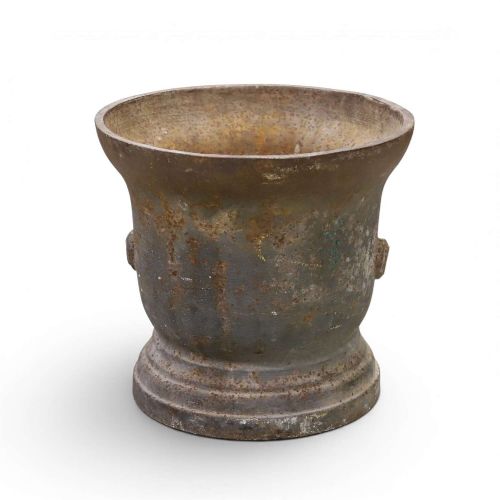
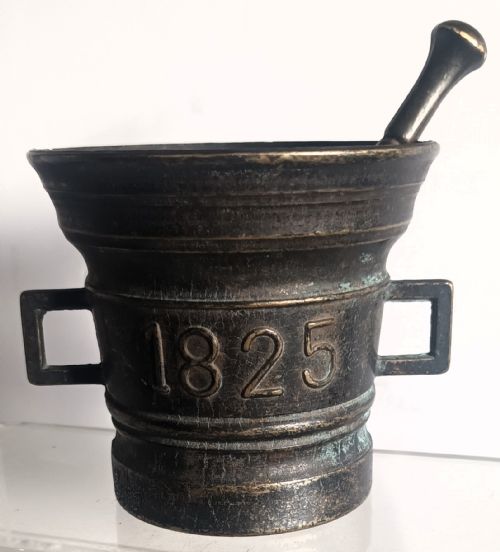
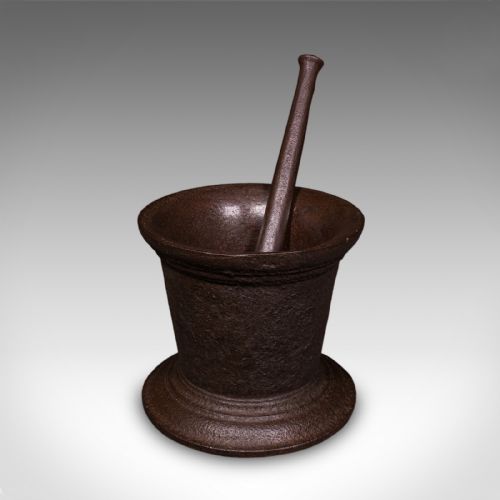
When searching for an antique mortar vessel, buyers encounter heavy utilitarian objects designed for crushing, grinding, and pounding materials in kitchens, apothecary shops, and dye works. The selections span from the seventeenth century through the Victorian era, taking forms such as kitchenware, apothecary tools, and large dye maker implements.
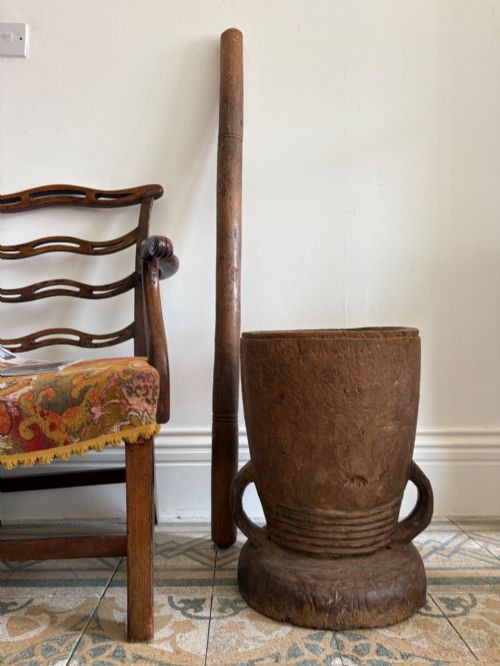
The most common examples on this page are metal pharmacy bowls and dense timber vessels. English and continental pieces dominate the selection, alongside items originating from diverse traditions like African tribal craft and Chinese elm carving.
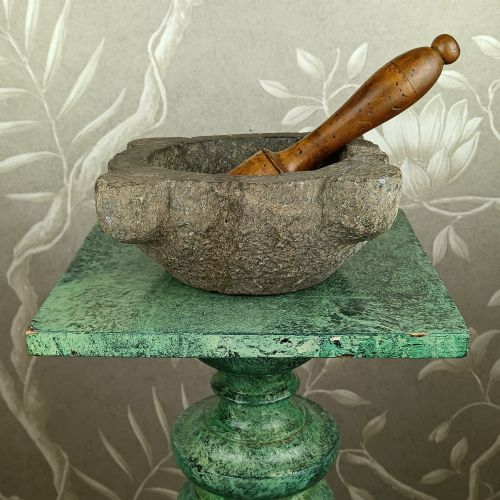
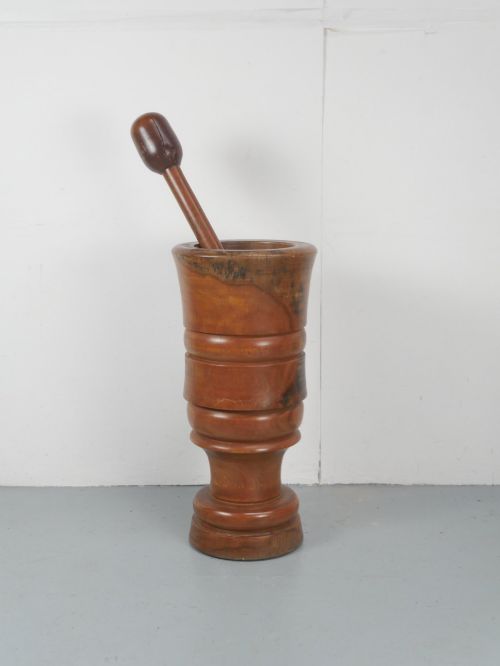
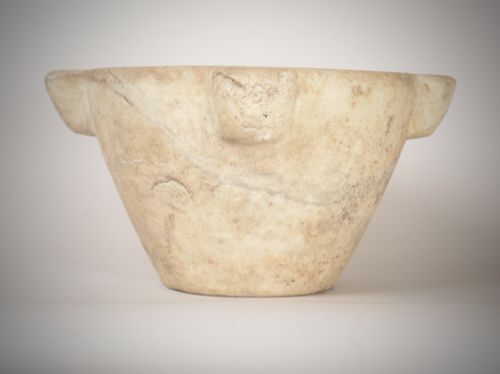
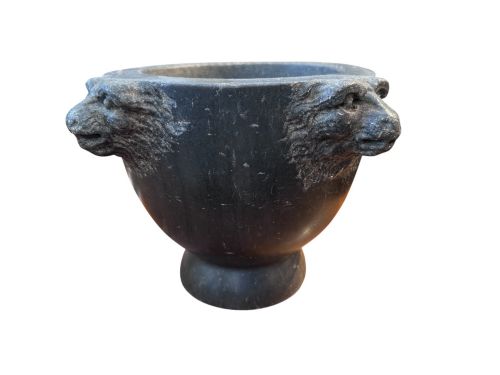
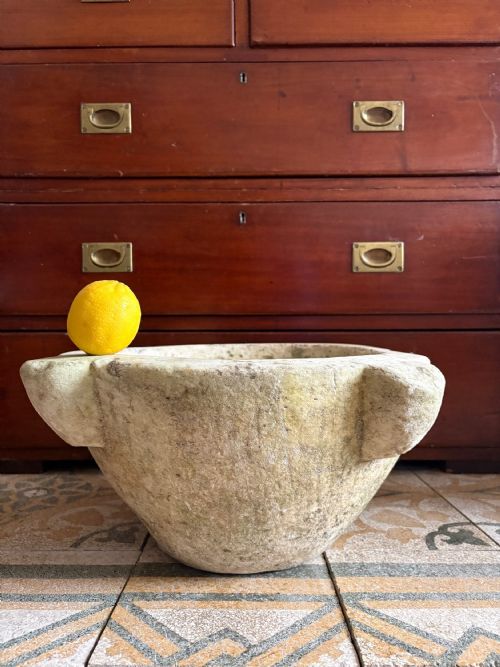
Forms range from small spice grinders to massive stone and marble basins measuring significant diameters. Many survive paired with their original pestles, while others stand alone as decorative vessels shaped from cast iron, brass, bronze, and hardwood.
How they were made
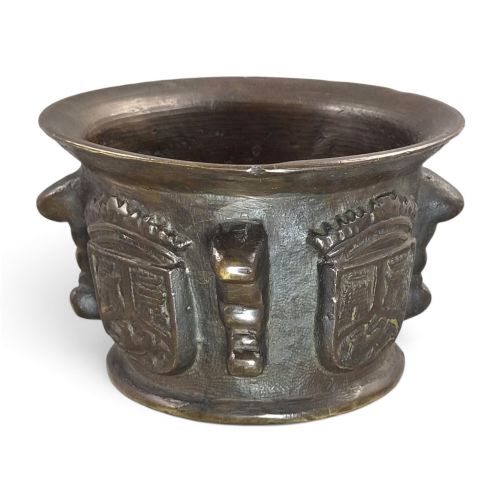
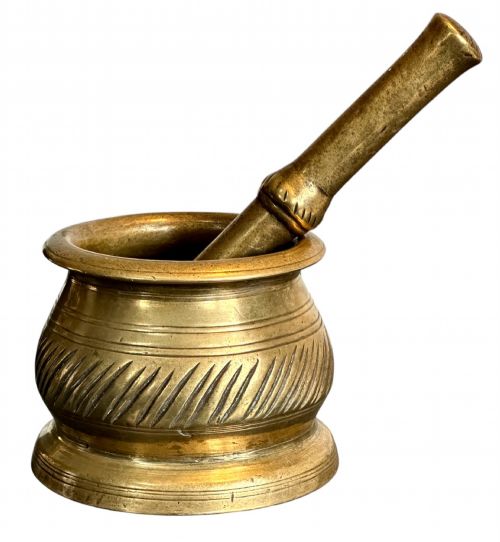
Metal vessels like bronze, brass, and cast iron were formed using foundry casting techniques, often incorporating decorative surface reliefs, heraldic arms, or Gothic motifs directly into the mould. These metal pieces require substantial weight and durable alloys to withstand repeated impact from heavy pestles.
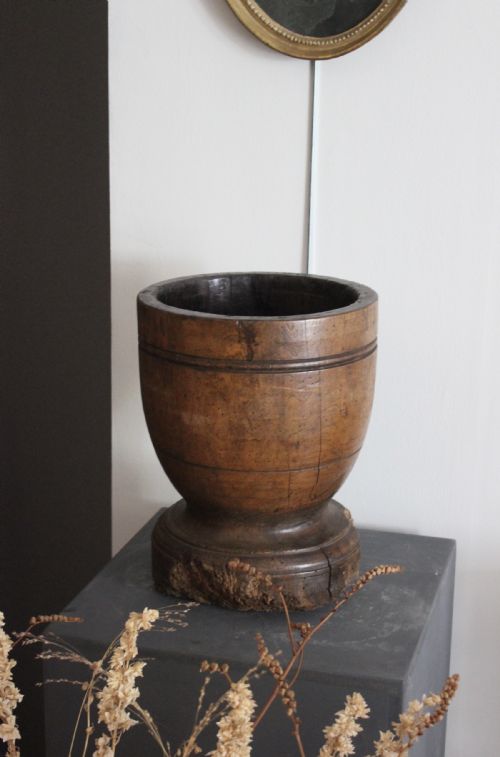
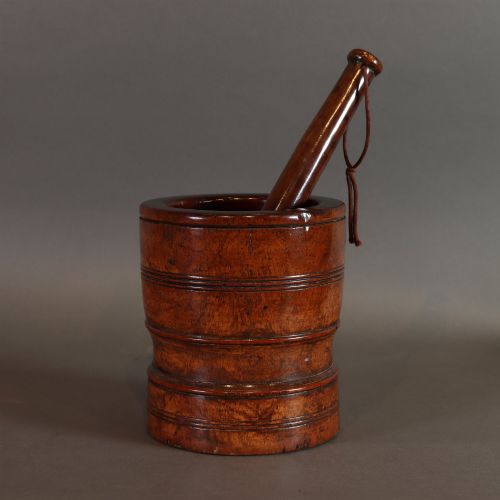
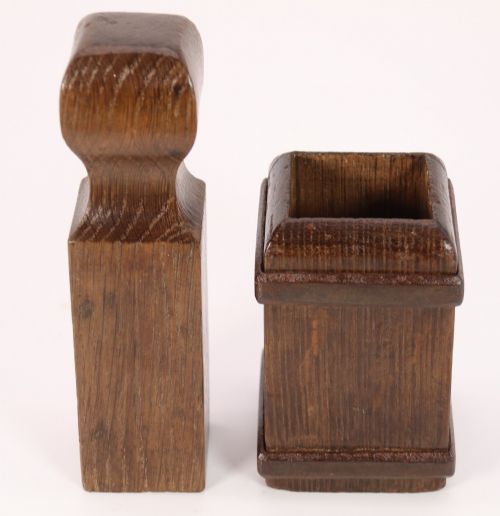
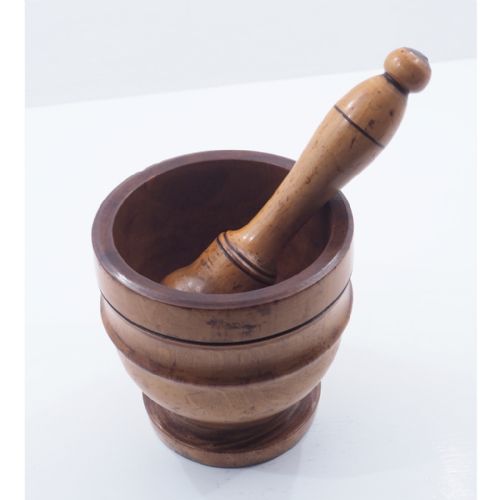
Wooden examples, referred to as treen, rely on turning dense timbers such as lignum vitae, oak, walnut, and fruitwood on a lathe, or hand-carving solid tree trunks into primitive grain vessels. Stone variations, including marble, basalt, and granite, are chiseled and ground into heavy, non-porous bowls suited for rigorous pharmaceutical or culinary preparation.
Antique Mortar Vessel Retail Price Guide 2026
Typical asking prices for mortar vessel among the pieces listed under this phrase on Sellingantiques today, from the lower quarter to the upper quarter. They describe what is for sale here now, not the wider market.
Some dye makers required massive iron and stone vessels weighing over a hundred pounds just to mix the first stage of colour.
What varies in quality
Quality rests in the integrity of the material and the crispness of the original cast or carved form. Metal mortars with sharp heraldic details, well-defined Tudor roses, or untouched patination sit higher in the range than worn, heavily pitted utilitarian examples.
For wooden and stone pieces, the density of the grain, the symmetry of the turned or carved profile, and the survival of a matching pestle determine distinction. Pieces displaying deliberate artistic effort, such as decorative brass moulding or large-scale architectural marble, command stronger interest than basic utility items.
The Antique Mortar Vessel Glossary
- Treen
- Small handmade wooden household objects and utilitarian items. These pieces showcase traditional turning and carving skills in domestic timbers.
- Lignum vitae
- A dense, heavy wood historically utilised for turned objects and mallets. Its natural oils and tight grain provide exceptional durability.
- Apothecary
- Pertaining to the preparation and selling of medicines and drugs. Apothecary mortars held chemical ingredients and dry compounds.
- Cast bronze
- An alloy of copper and tin poured into a mould to shape vessels. This method permitted intricate surface decoration and heavy walls.
Antique Mortar Vessel: Frequently Asked Questions
What were antique mortars used for?
These vessels served diverse roles in crushing herbs, grinding spices, preparing medicines in apothecary shops, and processing dyes for textiles.
Larger versions handled heavy industrial tasks, while smaller wooden or brass formats sat on kitchen counters for daily food preparation.
How do I date a bronze mortar?
Dating relies on stylistic clues like decorative mouldings, heraldic stamps, rim shapes, and surface patination developed over centuries of handling.
Earlier seventeenth-century examples often feature Gothic or Tudor motifs, whereas later Georgian and Victorian pieces show simpler, more standardised utilitarian profiles.
Are pestles usually original to the mortar?
Finding a mortar paired with its matching pestle is common but not guaranteed, as the two components frequently separated during decades of use.
Listings specify whether the set remains together or if the pestle represents a later or associated pairing.
How can I display an antique mortar?
Their heavy materials and sculptural forms make them suited for placement on kitchen shelves, sideboards, or open tables as standalone focal points.
They also function practically for holding small household items or dried botanicals in modern living spaces.