



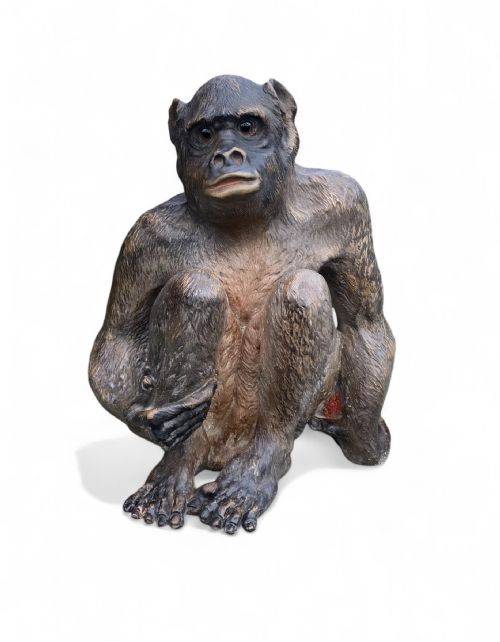


Antique Monkey Figure
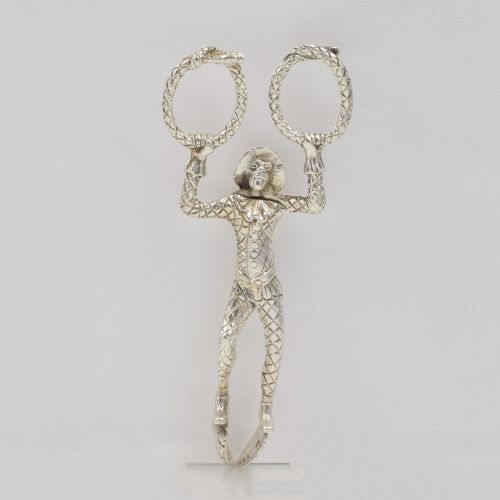
An antique monkey figure brings character and wit to a room, ranging from small silver sugar tongs to lifesize carved sculptures.
Antique Monkey Figure
When you search for an antique monkey figure, you encounter a surprisingly varied selection of sculptural forms, functional objects, and decorative items spanning multiple centuries. The evidence shows pieces ranging from Georgian silver sugar tongs and Victorian bronze desk accessories to Meiji period Japanese okimono and twentieth-century wooden garden sculptures.
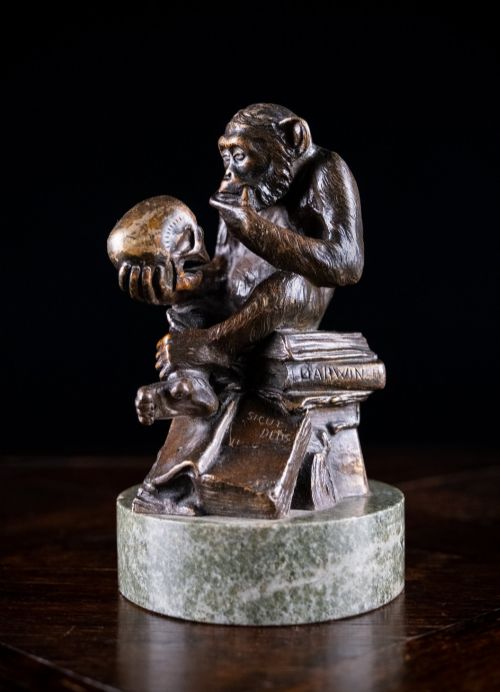
The version you are most likely to meet on this page is a nineteenth-century or early twentieth-century bronze or carved wooden representation. These pieces often draw upon the Animalier style or Japanese Meiji period traditions, reflecting the Victorian and Edwardian fascination with naturalism and exotic subjects.
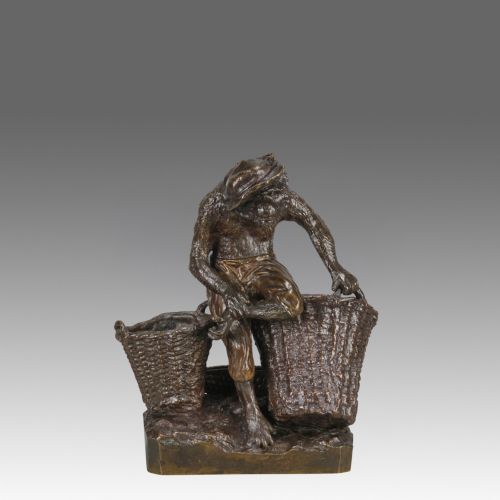
Makers and artists applied this primate motif across diverse mediums, creating everything from cold-painted Vienna bronze dishes to porcelain figures from the eighteenth century. Whether rendered as an anthropomorphic scholar holding books or a chimpanzee integrated into practical desk tidy hardware, the form consistently captures expressive movement.
Materials and construction
Metalworking techniques dominate the evidence, utilising bronze, copper, sterling silver, and mixed metals often enhanced with gold inlay or cold-painted finishes. Sculptors employed traditional casting methods like lost-wax casting for bronze and Animalier subjects, whilst silversmiths shaped novelty items such as harlequin sugar tongs.
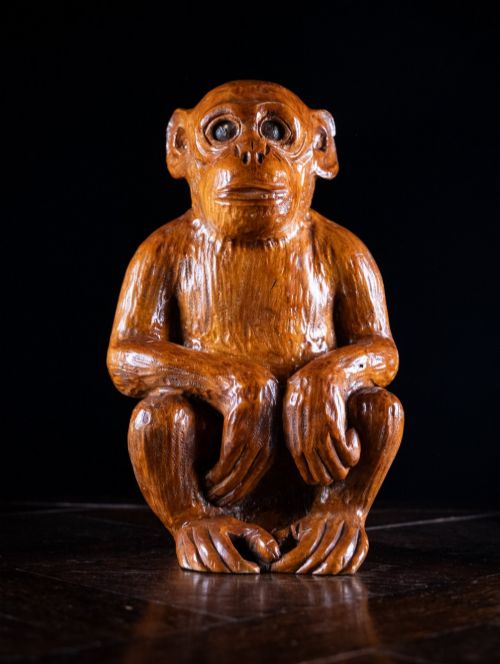
Carving represents the other primary method of production, utilising dense hardwoods like mango wood or general hard woods to shape larger figures and dinner gongs. Ceramic works rely on hard-paste porcelain and terracotta, demonstrating how artisans matched the medium to the intended scale and function of the object.
Antique Monkey Figure Retail Price Guide 2026
Typical asking prices for monkey figure among the pieces listed under this phrase on Sellingantiques today, from the lower quarter to the upper quarter. They describe what is for sale here now, not the wider market.
Listings feature 19th Century, Victorian, and Georgian periods alongside 1930 and Edwardian eras.
Evaluating quality and execution
Quality in these figural works depends upon the anatomical precision and expressive character achieved by the maker, whether working in bronze, silver, or wood. Finer examples display meticulous surface detail in the fur texture, skeletal structure, and posture, distinguishing them from mass-produced or purely decorative castings.
The integrity of the materials and any applied finishes, such as cold-painted enamel or mixed-metal inlays, also determine the standing of a piece. Original components, such as inset glass eyes or integrated functional hardware like inkwells and dinner gongs, preserve the intended aesthetic and mechanical harmony of the design.
Dee and Fargus·Christophe Fratin·Meissen
The Antique Monkey Figure Glossary
- Animalier
- A nineteenth-century artistic movement focused on the realistic portrayal of animals in sculpture. Practitioners often emphasised muscular tension and natural behaviour.
- Okimono
- A Japanese decorative carving intended for display on a tokonoma or shelf. These small-scale sculptures frequently depict figures, animals, or historical scenes with high detail.
- Cold-painted bronze
- A technique where bronze sculptures are painted with unfired oil-based paints or enamels. This method allowed for vibrant colouration on Vienna bronzes.
- Hard-paste porcelain
- A ceramic composition made from kaolin and petuntse fired at very high temperatures. It produces a dense, durable body often associated with eighteenth-century European manufactories.
- Dummy board
- A life-sized painted wooden or canvas figure cut out and supported by a prop. These trompe-l'œil pieces were placed in rooms to create the illusion of a person or animal present.
Antique Monkey Figure: Frequently Asked Questions
What periods do these figures come from?
The pieces span from the eighteenth century through the Georgian, Victorian, and Edwardian eras into the twentieth century. Specific origins include Georgian silverwork and Meiji period Japanese metalwork.
Later examples extend into the mid-twentieth century with carved wooden and bronze animalier sculptures.
How were these decorative figures used?
Many items served dual practical and decorative purposes in domestic spaces, functioning as desk tidies, inkwells, and dinner gongs. Others were purely ornamental sculptures or incorporated into tableware like sugar tongs.
Larger versions included garden lead sculptures and lifesize dummy boards designed to surprise visitors.
What materials are most common?
Bronze and mixed metals appear frequently, alongside sterling silver, copper, and cold-painted Vienna bronze. Wood is another primary medium, seen in carved hardwood figures and mango wood gongs.
Ceramics are also represented through hard-paste porcelain and terracotta figures.
How do I identify a Meiji period piece?
Meiji period Japanese works often utilise mixed-metal alloys, intricate bronze casting, and gold inlay. They frequently depict anthropomorphic scenes or naturalistic studies of animals.
Subject matter typically aligns with traditional Japanese artistic motifs of the late nineteenth century.