

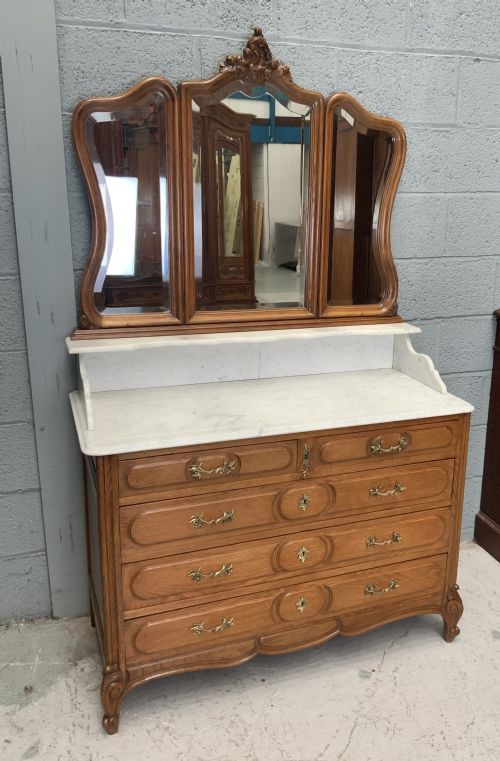


Antique Mirrored Washstand
These antique mirrored washstand pieces combine practical bedroom utility with glass and timber craftsmanship from the Georgian to Edwardian eras.
Antique Mirrored Washstand
An antique mirrored washstand represents a domestic fixture designed for personal grooming and hygiene, uniting a functional water basin surface with an integrated looking glass. These items span periods from the Georgian era through to the Edwardian years and the 1920s, reflecting changing domestic habits in the bedroom.
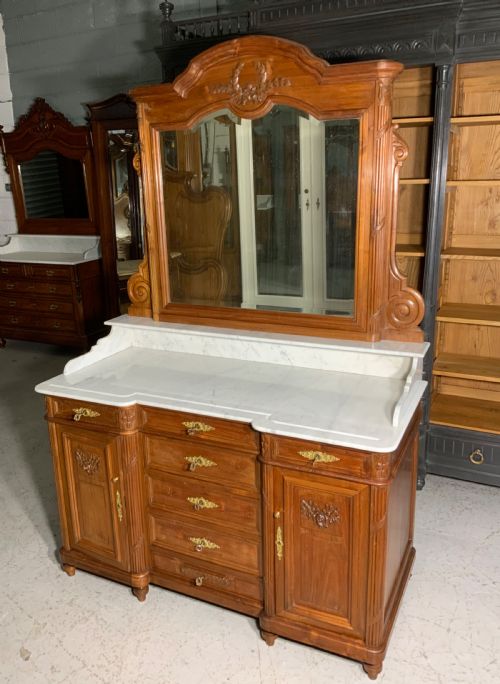
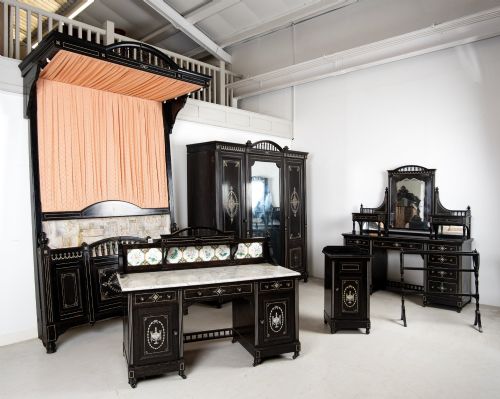
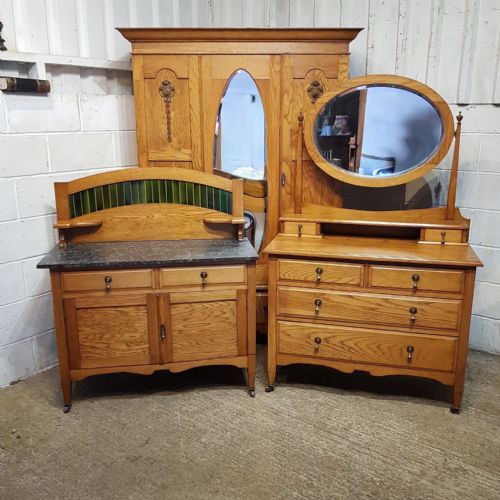
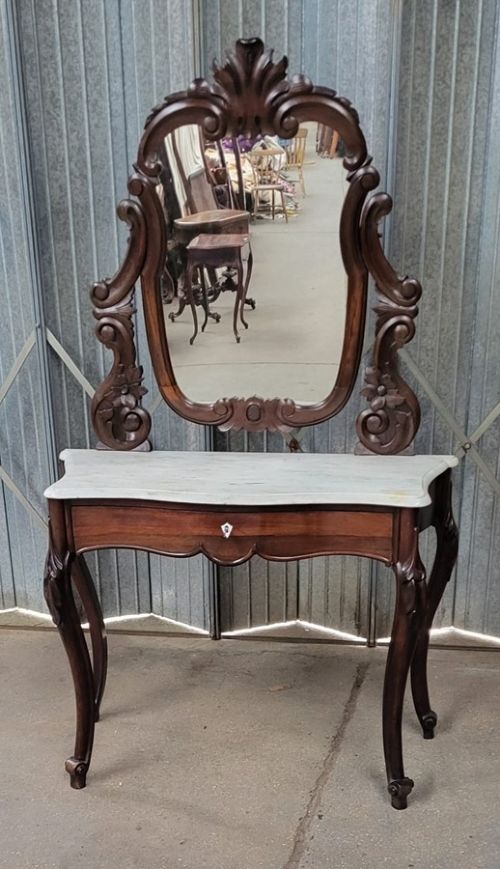
The pieces listed on this page appear in various forms including traditional washstands, shaving stands, dressing tables, and multi-piece bedroom suites. Mahogany, oak, walnut, and rosewood serve as the primary timbers, frequently paired with marble tops, ceramic tiles, and glass mirrors.
Buyers encounter examples styled in the Georgian, Victorian, Edwardian, Arts and Crafts, and Art Nouveau manners, alongside French provincial and Rococo revival designs. The incorporation of mirrors distinguishes these functional wash stands and dressing chests from simpler utilitarian tables.
How they were made
Cabinet makers utilised dense hardwoods such as mahogany, oak, walnut, and satinbirch for the structural frames and cabinetry, often employing inlay or ebonising for decoration. Joinery techniques varied from campaign folding frames to carved French walnut and panelled oak constructions.
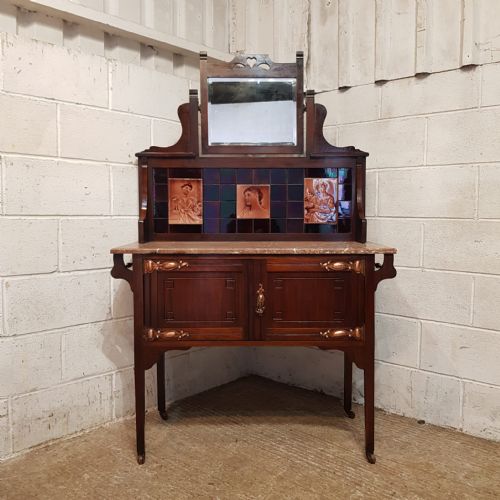
Functional surfaces frequently incorporated fitted white marble tops or ceramic tiles to resist water damage from washing basins and jugs. Glass mirrors, including triplate and adjustable configurations, were secured into wooden frames or crestings above the main body of the stand.
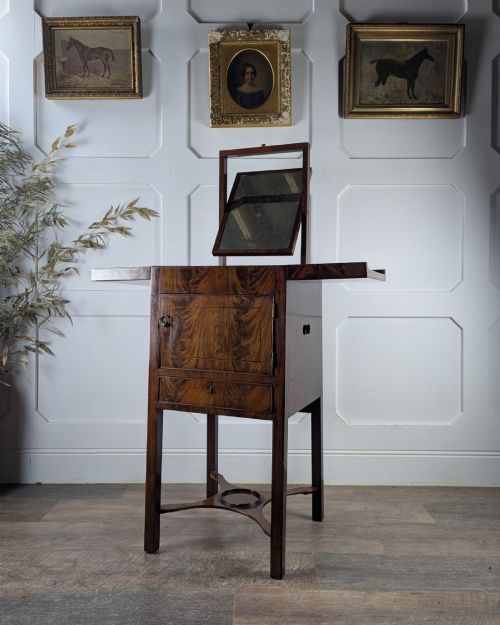
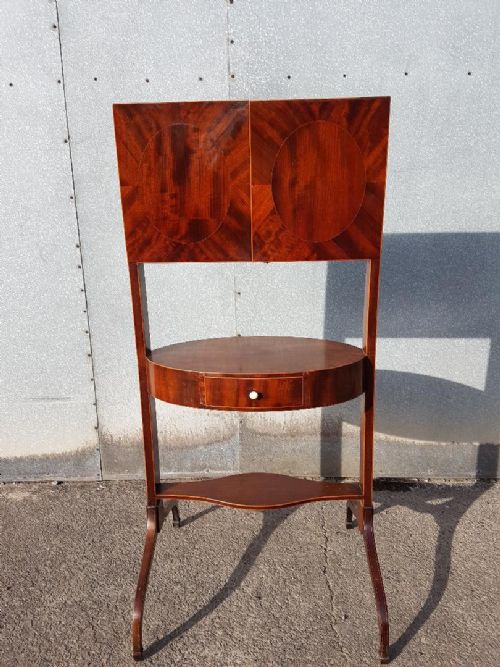
Several pieces include hidden folding compartments originally intended for gentleman's shaving soap and razors.
What varies in quality
The standard of timber selection and cabinetmaking dictates the foundational quality, with figured Cuban mahogany or quarter-sawn oak representing superior material choices over softer secondary woods. The intricacy of hand-carved details, such as those found on French walnut or Arts and Crafts pieces, demonstrates the maker's proficiency.
The integration of auxiliary materials like Carrara marble tops, ceramic tile splashbacks, and original bevelled glass mirrors influences the overall grade of the piece. Stamped signatures from notable makers add a documentary layer that elevates the standing of individual dressing and washing furniture.
James Shoolbred
The Antique Mirrored Washstand Glossary
- Washstand
- A piece of bedroom furniture designed to hold a basin and jug for washing, frequently equipped with a splashback and mirror.
- Campaign washstand
- A portable folding timber stand engineered for travel and military use during the Georgian and 19th-century periods.
- Marble top
- A polished stone slab fitted to the upper surface of a washstand to provide a durable, water-resistant counter for ablutions.
- Triplate dressing table
- A vanity or washstand featuring three hinged mirrors that allow the user to view angles from multiple sides simultaneously.
- Shaving stand
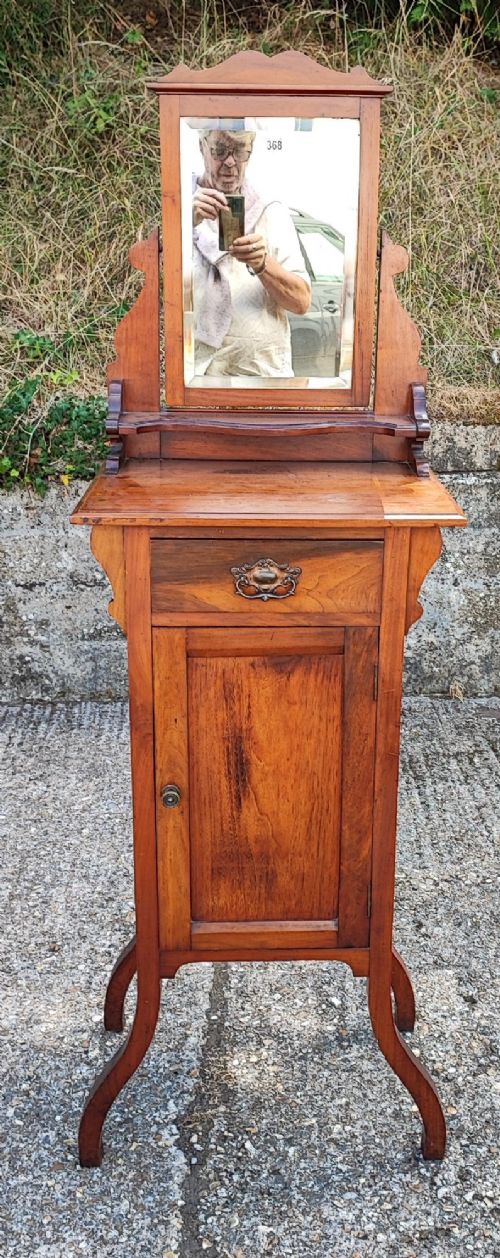
- A specialist grooming station incorporating an adjustable mirror and small surfaces specifically for male shaving equipment.
Antique Mirrored Washstand: Frequently Asked Questions
How do I use an antique washstand today?
Many people repurpose these timber and marble items as bathroom vanity units or hallway console tables. The upper surface safely accommodates modern basins with proper plumbing adaptations.
Alternatively, they function effectively as dressing tables or bedroom storage chests where the original mirror adds practical utility.
What is the difference between a washstand and a dressing table?
Washstands were historically constructed with water-resistant surfaces such as marble or tiles to handle washbasins, jugs, and splashing. They often include integrated towel rails and splashbacks.
Dressing tables focus on cosmetic preparation and grooming, featuring flat wooden tops, drawers for powders and brushes, and fixed or adjustable mirrors.
Are the mirrors original to these stands?
Many surviving pieces retain their original mercury or silvered glass mirrors, which frequently display minor foxing and age spots. These authentic imperfections confirm the historical continuity of the glass.
Replacement mirrors do occur in some examples where the original plate suffered breakage during decades of domestic use.
How do I identify a Georgian washstand?
Georgian examples typically feature lighter proportions in Cuban mahogany or satinwood, sometimes designed with clever folding mechanisms for campaign use. Their lines remain restrained and classical without the heavier ornamentation seen later in the century.
Look for hand-cut dovetails in the drawer construction and traditional timber pegging that predates mass-produced metal fixings.