

Antique Miniature Jewellery
These pieces of antique miniature jewellery are small-scale ornaments and personal tokens designed to carry portraits or hold precious trinkets close.
Antique Miniature Jewellery
Buyers examining antique miniature jewellery encounter a diverse selection of small personal adornments and fitted containers spanning several centuries. The category bridges personal ornamentation and miniature cabinet-making, uniting wearable items with small repositories for keepsakes.
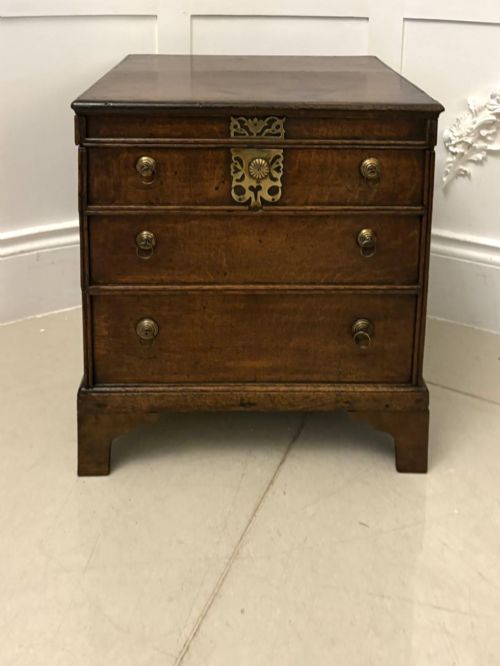
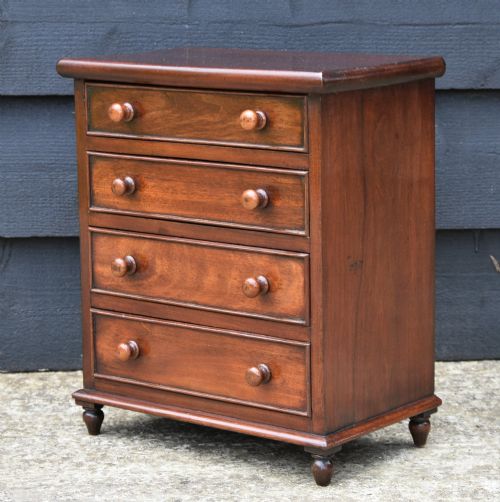
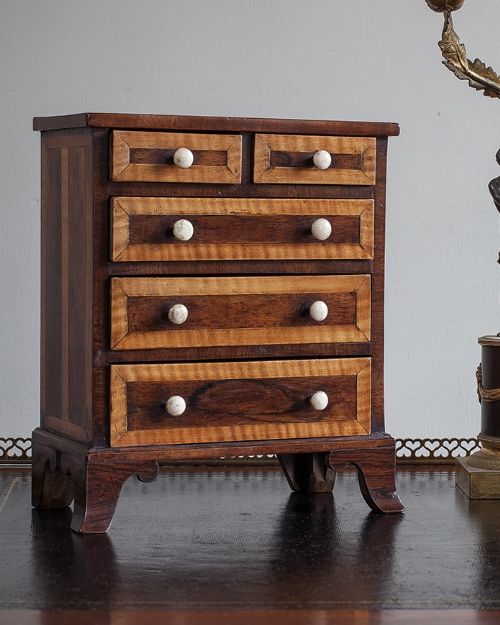
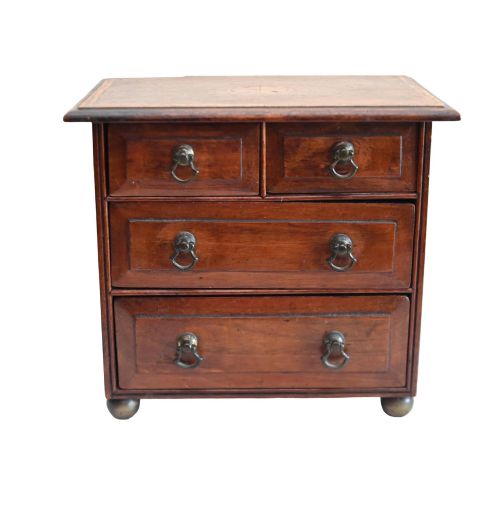
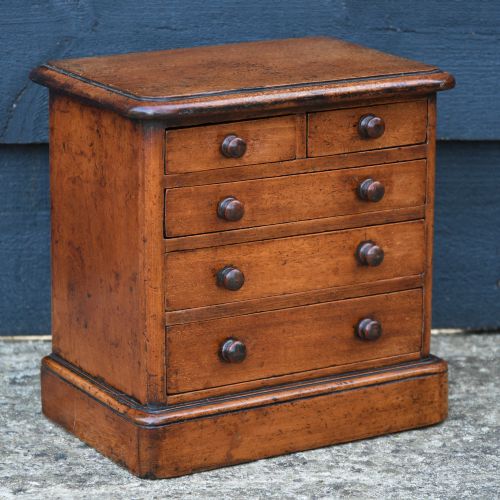
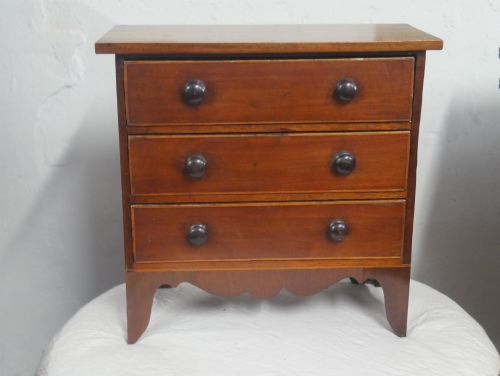
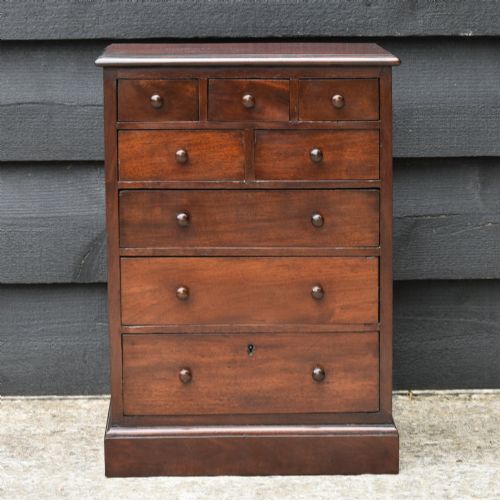
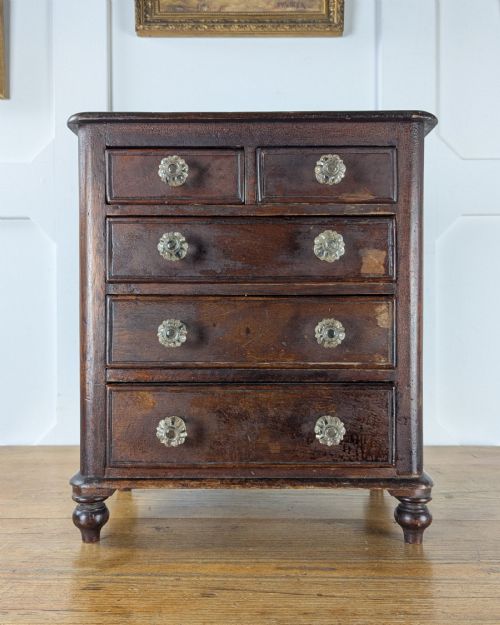
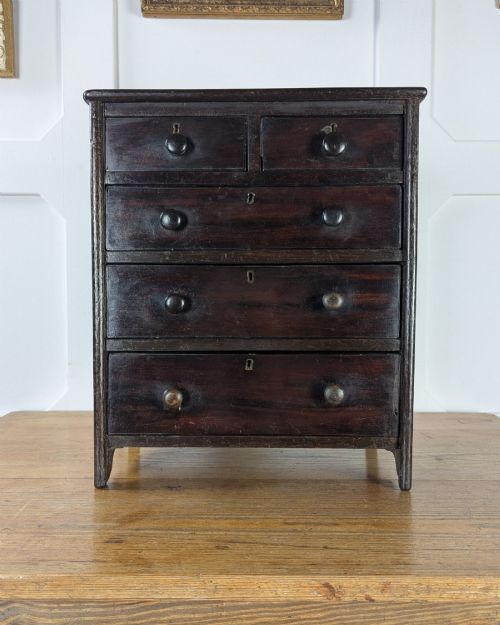
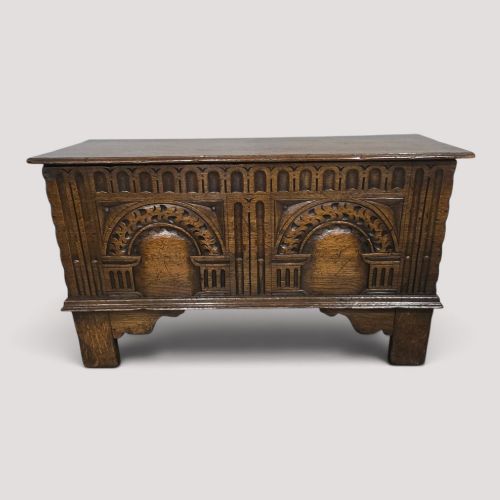
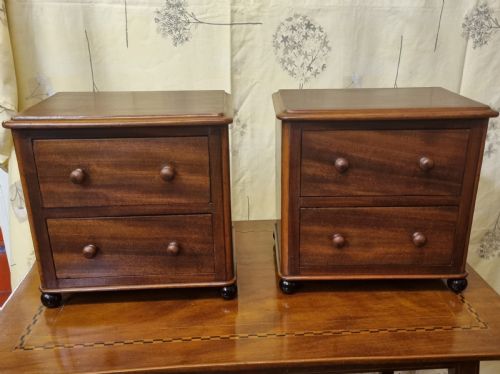
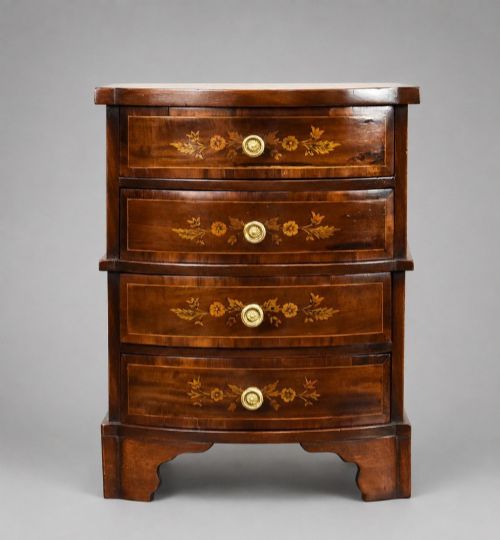
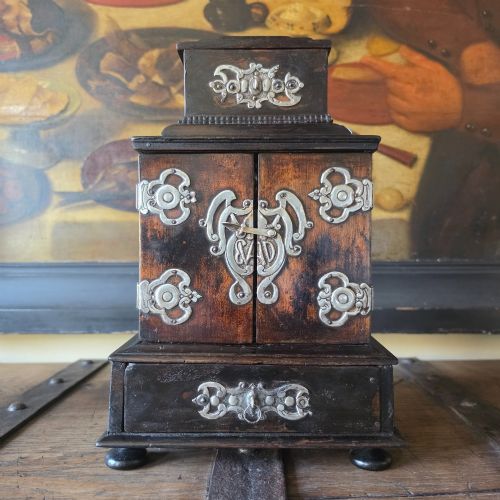
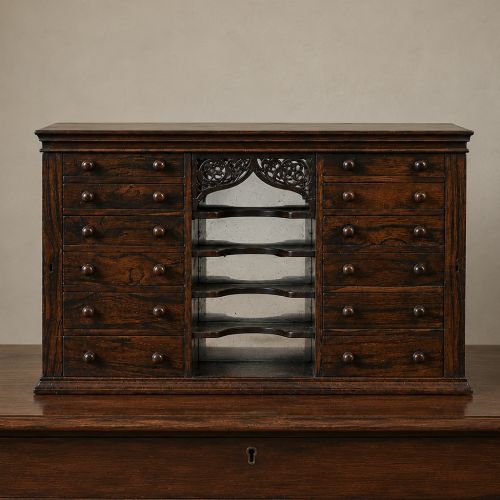
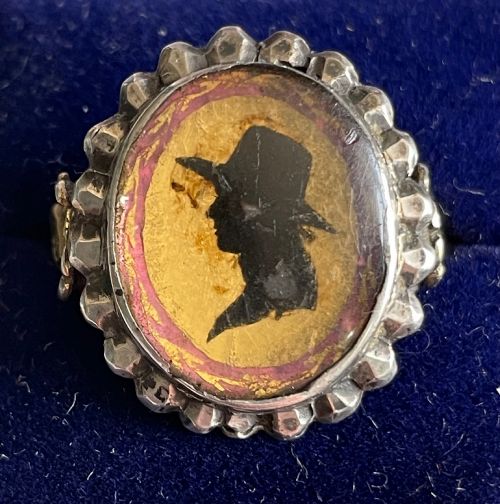
The wearable pieces most frequently met on this page include Georgian and Victorian portrait miniature pendants, brooches, rings and sentimental love token pieces. Alongside these wearable jewels appear miniature chests of drawers, jewellery cabinets, novelty boxes and tabletop collectors cabinets.
Origins stretch from English and continental workshops to Scottish and Anglo-Indian makers, taking shape across the eighteenth, nineteenth and early twentieth centuries. These objects reflect both the portable portraiture of past eras and the meticulous skill of apprentice cabinet-makers.
Materials and construction methods
Makers constructed wearable antique miniature jewellery using gold frames, silver settings and enamel, housing hand-painted portrait miniatures, silhouettes and hairwork. Metalwork techniques combined casting and bezel setting to secure delicate painted ivories, glass and verre eglomise panels.
Miniature furniture and cabinets rely on traditional timber construction utilising mahogany, walnut, oak, rosewood and inlaid hardwoods combined with brass hardware. Artisans shaped miniature drawers, dovetail joints and turned feet with the same precision applied to full-scale furniture.
Periods represented across these items range from the 18th Century through the Georgian, Regency, Victorian, and Edwardian eras up to 1920.
Distinctions in quality and execution
Quality in portrait miniatures rests upon the finesse of the brushwork, the depth of expression in the subject's face and the original artists signature. Superior jewellery mounts display crisp casting, secure settings and well-preserved enamelling or gold work.
Cabinetwork quality shows in the selection of figured timber veneers, the tightness of the joinery and the survival of original brass handles, locks and glass panels. Pieces demonstrating deliberate attention to internal fitting and structural proportions mark the upper tier of surviving examples.
Henry Bone ARA·John Miers·Christian Friedrich Zincke·Amalie Von Peter
The Antique Miniature Jewellery Glossary
- Apprentice piece
- A specimen item created by a trainee artisan to demonstrate mastery of joinery and woodworking skills before admission to a trade guild.
- Verre eglomise
- A cold decoration technique where a design is painted and gilded onto the reverse side of glass to create a reflective, metallic panel.
- Silhouette
- A solid black profile portrait cut from paper or painted onto card, plaster or ivory, popular during the eighteenth and nineteenth centuries.
- Portrait miniature
- A small, highly detailed painting executed on ivory, vellum or card, frequently housed within a pendant, brooch or locket frame.
- Mule chest
- A traditional storage form combining drawers beneath a lift-lid coffer box compartment.
- Hairwork
- Human hair braided or arranged into intricate patterns behind glass within a mourning or sentimental jewellery piece.
Antique Miniature Jewellery: Frequently Asked Questions
How were portrait miniatures worn?
Portrait miniatures were commonly mounted in gold or silver frames to be worn as pendants on necklaces or pinned to garments as brooches.
Some examples double as rings or lockets, allowing the owner to keep a likeness of a relative or lover hidden against the body.
What are apprentice pieces?
Apprentice pieces are small-scale furniture items, such as miniature chests of drawers or cabinets, produced by trainees to prove their proficiency to master craftsmen.
Because they required the same joinery skills as full-sized furniture, they exhibit remarkable precision in their timber selection and construction.
How do I care for antique jewellery and miniature cabinets?
Keep delicate painted miniatures and jewellery away from direct sunlight, moisture and harsh cleaning chemicals to protect the fragile pigments and ivory supports.
For wooden miniature cabinets and boxes, apply occasional appropriate wax polish and maintain stable room humidity to prevent timber movement.
How can I tell the period of a piece?
Dating relies on stylistic clues, framing techniques, and material choices characteristic of periods like the Georgian, Regency and Victorian eras.
Portrait clothing styles, hair arrangement, and fastener types further help narrow down the decade of manufacture.