



Antique Military Instrument
These antique military instrument pieces are functional relics of service and navigation, offering tangible connections to operational history that collectors prize.
Antique Military Instrument
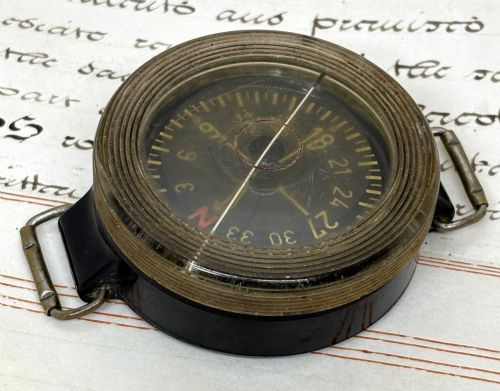
When you search for an antique military instrument, you encounter precision tools designed for navigation, observation, and medical utility during active service. The selection spans the Victorian era through the Second World War, including periods such as Edwardian and the 1910s. You will frequently find pocket compasses, telescopes, and aviation instruments among the available forms.
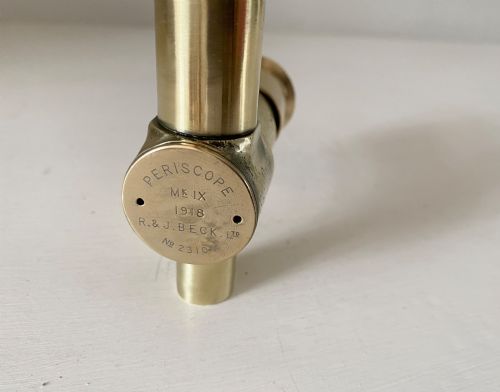
The objects on this page range from campaign telescopes and periscopes to cockpit watches and altimeters. Most specimens originate from the early twentieth century, reflecting the technological demands of the First and Second World Wars. These pieces bridge the gap between practical military gear and collectible historical artefacts.
Materials and construction
Brass and steel form the backbone of these pieces, providing the durability required for field deployment. Makers incorporated glass for optics and dials, alongside leather for protective cases and slings. Nickel, bakelite, and acrylic appear in later twentieth-century iterations.
Construction relies on robust mechanical assembly to withstand harsh operational environments. Optics are housed in machined metal tubes, while sensitive directional instruments utilise sealed brass casings to protect internal pivots.
Antique Military Instrument Retail Price Guide 2026
Typical asking prices for military instrument among the pieces listed under this phrase on Sellingantiques today, from the lower quarter to the upper quarter. They describe what is for sale here now, not the wider market.
Listings feature brass, glass, steel, leather, nickel, bakelite, and acrylic across instruments from the Victorian era to the 1940s.
Factors of quality
Quality rests upon the clarity of optics, the legibility of engraved markings, and the intactness of original components. Maker inscriptions and official military issue broad arrows distinguish standard production from superior pieces. The precision of movement in compasses and watches separates fine workshop output from basic utilitarian gear.
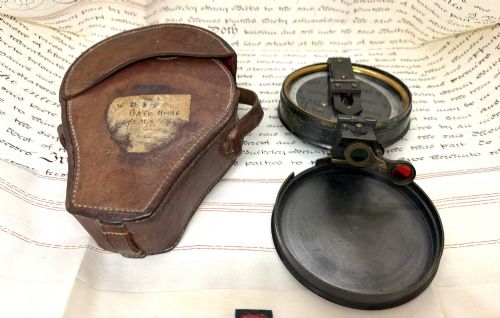
Preservation of original surface finishes and functional mechanical operation elevate a piece. Items retaining their contemporary leather cases or calibration chambers demonstrate greater historical completeness.
French Ltd·R & J Beck Ltd·P. Orr, Madras·Voigtländer & Sohn AG·Maw, London·Elliott Brothers, London
The Antique Military Instrument Glossary
- Verner's Pattern
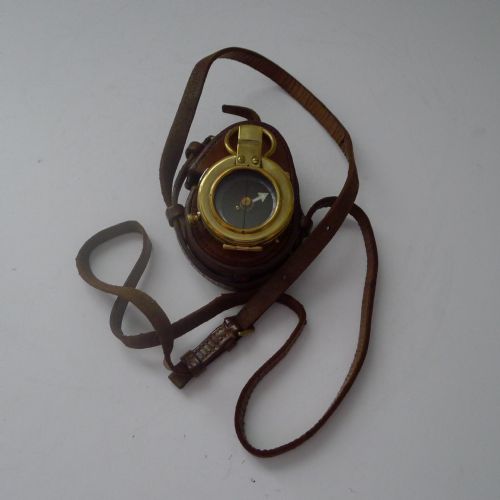
- A standard military compass design utilised extensively by British officers during the early twentieth century. These instruments feature specific sighting mechanisms for field mapping.
- Sextant
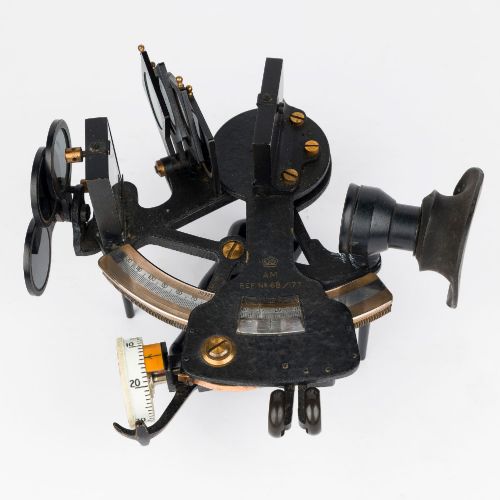
- An navigational instrument used to measure the angle between two visible objects for celestial navigation. Aviation examples were adapted for use in flying boats.
- Altimeter
- A device used to measure altitude above a fixed level, often found in military observation balloons and aircraft. Calibration chambers were utilised to test these sensitive barometric mechanisms.
- Beam compass
- A drafting instrument consisting of a bar with adjustable slides, used for drawing large circles or arcs. Woolwich pattern versions served specific engineering or artillery functions.
Antique Military Instrument: Frequently Asked Questions
How do I identify a military issue compass?
Military issue compasses typically bear broad arrow acceptance marks, government inventory numbers, and specific pattern designations like Verner's.
Maker signatures and registration years engraved on the brass casing or dial also confirm official military procurement.
Can I use an antique telescope outdoors?
While brass campaign telescopes remain mechanically robust, vintage optics lack modern coatings and sealing against moisture.
Casual viewing is possible, but delicate lenses benefit from careful handling away from harsh weather.
What period do most cockpit watches date from?
Cockpit watches and aviation instruments on this page predominantly date from the First and Second World Wars.
Specific issue numbers and dial markings tie them to departments like the Royal Flying Corps or the Air Ministry.
How should I display brass instruments?
Brass instruments look best displayed on flat surfaces in stable indoor environments away from direct sunlight and dampness.
Allowing the metal to retain its natural age patina preserves the historical character of the piece.