


Antique Micro Mosaic Jewellery
These pieces of antique micro mosaic jewellery combine tiny glass tesserae with gold and metalwork to create wearable miniature pictures.
Antique Micro Mosaic Jewellery
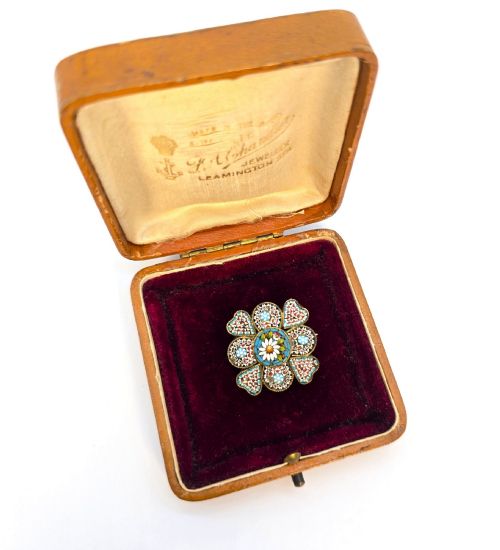
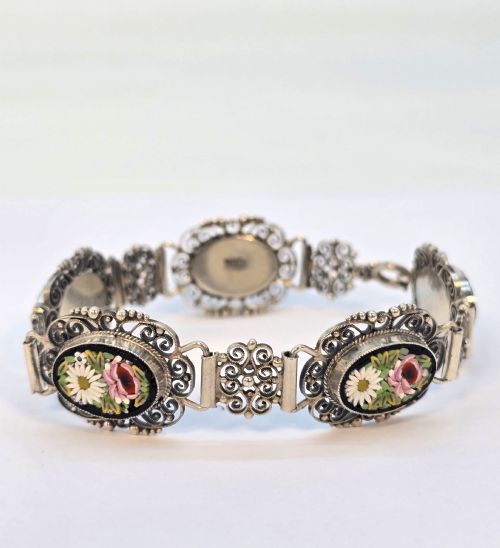
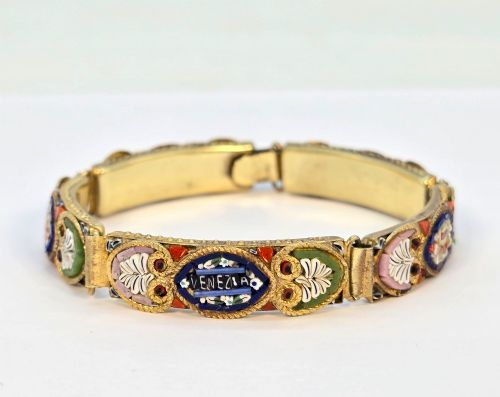
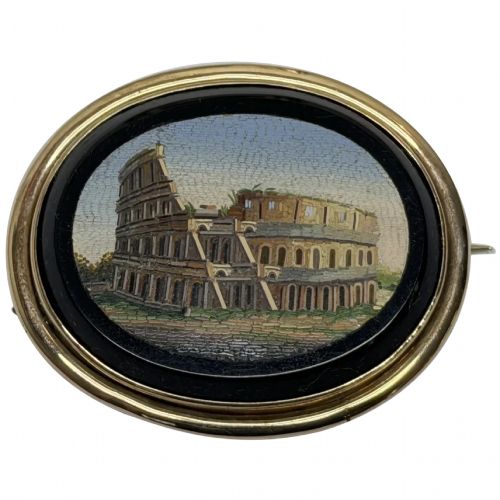
Antique micro mosaic jewellery comprises brooches, bracelets and earrings decorated with minute glass tesserae assembled into pictorial scenes. Pieces range from Victorian yellow gold brooches depicting the Roman Colosseum to Italian bracelet designs from Venice and dove earrings set in higher carat gold.
Buyers encountering this category will find examples originating primarily from nineteenth century Italy and the Victorian Grand Tour tradition. The assortment balances wearable personal ornaments with related decorative trinket boxes.
Alongside Italian micromosaics, the selection includes Tunbridge ware and Anglo-Indian Sadeli mosaic boxes that employ contrasting wood tesserae instead of glass. These related forms sit within the broader nineteenth century decorative mosaic tradition represented here.
How they were made
Craftsmen built these ornaments using microscopic glass tesserae, arranging hundreds of fused glass threads by hand into intricate pictorial motifs. These tiny tiles were set into mounts of yellow gold, including fifteen and eighteen carat metal, or framed within metalwork settings.
Alternative mosaic techniques utilise natural materials arranged with precision, such as the wood tesserae seen in Tunbridge ware boxes fashioned from rosewood, walnut, boxwood and ebony. Sadeli mosaic work employs microscopic pieces of bone and other materials in geometric patterns on box surfaces.
What varies in quality
The density and fineness of the glass tesserae dictate the clarity of the resulting image, with tighter arrangements producing smoother pictorial detail in architectural views and bird motifs. Brooches and earrings that demonstrate superior precision in setting display tighter joints and more convincing depth.
The choice of surrounding metalwork also distinguishes pieces, moving from standard gilt metal mounts to substantial fifteen and eighteen carat yellow gold settings. Wood mosaic boxes vary according to the complexity of the geometric wood inlay and the choice of timbers like rosewood and ebony.
The Antique Micro Mosaic Jewellery Glossary
- Micromosaic
- A decorative technique using microscopic glass tesserae to form detailed pictorial scenes or geometric patterns. These tiny tiles are painstakingly laid into a supportive matrix.
- Tesserae
- The individual small blocks of coloured glass, stone or wood used to build up a mosaic composition. In micro mosaics, these pieces measure fractions of a millimetre.
- Grand Tour
- The nineteenth century custom of cultural travel through Europe undertaken by young upper-class people. Travellers frequently purchased micromosaic jewellery in Rome and Venice as souvenirs.
- Tunbridge Ware
- A type of woodwork originating from Tunbridge Wells featuring intricate mosaic patterns made from many different coloured woods. Artisans glued tiny wood prisms together to create pictorial or geometric designs on boxes.
- Sadeli Mosaic
- A complex micro-mosaic craft originating in India involving the creation of intricate geometric patterns from minute slivers of bone, metal and woods. These strips were bundled and sliced to veneer boxes.
- Gilt Metal
- Metal that has been treated with a thin layer of gold wash or leaf to simulate solid gold. It provides a durable and decorative setting for many nineteenth century ornaments.
Antique Micro Mosaic Jewellery: Frequently Asked Questions
What is antique micro mosaic jewellery?
Antique micro mosaic jewellery consists of wearable ornaments decorated with tiny pieces of coloured glass fused together to form detailed pictures. These miniature artworks typically depict architectural landmarks, birds or floral motifs.
Created primarily during the nineteenth century, these pieces served as popular souvenirs for travellers undertaking the Grand Tour across Europe. They combine meticulous glasswork with precious metal mounts like yellow gold.
How do I wear these delicate pieces?
Wearing antique micro mosaic jewellery requires mindfulness regarding its physical structure, as the tiny glass tesserae are held in place by an adhesive matrix. Brooches and earrings should be pinned securely and stored safely when not in use to prevent impact damage.
Because many examples date from the Victorian era and incorporate softer gold or gilt metal mounts, they benefit from gentle handling. Avoid exposing them to moisture or harsh cleaning chemicals that could weaken the mosaic setting.
How are micromosaics different from other mosaics?
Micromosaics differ from architectural mosaics through the extreme scale of their component glass tesserae, which are often so small they require magnification to appreciate fully. Craftsmen used pulled glass threads cut into microscopic sections rather than larger stone cubes.
This technique allowed makers to achieve the level of detail seen in miniature paintings, depicting complex shading and perspective within a small brooch or bracelet link.
Are wooden mosaic boxes related to glass mosaics?
Wooden mosaic boxes such as Tunbridge ware and Sadeli work share the core principle of creating decorative surfaces from thousands of tiny constituent parts. Instead of glass tesserae, these makers utilised natural woods, bone and metal slivers.
Both traditions reflect a nineteenth century fascination with meticulous miniature craftsmanship and geometric or pictorial precision. They appear alongside glass pieces in this category of mosaic items.
How can I tell the period of a piece?
Dating these items relies on examining the style of the metal mount, the subject matter and the materials used in construction. Nineteenth century Victorian and Grand Tour pieces often feature specific architectural subjects like the Roman Colosseum set in yellow gold or gilt frames.
Tunbridge and Sadeli wooden boxes from the same century employ distinct regional timbers and geometric formulas typical of their respective manufacturing centres. Comparing the mounting techniques and overall design helps establish the era.