


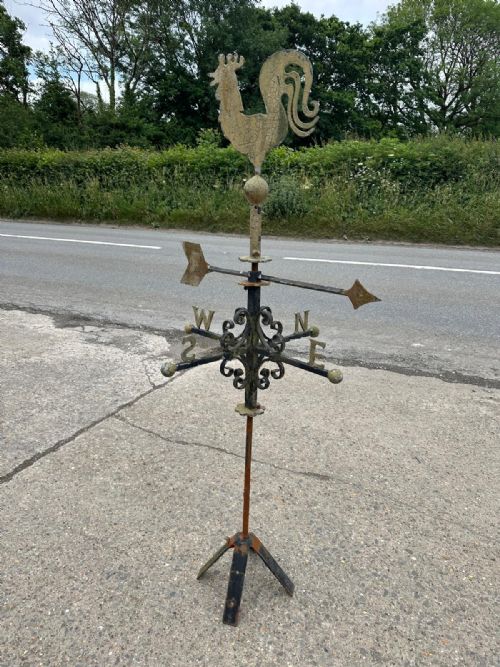


Antique Metal Weather Vane
An antique metal weather vane brings both movement and character to a roofline, garden or interior wall.
Antique Metal Weather Vane
An antique metal weather vane is a functional silhouette designed to indicate wind direction, now frequently collected as folk art sculpture. When searching for an antique metal weather vane, buyers encounter varied forms ranging from traditional cockerels to galloping horses.
The pieces on this page span the Georgian, Victorian, Edwardian and early twentieth century periods, reflecting diverse vernacular traditions. English folk art and rustic country styles predominate, often manifesting as simple sheet metal silhouettes or sculptural copper forms.
Makers shaped these objects for practical service on barns and rooftops, utilising durable metals designed to withstand the elements. Over decades, exposure to weather has imparted weathered surfaces, old paint remnants and natural patinas highly valued by collectors.
Materials and construction methods
Makers fashioned these pieces primarily from copper and sheet iron, employing techniques suited to durable outdoor metalwork. Sheet metal was cut into silhouettes such as horses, huntsmen and cockerels, sometimes enhanced with dimensionality.
Wrought iron provided robust structural support for directional elements and mounting brackets, while applied old paint added initial colour and protection. Over time, surfaces weathered naturally, leaving copper with distinctive patinas and iron with characteristic oxidation.
A teeter totter sculpture quietly crosses the boundary from rooftop instrument to playful garden folk art.
Factors that distinguish quality
Quality rests in the sculptural strength of the silhouette and the clarity of its form against the sky. Pieces displaying strong folk art character and expressive detailing command greater attention than simple utilitarian examples.
The condition of the original surface significantly alters the appeal of a piece. Traces of old paint, stable patinas and minimal structural intervention separate compelling display items from heavily restored or compromised examples.
The Antique Metal Weather Vane Glossary
- Weather vane
- A movable device attached to an elevated structure to indicate the direction of the wind. Traditionally comprising a pointer and a directional indicator, many surviving examples now function purely as decorative sculpture.
- Folk art
- Artistic work created within a traditional culture by self-taught or local artisans. In this category, it describes utilitarian metal objects shaped by regional craft traditions rather than academic design.
- Silhouette
- A two-dimensional outline of an object filled in with a solid colour, typically dark. Weather vanes often employ this technique to create recognizable profiles of animals and figures visible from a distance.
- Patina
- A surface sheen or coloration developed through age, use and exposure to the elements. Collectors prize natural copper oxidation and aged paint surfaces for their visual depth.
Antique Metal Weather Vane: Frequently Asked Questions
How were antique weather vanes originally mounted?
Makers attached these objects to iron rods or spindles fixed to the highest points of buildings, allowing them to pivot freely with the wind.
Today, many owners mount them indoors on custom stands to display the sculptural silhouette as wall art or tabletop decor.
Are these weather vanes still suitable for outdoor use?
While originally built for rooftops, most surviving antique pieces have delicate patinas and historical surfaces that benefit from sheltered placement.
Exposing fragile sheet iron or old paint to modern weathering can accelerate degradation, making interior display a safer choice for preservation.
What animal motifs are most common?
Cockerels and horses appear most frequently across nineteenth and early twentieth century examples, reflecting rural livestock and farm life.
Other rarer silhouettes, such as huntsmen or specific folk art figures, reflect the specific commissions or local vernacular traditions of their makers.
How do I identify a Georgian or Victorian piece?
Dating relies upon stylistic markers, material thickness and the nature of the remaining surface patinas or old paint layers.
Earlier pieces often display hand-wrought ironwork and simpler, robust sheet metal cuts compared to later standardised production methods.