

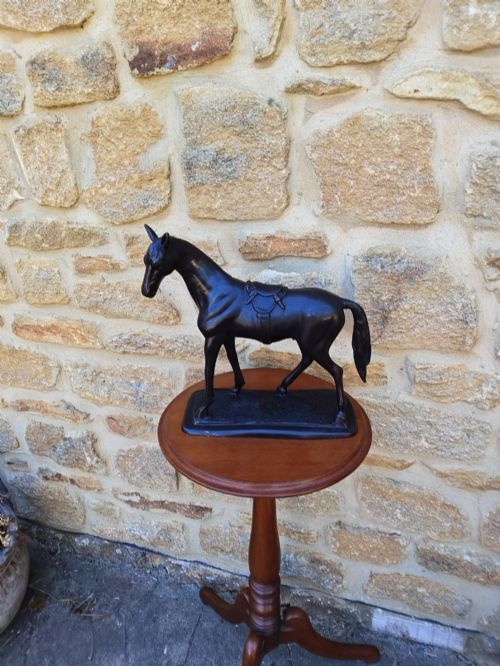
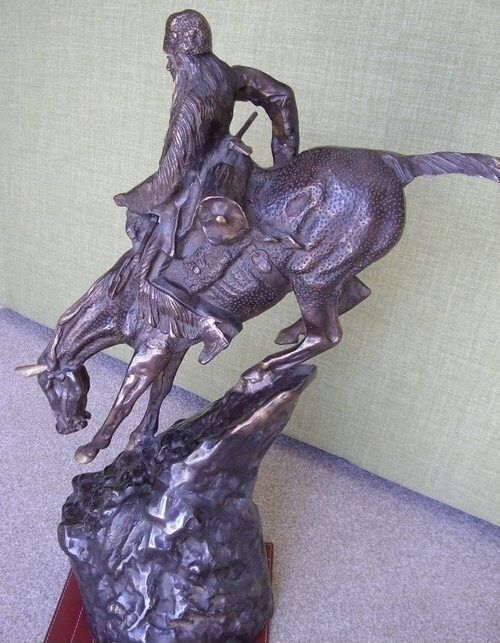
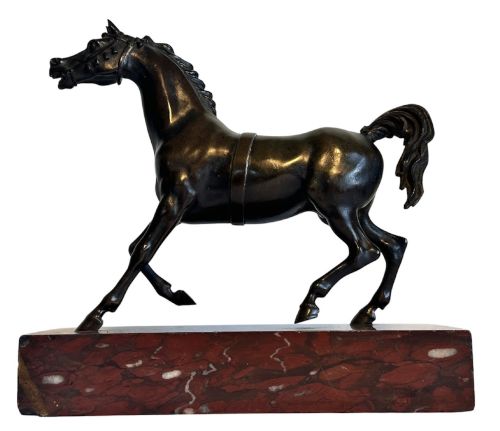
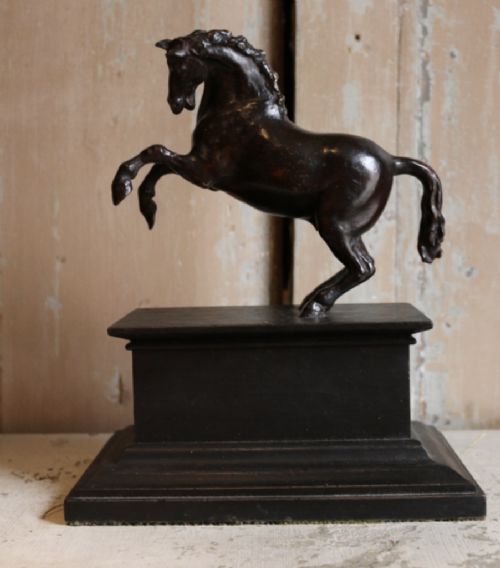


Antique Metal Horse Figurine
These antique metal horse figurine pieces range from early twentieth century bronzes to nineteenth century doorstops, offering enduring appeal for equine collectors.
Antique Metal Horse Figurine
An antique metal horse figurine encompasses everything from nineteenth century bronze stallions on marble bases to heavy cast iron and brass doorstops. Buyers searching this phrase will find a diverse selection spanning the seventeenth century up through the Edwardian period and the nineteen twenties.
The objects take various forms including cabinet sculptures, functional doorstops, and even a table cigarette lighter styled after Dick Turpin. Animalier and Art Deco styles frequently appear alongside Grand Tour and French Neoclassical influences.
Bronze and brass dominate the material record, often paired with marble bases or finished with cold-painted details and silver plating. Pieces range from diminutive cabinet models to substantial door keepers designed for domestic use.
How they were made
Foundry methods such as sand casting and lost-wax casting create the primary metal forms seen in these figures. Molten bronze, brass, or cast iron is poured into moulds to capture muscular definition and harness details.
Finishing techniques involve hand-chasing the metal surface, applying gilding or silver plating, and mounting heavier figures onto marble plinths. Cold-painted metal introduces surface colour directly onto the alloy.
Some utilitarian examples, such as doorstops, utilise robust cast iron or brass construction designed to withstand everyday handling and weight requirements.
Antique Metal Horse Figurine Retail Price Guide 2026
Typical asking prices for metal horse figurine among the pieces listed under this phrase on Sellingantiques today, from the lower quarter to the upper quarter. They describe what is for sale here now, not the wider market.
Listings span multiple centuries, incorporating seventeenth century works, nineteenth century Victorian examples, and nineteen twenties Art Deco designs.
What varies in quality
Materials and base construction also differentiate the range, as seen in heavy bronze figures secured to bespoke marble bases versus solid cast iron or brass utility items.
Artistic fidelity to the chosen style - whether Animalier realism or streamlined Art Deco - determines the visual success and overall character of the piece.
The Antique Metal Horse Figurine Glossary
- Animalier
- A nineteenth century sculptural movement focused on realistic depictions of animals, particularly horses and big cats. Artists in this tradition paid close attention to anatomical accuracy and movement.
- Grand Tour
- A cultural tradition where wealthy travellers collected art and souvenirs across continental Europe. Bronzes purchased on these travels often replicated famous classical monuments.
- Cast iron
- An iron-carbon alloy poured into moulds to create heavy, durable objects. This material was frequently utilised for functional items like doorstops.
- Cold-painted
- A colouring technique where paint is applied to metal without high-temperature firing. This finish is commonly found on decorative metal animals from the late nineteenth and early twentieth centuries.
Antique Metal Horse Figurine: Frequently Asked Questions
How do I identify the period?
Dating relies on stylistic clues, casting techniques, and material combinations typical of specific eras like the Victorian period or the nineteen twenties. Patination and base materials also offer chronological indicators.
Examining the underlying metal and manufacturing marks helps distinguish older seventeenth century pieces from later Edwardian reproductions.
Were these figures meant for display?
Many examples, such as bronze stallions and Grand Tour gildings, were created strictly for aesthetic display on mantelpieces or desks. They served as artistic tributes to equine form.
Conversely, heavier brass and cast iron versions were built for practical use as door keepers in domestic interiors.
How do I care for bronze and brass?
Maintenance involves gentle dusting with a soft cloth to protect the original patination and metal surfaces. Avoid harsh chemical cleaners that strip historical finishes.
For pieces mounted on marble bases, care must be taken to support the entire object when moving it.