


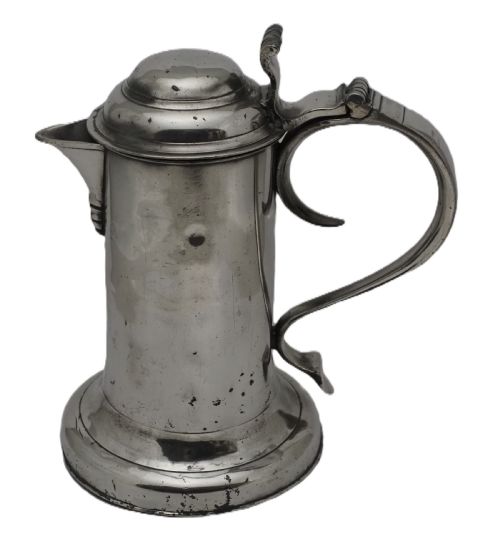


Antique Metal Flagon
An antique metal flagon serves liquid with substance, spanning pewter church vessels to copper harvest jugs shaped by centuries of utility.
Antique Metal Flagon
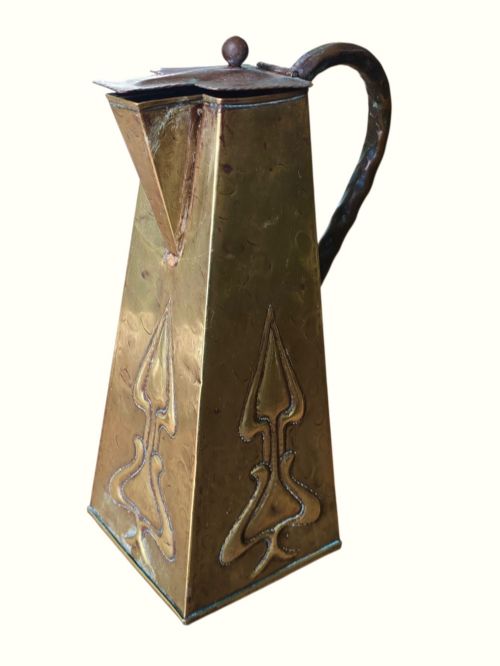
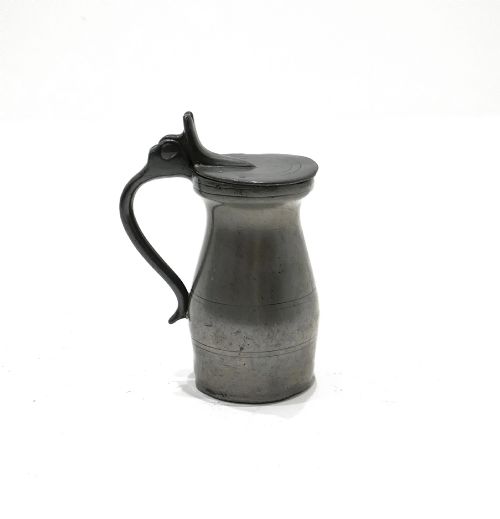
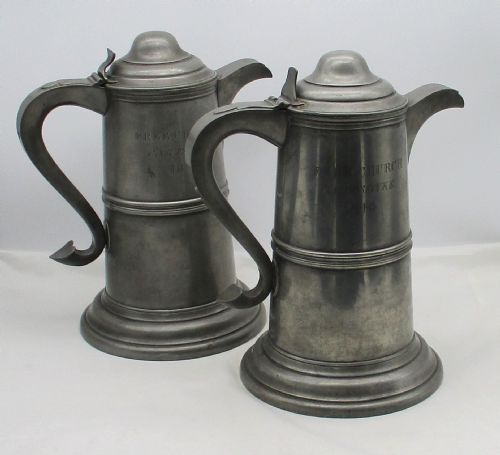
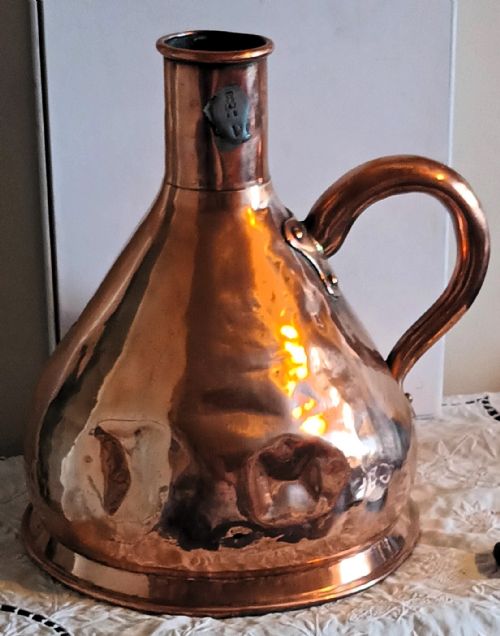
An antique metal flagon is a historic vessel designed for holding and pouring liquids, most commonly found here in forms ranging from pewter church flagons and heavy copper harvest jugs to tall spire flagons and lidded measures. These pieces originate across the eighteenth and nineteenth centuries, taking influences from Georgian and Victorian periods alongside Arts and Crafts and Art Nouveau designs.
Buyers encounter domestic ale jugs and large church vessels alongside capacity measures in pewter, copper, and brass. Forms span flat-lidded tankards, spouted spire flagons, and Scottish tappit hens, reflecting both tavern use and ecclesiastical ritual.
How they were made
Pewter vessels are cast from tin alloys and shaped with soldered seams, featuring applied handles, thumbpieces, and flat or domed lids characteristic of London and provincial workshops. Copper and brass pieces employ heavy gauge sheet metal joined with dovetailed or brazed seams, often finished with hammered surfaces or cast spouts.
Silver-plated items and Old Sheffield Plate combine base metals with thin layers of silver applied through plating techniques or fused metal sheets. Bronze ornamental ewers utilise traditional lost-wax casting methods to achieve decorative surface detail.
Antique Metal Flagon Retail Price Guide 2026
Typical asking prices for metal flagon among the pieces listed under this phrase on Sellingantiques today, from the lower quarter to the upper quarter. They describe what is for sale here now, not the wider market.
Form variations range from Scottish tappit hens and spire flagons to massive two-gallon harvest jugs.
What varies in quality
The calibre of an antique metal flagon rests upon the weight of the metal, the crispness of maker marks or touchmarks, and the integrity of construction joints. Substantial gauge metal retains its structural form and proportions without excessive thinning from past cleaning.
Proportion and decorative restraint separate standard utility ware from exceptional examples. Finely cast thumbpieces, balanced handles, and well-preserved surface patinas elevate pieces made for ecclesiastical or formal domestic contexts.
John Heaney·Robert Iles·John De St Croix
The Antique Metal Flagon Glossary
- Flagon
- A large drinking vessel with a handle and lid, often used for church communion or holding ale.
- Pewter
- A malleable metal alloy primarily composed of tin, historically used for tableware and measures.
- Tappit hen
- A traditional Scottish measure of pewter vessel with a lid resembling a sitting hen.
- Spire flagon
- A tall tapering vessel with a distinctive pointed lid structure, common in eighteenth-century church use.
- Old Sheffield Plate
- A composite material formed by fusing a thin sheet of silver to a thicker copper base.
Antique Metal Flagon: Frequently Asked Questions
What were antique metal flagons used for?
These vessels served diverse roles ranging from ecclesiastical communion services to dispensing ale in taverns and measuring domestic liquids. Larger gallon examples functioned as storage containers for harvest workers.
Smaller capacity measures regulated commercial trade and liquid distribution before standardisation took hold in local markets.
How do I clean an antique metal flagon?
Pewter and copper require minimal intervention to preserve their natural historic surface oxidation and patination. Gentle dusting and occasional washing with mild soap remove surface dirt without stripping age.
Harsh metal polishes strip the authentic dark patination that collectors prize on centuries-old metalware surfaces.
How do I date an antique metal flagon?
Dating relies upon examining touchmarks, maker stamps, lid styles, and handle construction methods. Eighteenth-century pieces often feature flat lids and specific capacity touchmarks.
Nineteenth-century examples frequently incorporate imperial measurement stamps and bolder decorative motifs from the Victorian era.
What is the difference between a flagon and a jug?
Flagons traditionally feature lids and were designed for ecclesiastical or formal service where contents required secure covering. Jugs and pitchers more commonly include open lips or spouts for immediate pouring.
Over time, these terms overlapped as tavern and household vessels evolved through different regional manufacturing traditions.